
Abstract:
Samsung Electronics’ patent lawsuit surrounding the reverse wireless charging function of Galaxy phones has finally come to an end after nearly four years. Samsung, patent holder WiPQTUS Inc. and Japanese semiconductor company Renesas Electronics have reached an out-of-court settlement. The three parties agreed to withdraw all relevant litigation claims and promised not to litigate each other on the same dispute in the future.
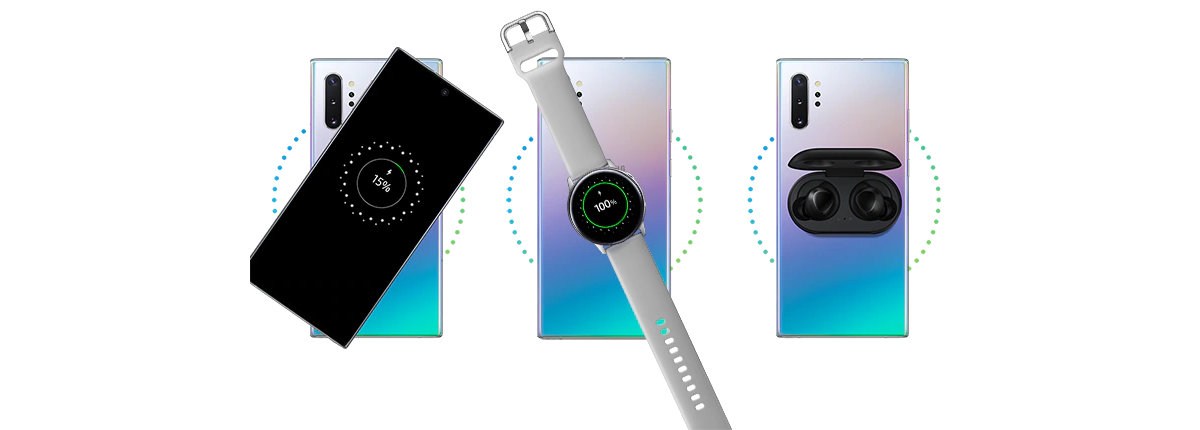
The dispute involves the Wireless PowerShare feature on Samsung Galaxy phones, also known as reverse wireless charging. This feature was first launched with the Galaxy S10 series released in 2019, allowing users to place wireless charging-enabled headphones, smart watches, and even other compatible mobile phones on the back of the Galaxy phone and use the phone's own battery to wirelessly power it.
WiPQTUS believes that the technology used by Samsung to achieve this function infringes on a U.S. patent it holds. This patent number is US 10,038,339, named "Dual Mode Wireless Power Receiver" (dual mode wireless power receiver), and was authorized in 2018. Its core technology involves using mobile devices as wireless charging devices to provide power to other devices.
In February 2023, WiPQTUS officially filed a lawsuit with the Federal District Court for the Eastern District of Texas, accusing Samsung of unauthorized use of its patented technology. The lawsuit involves multiple generations of Galaxy flagship products, including the Galaxy S10, S20, S21 and S22 series, as well as the Galaxy Note 10, Note 20 and Galaxy Z Fold and Z Flip series.
It is worth noting that WiPQTUS is a non-implementing entity (NPE), which is commonly known as a patent operating company. Such enterprises usually do not directly produce or sell related products, but maintain patent rights and obtain profits by holding patents, licensing or filing infringement lawsuits.
This dispute also involves Samsung’s semiconductor supply chain. Renesas Electronics America, an American company owned by Japan's Renesas Electronics, has provided wireless power management chips for related Galaxy devices. In the face of WiPQTUS's patent accusations, Renesas also took legal action, claiming that the chips it provided did not constitute patent infringement and filed a counterclaim against WiPQTUS.
On November 10, 2026, Samsung, WiPQTUS and Renesas jointly submitted a withdrawal agreement to the court, announcing that the three parties had reached a settlement, withdrawing all requests related to this lawsuit, and promised not to sue each other on the same matter again. At this point, the legal dispute that lasted for three years and nine months has officially entered the end process.
However, the settlement agreement did not disclose specific commercial terms, nor did it disclose whether Samsung paid patent licensing fees or other compensation to WiPQTUS. Since the three parties chose to settle out of court, the court will not make a substantive judgment on whether Samsung actually infringes the relevant patents. Therefore, the end of this lawsuit does not mean that the court has determined that Samsung has infringed, nor does it mean that Samsung has obtained a judicial ruling that the relevant technology does not infringe.
For ordinary Galaxy users, this settlement will not bring any direct changes. The Wireless PowerShare feature does not require adjustments and existing devices that support this feature will still work normally.
The dispute also reflects a long-term legal risk faced by the smartphone industry: a seemingly ordinary feature may involve multiple patent holders, chip suppliers and technology licensing relationships. In particular, for technologies such as wireless charging and reverse charging that have gradually become standard features of smartphones, their patent boundaries are often more complicated than consumers imagine.
Samsung finally got rid of this lawsuit that lasted for nearly four years. However, because the settlement content has not been made public, the outside world still cannot judge how much economic cost this patent dispute ultimately brought to Samsung and its chip suppliers.
Comments