
Abstract:
Sony’s next-generation PlayStation handheld console Project Canis has recently seen hardware specifications leaked again. The latest news is that this device will use AMD's customized APU built on TSMC's 3nm process. Through a more compact chip design and lower power consumption, it will ensure the ability to run next-generation games while avoiding becoming a bulky device like some high-performance Windows handheld machines.
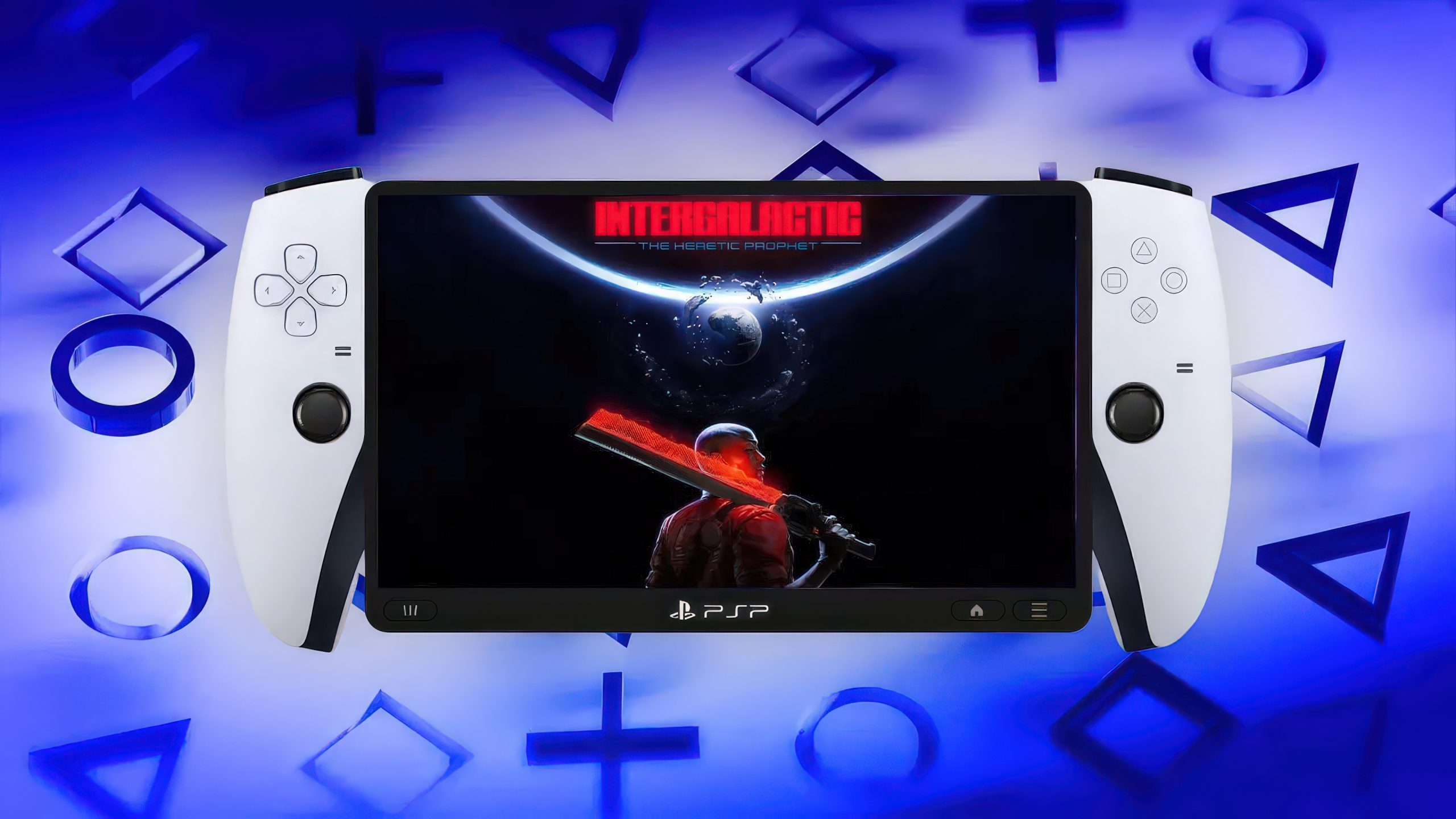
Project Canis is still only an internal code name, and Sony has not officially announced this product. However, in recent years, relevant information about this handheld console has been increasing, and many revelations point to its use of AMD custom chips and deep integration with the next-generation PlayStation ecosystem.
According to current leaked information, Project Canis will use a monolithic AMD APU of approximately 135 square millimeters, manufactured using TSMC’s 3nm process. The processor part includes 4 Zen 6c cores and 2 low-power Zen 6 cores. The 4 Zen 6c cores are mainly responsible for game running, while the other two low-power cores are responsible for the operating system and other non-game tasks.
This CPU architecture is significantly different from traditional PC handheld consoles. Sony seems to want to separate system background tasks from the game CPU core as much as possible so that the game can obtain more stable CPU resources. Relevant information shows that after handing over operating system tasks to an independent low-power core, game programs can theoretically obtain approximately 20% additional CPU resources.
GPU is another core change of Project Canis. The chip is expected to use AMD RDNA 5 architecture and be equipped with 16 computing units. The GPU frequency is about 1.2GHz in handheld mode, and can be increased to about 1.65GHz when connected to the dock.
According to this specification, the theoretical FP32 computing performance of Project Canis in handheld mode is about 4.9 TFLOPS, and when connected to the base, it can reach about 6.75 TFLOPS. However, simply comparing TFLOPS cannot accurately reflect the actual gaming performance of the new generation of GPUs, because RDNA 5 may be significantly better than the previous generation of architecture in terms of ray tracing, AI computing, and architectural efficiency.
In terms of memory, Project Canis is expected to use LPDDR5X and adopt a 192-bit memory bus, theoretically supporting a maximum capacity of 48GB. It has not yet been confirmed whether 24GB, 32GB or 36GB will be used, but some developers believe that if the next generation of games incorporates more complex AI functions, Nanite and other technologies, 16GB or even 24GB of memory may be tight, so the final retail version may require a larger unified memory capacity.
There is currently another recent leak that gives the specific configuration of 24GB LPDDR5X, and believes that this is a more likely solution for Project Canis. However, since Sony has not announced official specifications yet, the memory capacity is still subject to change.
One of the biggest features of Project Canis is that its design goal does not seem to simply pursue the highest performance, but hopes to strike a balance between portability, battery life and performance. Sony obviously does not want to build a handheld machine that must be equipped with a huge radiator and a high-capacity battery to maintain performance. Instead, it hopes to reduce the power consumption of the entire machine through a 3nm process, a low-power CPU core, and a more efficient RDNA 5 architecture.
The current power consumption range given by relevant revelations is about 15W to 25W, which is significantly lower than many Windows handheld machines using AMD's high-performance APU. Low power consumption means that the device can use a smaller heat dissipation system, and it can also reduce the pressure on battery capacity, making the body thinner and lighter.
Project Canis will also support dock mode. When the handheld device is connected to the Dock, the GPU frequency can be increased from approximately 1.2GHz to 1.65GHz to obtain higher graphics performance. In this way, it can be used as a portable game console or can be connected to a TV or monitor as a home console.
In terms of graphics technology, Sony is expected to add next-generation PSSR technology to Project Canis. The latest news calls it PSSR 3.0, and says that in addition to traditional super-resolution reconstruction, it may also add more complete frame generation capabilities.
If this statement is ultimately confirmed, Project Canis may use a lower internal rendering resolution and then upscale the picture to a higher output resolution through PSSR. Some sources even believe that some games may be rendered at an internal resolution of about 540p in handheld mode, and then upgraded to 1080p through PSSR 3.0, thereby achieving higher final picture quality under limited power consumption.
This also means that the actual game performance of Project Canis cannot simply be measured according to the native rendering performance of the GPU. If the quality and frame generation capabilities of PSSR 3.0 meet expectations, the smoothness and clarity of the picture players will eventually see may be significantly higher than the level corresponding to the native rendering capabilities of the GPU.
There are currently reports claiming that Project Canis’ ray tracing and path tracing performance will become its important advantages. Even if the traditional raster performance of the 16 RDNA 5 computing units is lower than that of the PS5, the new GPU architecture may rely on higher light tracing efficiency to narrow the gap with traditional home consoles in some games that support new technologies.
Previously exposed information shows that Project Canis's rasterization performance may be only about half to three-quarters of the basic PS5, but its ray tracing performance may be about 1.3 to 2.6 times that of the PS5. The specific performance depends on the game, driver and PSSR and other technologies, so these numbers can only be used as the predictions of the tipster, rather than official test results.
Backward compatibility is also an important feature of Project Canis. According to currently leaked development information, Sony plans to make the PS6 handheld console support PS4 and PS5 games, and through a unified software ecosystem, the same game can run on both the PS6 home console and the Project Canis handheld console.
This means developers don't necessarily need to re-create a completely separate version of the game for the handheld console. Sony seems to be using low-power modes and unified development tools to allow next-generation PlayStation games to automatically adjust the way they run based on hardware power consumption and performance.
Relevant development information also shows that Sony has asked developers to consider low-power modes and ensure that games can run with fewer CPU threads. This is considered an important sign that Project Canis has entered the development ecosystem.
In terms of hardware expansion, this handheld machine is expected to be equipped with MicroSD card slot, M.2 SSD slot, touch screen, dual microphones and tactile feedback. Compared with many current Windows handheld consoles, this design is closer to the closed hardware ecosystem of traditional game consoles, while retaining a certain degree of storage expansion capabilities.
In terms of release time, many reports currently point to 2027 as the launch date of Project Canis. Some sources even believe that Sony is targeting the end of 2027, but there is still great uncertainty about the specific launch time of the PS6 home console itself. Therefore, it is still undecided whether the handheld console will be launched simultaneously with the PS6 or launched later.
In terms of price, previous tipsters estimated based on the cost of 3nm chips, the price of LPDDR5X memory and the hardware subsidy strategy that Sony may adopt, that the final price of Project Canis may be between US$399 and US$499. However, if large-capacity memory of 32GB or even 36GB is eventually adopted, the actual selling price may be higher than this range.
If these revelations are ultimately confirmed, Sony's next-generation handheld console will be significantly different from the current high-power Windows handheld console. It does not try to gain advantages through higher power consumption, larger heat sinks and higher native GPU performance. Instead, it uses 3nm process, low-power core, RDNA 5 and PSSR to provide a gaming experience close to that of a home console at lower power consumption.
Therefore, the real concern about Project Canis may not be how many TFLOPS it can achieve, but whether Sony can compress the next generation of PlayStation games into a device that is truly suitable for long-term handheld use through software and hardware collaboration. If its low-power design, PSSR 3.0, and PS5/PS4 backward compatibility ultimately meet expectations, then this handheld console will be more like a true "portable PlayStation" rather than simply shrinking a PC game handheld console.
Comments