
Abstract:
New news recently emerged about MD’s next-generation handheld processor Ryzen Z3 series. According to currently disclosed information, Ryzen Z3 will use a semi-custom design based on the Zen 6 architecture. The CPU part may only be equipped with 6 cores and 12 threads, while integrating up to 12 sets of RDNA 4m computing units. Compared with the current 8-core, 16-thread, and 16 CU configuration of Ryzen Z2 Extreme, the new generation of products has reduced the number of CPU cores and GPU computing units, but AMD seems to hope to rebalance the resource allocation between the CPU and GPU under limited power consumption through a new architecture and a chip design more targeted at handheld machines.
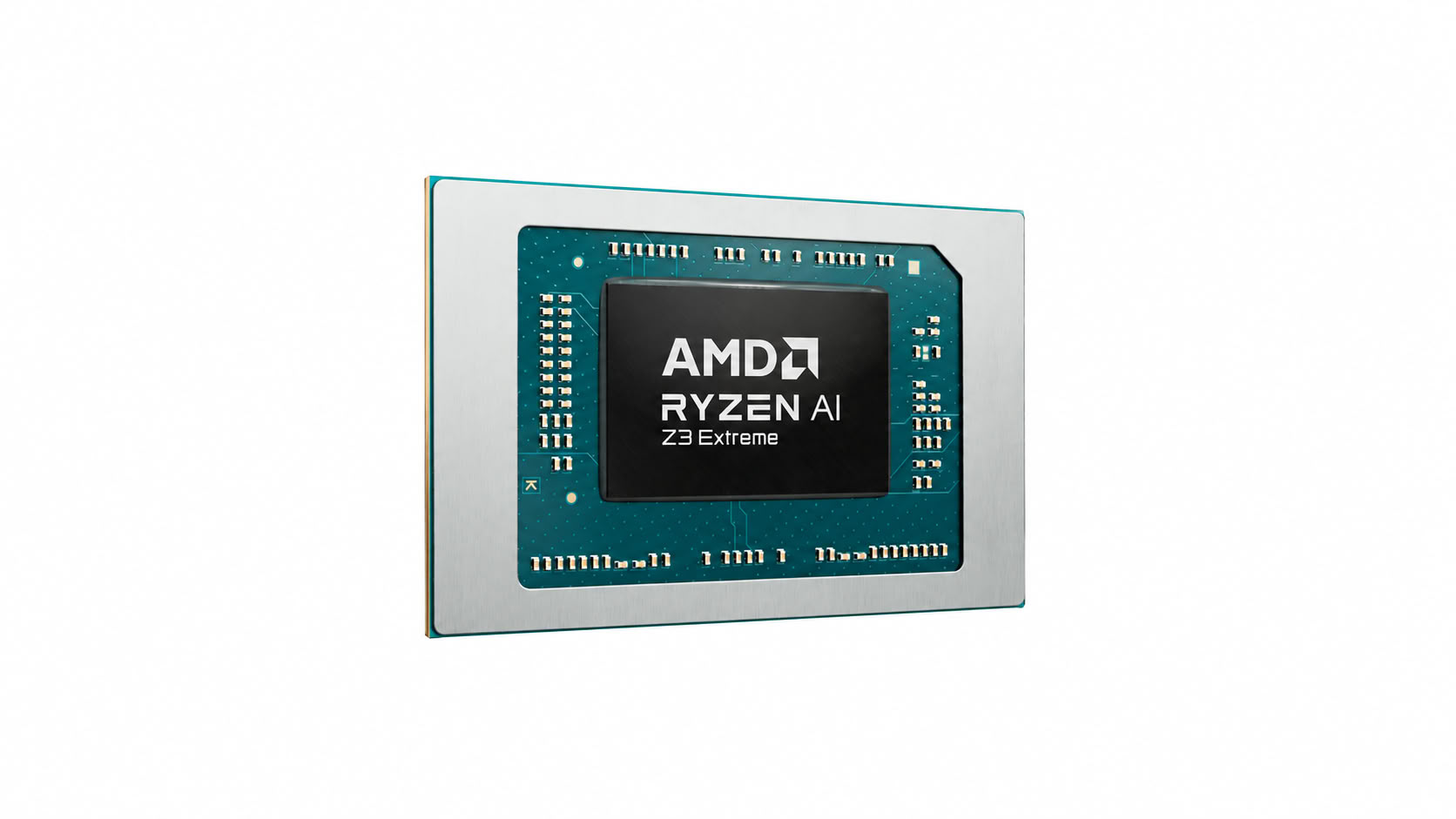
According to information released by tipster Gotou_3rd, Ryzen Z3 shares basic IP such as Zen 6 and RDNA 4m with AMD’s upcoming Medusa Point platform, but it will not directly copy the design of the standard version of Medusa Point, but will adopt a semi-customized solution optimized for handheld devices. The currently exposed configuration is 4 standard Zen 6 cores plus 2 low-power cores. However, the whistleblower himself also emphasized that this CPU configuration may still change, so the final retail version specifications are not yet completely determined.
If this design eventually becomes a reality, Ryzen Z3 will become an important product for AMD to reallocate resources for handheld platforms in recent years. The standard version of Medusa Point was previously rumored to use 4 Zen 6 cores, 4 Zen 6c cores and 2 low-power cores, for a total of 10 cores. Ryzen Z3 may directly cancel 4 of the Zen 6c cores and use the saved chip area and power budget to expand the GPU part.
The GPU has become the most noteworthy aspect of Ryzen Z3. It is reported that the chip will be equipped with 12 sets of RDNA 4m computing units, while the standard Medusa Point is currently rumored to have only 8 sets of CUs. In other words, AMD may make the chip more biased towards game graphics performance by reducing 4 CPU cores in exchange for 4 additional sets of GPU computing units.
However, RDNA 4m is not equivalent to complete RDNA 4. According to current information, RDNA 4m is closer to an improved version of RDNA 3.5. It adds some RDNA 4-level matrix computing hardware to the original architecture. Therefore, although the name contains "4m", it cannot be simply understood as a complete RDNA 4 GPU for the handheld version.
The practical significance of this change is that RDNA 4m can theoretically provide more advanced matrix computing capabilities to support AMD's latest generation image reconstruction technology. For example, current revelations believe that this architecture can natively support FSR 4 related technologies. For handheld consoles, this type of technology may be more important than simply adding GPU computing units, because handheld consoles are usually limited by 15 to 30 watts of power consumption. Through low-resolution rendering combined with AI or machine learning-assisted picture reconstruction, higher final output resolution and frame rate can be obtained under limited power consumption.
Judging from the paper specifications, Ryzen Z3 may even feel "retrograde". The current Ryzen Z2 Extreme uses an 8-core 16-thread CPU and 16 sets of RDNA 3.5 CUs, with a power consumption range of 15 to 35 watts, while the Ryzen Z3 may become a 6-core 12-thread and 12 CU. If we simply compare the number of cores, new products obviously do not have an advantage.
But different architectures cannot be compared only by the number of cores and CUs. Zen 6 is expected to have higher single-core performance and energy efficiency than Zen 5, and RDNA 4m may also make up for the impact of the reduced number of CUs with more advanced computing power and graphics technology. More importantly, the core limitation of handheld consoles is often not how many transistors can be packed into the chip, but whether the limited power should be allocated to the CPU or the GPU under a total power consumption of about 15 to 25 watts.
For most handheld games, the GPU is often more likely to be the factor limiting the frame rate than the CPU. Therefore, if AMD reduces four CPU cores and adds four GPU CUs, it is actually actively shifting the chip's performance focus toward graphics processing. This design is especially suitable for handheld consoles that run games at 1080p resolution and below.
In terms of power consumption, current news says that the regular Ryzen Z3 will be optimized for about 15 watts, while the higher-end Ryzen Z3 Extreme may target about 25 watts. However, it is not clear whether both products have fully enabled 12 sets of CUs, and it is not ruled out that the regular version turns off some GPU units, and further differentiates different models through core number, frequency and power consumption restrictions.
If this power consumption positioning is true, the product ideas of Ryzen Z3 and some current 35-watt high-performance handheld processors will be significantly different. AMD seems to hope that the new generation of handheld chips can achieve higher graphics efficiency at lower power consumption, rather than continue to increase power consumption in exchange for peak performance.
Another change worth noting is package size. Ryzen Z3 is said to come in an AMD FF6 package, measuring 25×25 mm, which is smaller than the FP8 package currently used by Strix Point. A more compact package can free up more motherboard space for handheld manufacturers, while also helping to further reduce the size of the device.
For handheld manufacturers, this design has practical significance. Unlike laptops, the internal space of handheld consoles is very limited, and the radiator, fan, battery, rocker, buttons and screen arrangement will take up a lot of space. Therefore, after the chip package size is reduced, even if the performance improvement is limited, it may help manufacturers design products that are thinner, lighter, or have larger battery capacity.
At the same time, Ryzen Z3 may also bring changes to AMD's handheld chip product line. The previous Ryzen Z2 series models were very complex, ranging from Zen 2, Zen 3+, Zen 4 to Zen 5, and different models used different generations of GPU architectures. The solution currently exposed by Ryzen Z3 is more like a dedicated platform developed from the beginning for a new generation of handheld consoles, rather than simply repackaging existing notebook processors after adjusting power consumption.
However, all current information about Ryzen Z3 comes from unofficial channels, and AMD has not yet announced product specifications. Key information including CPU core configuration, number of GPU CUs, clock frequency, memory type and bandwidth, specific process, chip area and final power consumption may change before the product is officially released.
Especially for the CPU, the whistleblower has made it clear that the configuration of 4 Zen 6 cores plus 2 low-power cores may still change, so the possibility of using different core combinations in the final retail version cannot be ruled out. At the same time, it is currently impossible to confirm whether Ryzen Z3 and Z3 Extreme use the exact same 12 CU GPU, or whether the product level difference is formed by shielding some computing units.
If the current revelations are ultimately confirmed, Ryzen Z3 will embody a clear change in AMD's thinking on handheld chips: instead of continuing to stack CPU cores and GPU units, it is better to reallocate resources according to the limited power budget of handhelds. By reducing CPU cores, increasing GPU resources, and introducing Zen 6 and RDNA 4m architectures and more advanced image reconstruction capabilities, AMD hopes to convert more of each watt of power consumption into game screen performance.
Therefore, what really deserves attention in Ryzen Z3 is not the "6 cores and 12 threads" number itself, but whether AMD can achieve significantly higher actual game performance than the previous generation in the 15 to 25 watt power consumption range through new architecture and resource configuration. If this is ultimately possible, reducing CPU cores may be a way to improve the overall gaming experience for the next generation of Windows handheld consoles.
Comments