
Abstract:
Gavin Newsom, the governor of California, recently vetoed a privacy protection bill targeting wearable recording devices such as smart glasses. The bill originally planned to prohibit people from using devices such as smart glasses to secretly record audio or video without consent in places where others have reasonable expectations of privacy. It also required related devices to be launched in the future to set obvious recording prompts.
Newsom's main reason for vetoing the bill is that he believes that the definition of "wearable recording devices" is too broad and inaccurate, and that some of the proposed new privacy protection measures duplicate existing provisions of California's existing laws.
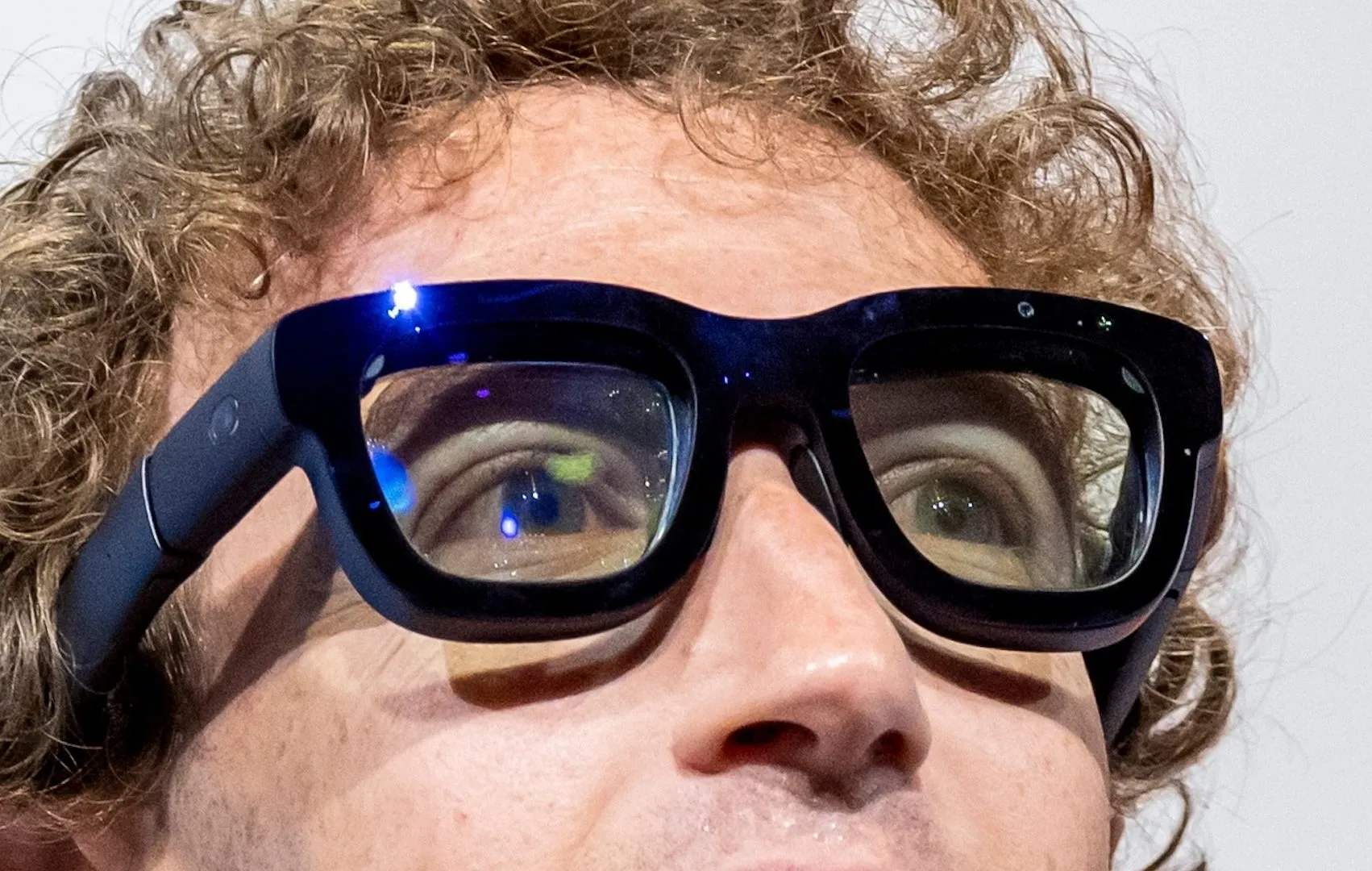
This bill, numbered SB 1130, was introduced by California State Senator Eloise Gómez Reyes and is officially called "Privacy Invasion: Wearable Recording Devices." The bill was passed by the California Senate and House of Representatives this year and was sent to the governor's office on September 9. It was eventually vetoed by Newsom on September 30.
According to the original provisions of the bill, if someone uses smart glasses or other wearable recording devices to record audio or video without the explicit consent of the person being recorded, it may constitute an illegal act in places such as locker rooms and doctor's offices where people usually have reasonable expectations of privacy.
The bill also plans to require smart glasses and other wearable devices with audio or video capabilities sold in California starting in 2028 to be equipped with obvious visual or audio prompts to let people around them know that the device is recording.
In addition to requiring the device itself to provide recording prompts, the bill also seeks to ban the sale of technology designed to hide, turn off, or circumvent recording lights and audible prompts. In other words, even if the device has a recording instruction function, special software or hardware cannot be used to allow users to completely hide this state during recording.
For individuals who violate relevant provisions, the bill originally planned to set fines and criminal penalties of up to $1,500; for manufacturers, if they sell devices that do not meet the recording prompt requirements, or provide technology to help users hide the recording status, they may face fines of up to $2,500.
The background of this legislation is the rapid popularity of smart glasses equipped with cameras, microphones and AI functions in recent years. Take the Ray-Ban smart glasses launched by Meta as an example. Users can directly take photos, videos, and voice interactions through the glasses, and submit part of the content to AI for analysis.
One of the biggest differences between smart glasses and traditional mobile phone cameras is that the camera is more hidden. When ordinary people see a person taking out a mobile phone and pointing the camera at themselves, they can easily realize that they may be being filmed. However, people wearing smart glasses only need to look in a certain direction normally to complete the recording, so the person being filmed may not be able to detect it immediately.
This issue has attracted the attention of privacy groups and consumer rights agencies. Supporters of the bill believe that as smart glasses get closer to the appearance of ordinary glasses, society needs to establish clearer rules so that people can determine whether they are being recorded by wearable devices.
However, there is clear opposition to SB 1130 in the technology industry. TechNet, an industry organization representing large technology companies such as Meta, Google, and Amazon, believes that the scope of application of this bill is too broad, and that California’s existing laws can already handle many unauthorized recording and video recording activities, so there is no need to establish a new set of laws for specific hardware forms.
Newsom expressed similar concerns in his veto letter. He believes that the bill's definition of "wearable recording devices" is too broad or not precise enough, and may include some devices that were not the original goals of lawmakers within the scope of regulation. For example, some smartwatches and other wearable devices that are already widely used by people and have audio or video recording capabilities may also fall under this legal definition.
This means that if the text of the original bill is directly implemented, it may not only be smart glasses with cameras that will be affected in the future, but also other wearable electronic devices with recording capabilities. Newsom believes this could create confusion in legal interpretation and unintended consequences.
Newsom also pointed out that California’s current law itself already provides protection for some related behaviors. For example, unauthorized video recording in a location with a reasonable expectation of privacy, as well as the recording of certain confidential communications without consent, may be subject to existing legal restrictions. Therefore, he believes that parts of the new bill are duplicative of existing laws.
However, Newsom did not deny the privacy issues brought about by smart glasses. As cameras, microphones and artificial intelligence are gradually integrated into daily necessities such as glasses, headphones, and hats, traditional privacy rules are facing new technological challenges. The veto was mainly aimed at the specific legal design of the bill, rather than the belief that wearable devices do not pose privacy risks.
In fact, the privacy controversy over smart glasses has expanded from the United States to other countries. In September this year, the Norwegian government discussed the need to restrict wearable devices such as smart glasses with cameras. The local government is worried that with the further integration of AI, cameras and microphones, such devices may be used to monitor others without their consent in the future, and even be combined with facial recognition technology to identify people around them.
In the US market, smart glasses manufacturers have generally adopted a recording prompt mechanism to a certain extent. Taking Meta's Ray-Ban smart glasses as an example, the device will alert people around it through external indicators when shooting. However, in reality, there are still issues such as how to ensure that the prompt is obvious enough and whether the prompt can be circumvented through technical means.
The smart glasses industry has also been developing towards more complex AI functions in recent years. The new generation of products no longer simply takes photos and listens to music, but is capable of identifying the objects the user sees, answering questions about the surrounding environment, performing real-time translations, and even continuously interacting with AI assistants. This means that cameras and microphones may become continuously running sensing devices, making privacy issues more complex than with traditional digital cameras.
The final rejection of SB 1130 does not mean that California will no longer consider formulating special rules for smart glasses. On the contrary, this legislative process has revealed an important issue: whether the existing privacy laws for mobile phones, cameras and traditional recording devices are enough to cover the next generation of wearable devices that are almost indistinguishable from ordinary glasses and have AI capabilities.
At present, SB 1130 cannot become law according to the original plan. If California again legislates smart glasses in the future, it is likely to need to more clearly distinguish between device types and specific behaviors, such as clearly stipulating which devices need to record prompts, which places belong to key protection areas, and what responsibilities manufacturers and users bear respectively.
As smart glasses gradually move from niche products to the mass consumer electronics market, how to facilitate users to use cameras and AI functions while allowing people around them to have a clear enough right to know will also become a problem that regulatory agencies in various places must face. Although the California bill failed to finally take effect, the contradiction between privacy protection and wearable AI technology involved in it will still exist as smart glasses become more popular.
Comments