
Abstract:
A newly published study by Canadian researchers shows that even one night of sleep deprivation can significantly affect people's memory abilities. However, a simple bout of moderate-intensity exercise may help the brain ward off some of the negative consequences, providing a low-cost solution for people who often face sleep deprivation.

Science has long recognized that sleep is critical to learning and memory formation. Lack of sleep not only makes people mentally exhausted and reduces their concentration, but also weakens their ability to store and retrieve information, making it more difficult to learn new knowledge and remember existing information. At the same time, exercise has also been shown to improve sleep quality, relieve anxiety, regulate body clock rhythms, and promote a healthier resting state.
To further understand whether exercise can directly reduce the damage caused by lack of sleep to memory, a research team from Concordia University in Canada conducted an experiment. The researchers recruited 88 healthy young volunteers and randomly assigned them to four different experimental groups.
Half of the participants were given normal sleep time, which was about 8.5 hours of sleep; the other half were restricted to only 4.5 hours of sleep. Later, the two groups were further subdivided, with some doing 30 minutes of moderate-intensity cycling before going to bed, and the other just sitting and resting for about 40 minutes.
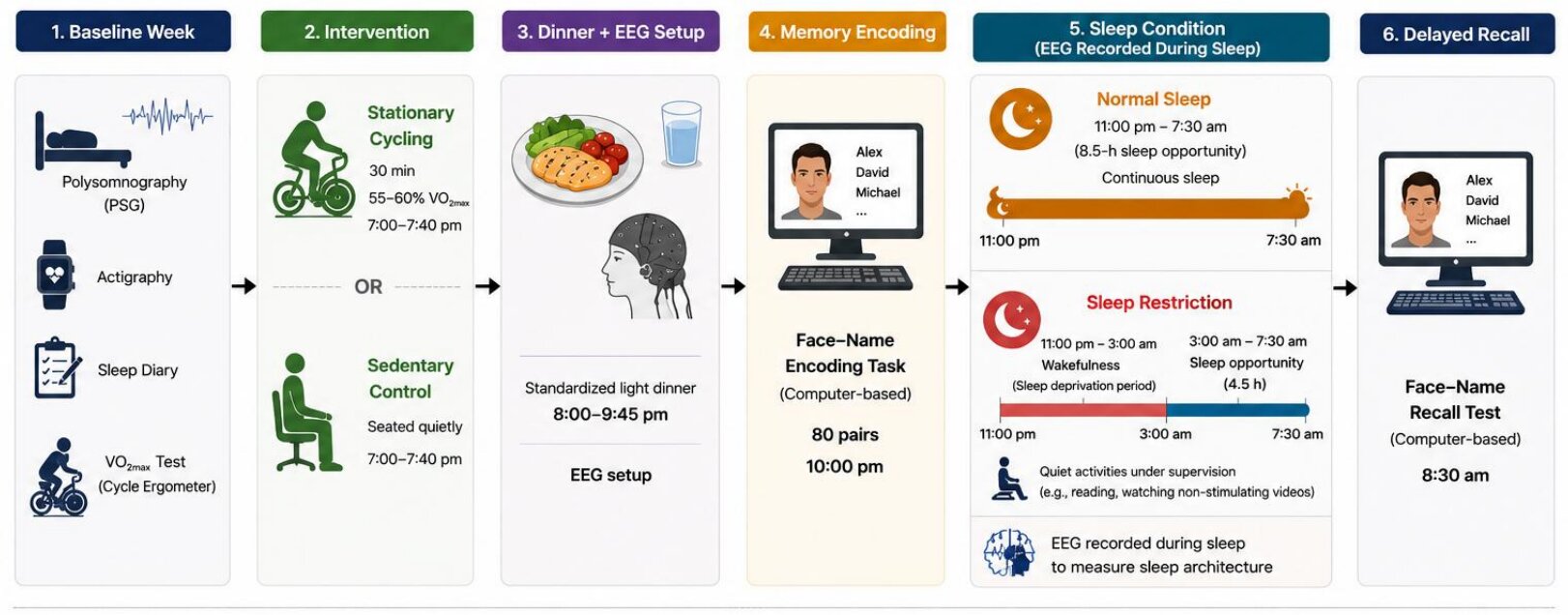
Before going to bed, all participants took a facial image memory test. They were asked to determine whether a series of photos of faces had been shown before. After waking up the next day, the researchers performed similar tests again to assess memory retention.
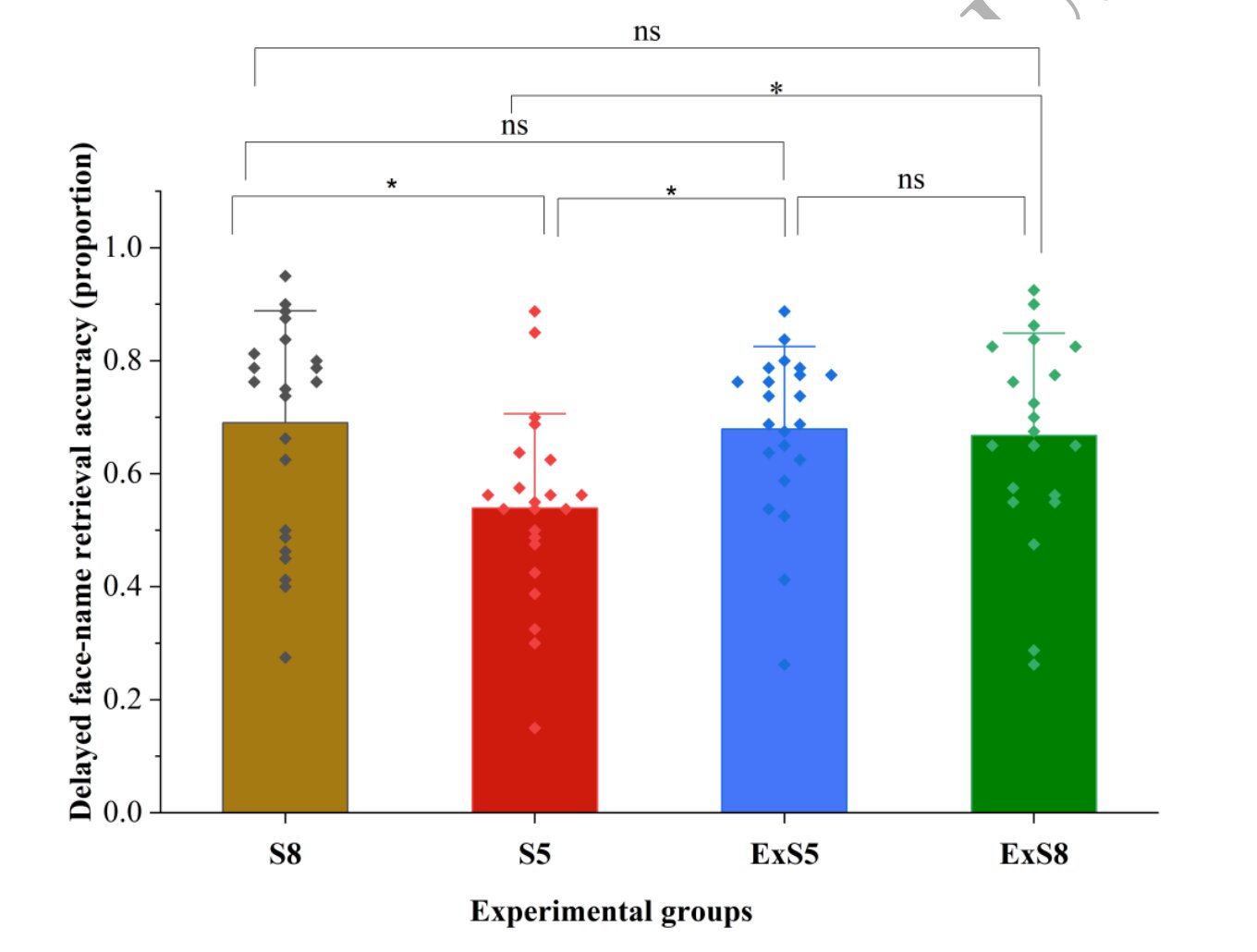
Experimental results show that adequate sleep is still the most effective way to protect memory performance. Participants who got complete sleep performed best on the next day's test, completing the recognition task more accurately and quickly.
In contrast, the performance of sleep-limited people is significantly reduced, their reaction speed is slowed, and their memory retrieval ability is affected. However, the researchers also found that the memory performance of the sleep-deprived group who performed 30 minutes of moderate-intensity exercise before going to bed was significantly better than those who were also sleep-deprived but did not exercise. While they didn't quite reach the level of the adequate sleep group, exercise significantly mitigated the negative effects of sleep deprivation.
The research team believes that this finding provides new evidence for understanding the relationship between exercise and cognitive function. The findings suggest that even if you don't get ideal sleep, a moderate amount of physical activity may still help the brain better maintain memory function.
The researchers also pointed out that this experiment still has certain limitations. For example, experiments use group comparisons between different participants rather than having the same participants tested repeatedly under different conditions. In the future, if a longer-term and more comprehensive research design is adopted, the specific mechanism by which exercise protects memory can be further confirmed.
Scientists emphasize that deep sleep is crucial for memory consolidation. When the brain enters the slow-wave sleep stage, a large amount of information acquired during the day is organized and stored. However, it is this critical sleep that people are most likely to sacrifice most when they cram for exams, work overtime to catch up on work emails, or watch video content for long periods of time late at night.
The researchers also reminded that the problems caused by lack of sleep go far beyond memory loss. Chronic sleep deprivation may also increase inflammation levels, interfere with metabolism, and increase the risk of chronic diseases such as cardiovascular disease, cognitive decline, and dementia.
The research team believes that although exercise cannot replace sleep itself, for people who are temporarily unable to get adequate rest, moderate exercise may be a simple, economical and drug-free method to help the brain maintain a better cognitive state. Everything from spending less time scrolling through your phone late at night to going for a light bike ride or walk in the evening may have additional benefits for your memory and long-term health.
Comments