
Abstract:
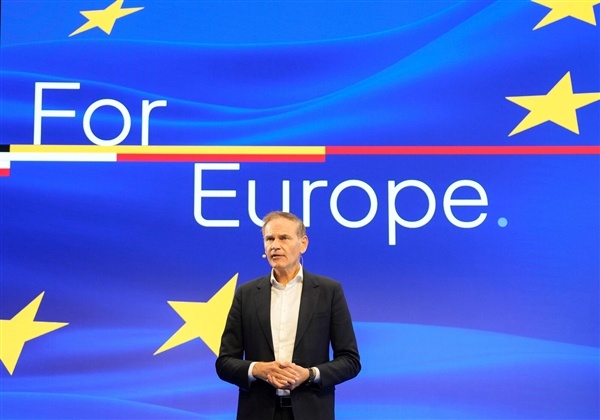
On the eve of the opening of the Paris Auto Show, Volkswagen Group CEO Oliver Blume attended an event themed "For Europe" and said,
Faced with strong competition from Chinese car companies, France and Germany must join forces on industrial policy, and European policymakers also need to create appropriate framework conditions for the restructuring of the automotive industry.
Blum called Volkswagen's current transformation plan "the largest change project in the history of the group." Volkswagen's brands span multiple levels, from mass-market brands such as Volkswagen, Skoda and Cupra to high-end brands such as Porsche and Lamborghini. Blum is trying to reduce the complexity of the entire group. In his speech, he emphasized that this is a joint responsibility: companies must become more competitive, and policymakers must establish the right framework conditions.
The current Paris Auto Show was held from October 12 to 18. A total of 59 vehicle manufacturers participated in the exhibition, of which 22 were Chinese brands, accounting for 37.3%, setting a historical record.
In contrast, France, the host country, has 10 exhibiting brands, Germany, the birthplace of the automobile industry, only has 7 exhibitors, and the number of Chinese exhibitors has exceeded the sum of France and Germany.
Brands such as BYD, Chery, Leapmoon, Ideal, Jikrypton, and Lynk & Co were all present. Chinese car companies have penetrated the European market far faster than outside expectations.In his speech, Bloom clearly supported the "Made in Europe" rules proposed by the EU to stimulate local production, and welcomed the agreement between the EU and China to reduce exports of plug-in hybrid vehicles. According to the agreement, China will cut its exports of plug-in hybrid and hybrid models to Europe by more than half within four years, involving millions of vehicles. The EU Trade Commissioner said that the agreement may reduce China's imports of pure electric and plug-in hybrid vehicles to Europe by up to 50%, while China will improve market access for EU companies and relax export restrictions on rare earths.
Blum said: "Those who sell cars here should compete under equal conditions and create jobs and value in Europe."
It is reported that Volkswagen’s net profit will plummet 53% year-on-year in 2025, and sales in the Chinese market will decline 14.9%. In June this year, Volkswagen announced the launch of the most radical restructuring plan in the past 90 years, including laying off up to 100,000 people and closing four German factories. In September, 175,000 workers in the German automobile and parts industry held protests at 280 locations to oppose layoff plans. Bloom is also facing pressure from investors to prove that the transformation strategy is not just about downsizing but also about making substantial progress in product development and software.
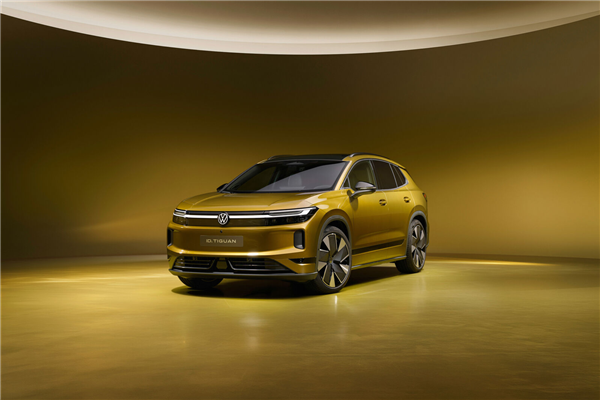
In terms of products, Volkswagen debuted the new ID. Tiguan pure electric SUV at the Paris Auto Show.
This car replaces the ID.4 and ID.5 and has a range of up to 600 kilometers. The top dual-motor four-wheel drive version has a combined power of 220 kilowatts and can accelerate from 0 to 100 kilometers per hour in 6.3 seconds. It will be launched in Europe in early 2027.
In addition, Volkswagen's ID.Polo, Skoda Epiq, Cupra Raval and other entry-level pure electric models have also been launched, with starting prices of about 25,000 euros. Volkswagen said that the sales of these models "significantly exceeded expectations."
Comments