
Abstract:
Bee colonies not only rely on the immunity of individual bees to resist disease, but the entire hive itself may also form a highly organized collective defense system. A recent study by a research team from the University of Sydney in Australia found that honey, beeswax, propolis, pollen and substances secreted by the bees themselves can form multi-layered antibacterial barriers according to different areas inside the hive. This structured defense mechanism bears surprising similarities to animal immune systems.
Researchers describe the hive as a "living immune system." The hive is not only a place where bees live, store food and reproduce, but also assume a protective function similar to a hospital. Different natural materials are arranged in different locations of the hive, and through their respective chemical compositions and antibacterial properties, they jointly reduce the threat of harmful microorganisms to the bee colony.
Studies have found that the antimicrobial defense capabilities are most evident in the outer areas of the hive. Honey shows particularly strong antibacterial activity and contains antibacterial ingredients such as hydrogen peroxide. Propolis is a sticky material formed by bees after collecting resinous substances from plants. It is usually used to seal the gaps and entrances of the hive. It contains phytochemicals such as flavonoids, which can further inhibit the growth of microorganisms.
As researchers get deeper into the hive, the defense mechanisms begin to take on more sophisticated characteristics. Beeswax combs, stored pollen, and substances produced by the bees themselves not only inhibit harmful bacteria and fungi, but also help maintain beneficial microbial communities. Especially in the area where bee eggs and larvae develop, this selective microbial regulation is particularly important.
Research leader Dr. Kenya Fernandez said that the antibacterial properties of honey, beeswax and propolis have long been known to the scientific community, but what is really surprising about this study is that the arrangement of these materials in the honeycomb is not randomly formed, but has a clear spatial organization structure. The antimicrobial effects of the different materials work together to protect bee eggs, larvae and the fermented pollen that bees eat.
To study this defense system, the team surveyed 24 bee colonies at five apiaries at Tokar College in New South Wales, Australia. They analyzed the chemical composition and antibacterial capabilities of honey, pollen, beeswax and propolis, studied the microorganisms in the bees' digestive systems, and tested the antibacterial activity of the bee tissues and secretions themselves.
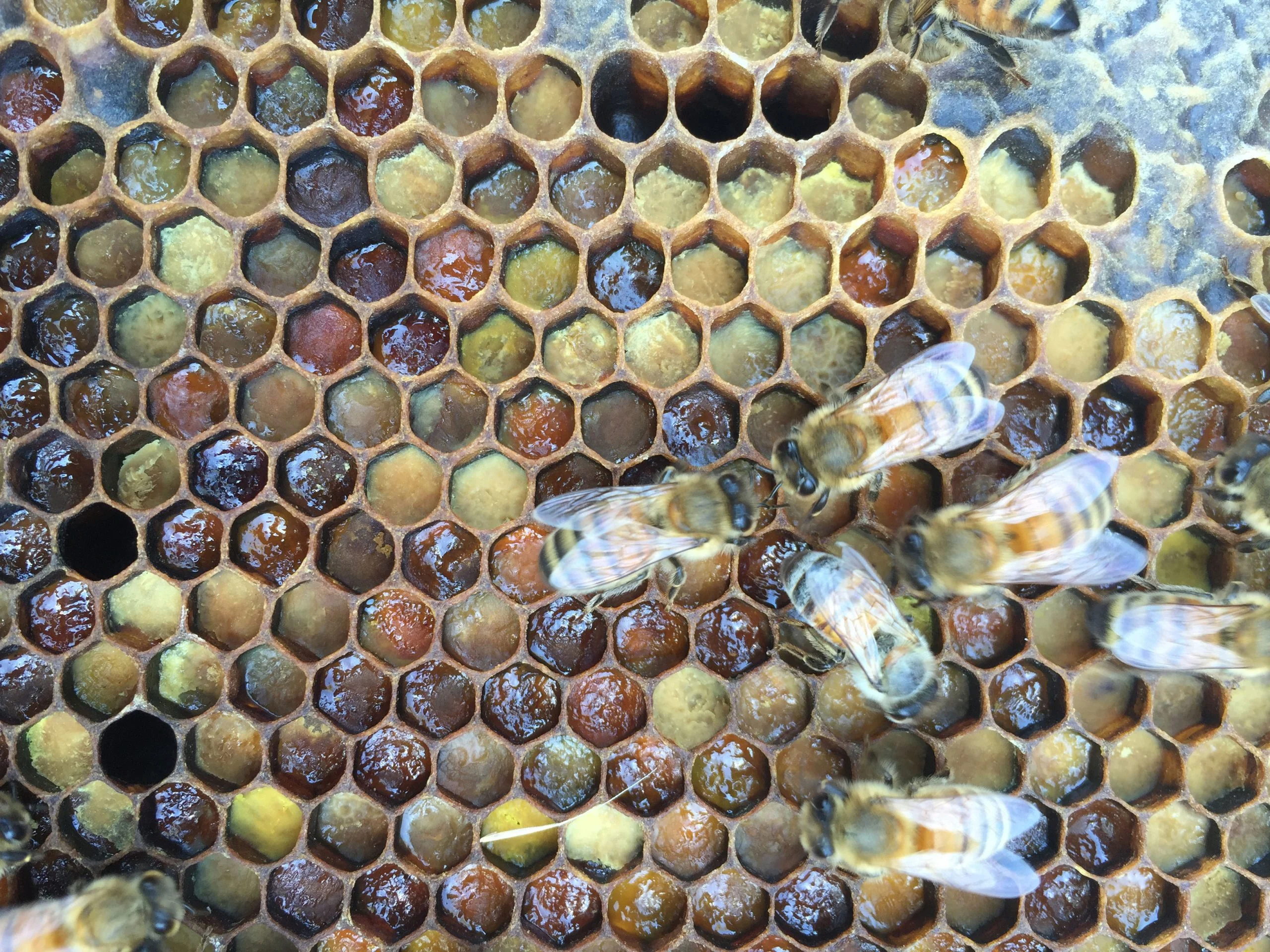
The results show that a considerable part of the microorganisms in the hive may come from the nectar collected by bees. After bees bring nectar, pollen and plant-derived materials back to the hive, they not only provide nutrients for the bee colony, but may also bring chemicals and microorganisms from the surrounding plant environment into the hive, thereby affecting the defense capabilities of the entire bee colony.
The study also found that the ecological environment around the hive will have a significant impact on its antibacterial properties. The hive material of colonies closer to native woodland exhibits different chemical defense characteristics than colonies closer to agricultural land. This means that what plant resources bees are able to harvest may directly affect the hive's ability to resist pathogens.
Healthy bee colonies require healthy ecosystems, said study co-author Elizabeth Frost, a technical expert with the New South Wales Department of Primary Industries and Regional Development. Land clearing and intensive agriculture can weaken bees' natural defenses without being noticed. Therefore, protecting habitats that are rich in plant species and can continuously provide a source of flowers will not only help bees obtain food, but may also increase their ability to resist disease.
The researchers also noticed that the hive's defense system was overall more effective against bacteria than against fungi. They believe this may be related to the serious threat that certain bacterial diseases pose to bee colonies. For example, American larval rot disease is a highly contagious bacterial disease that can kill bee larvae and, in severe cases, destroy entire bee colonies.
In addition to direct threats such as mites, bees also face indirect risks from habitat degradation. Decreased plant diversity may alter the sources of flowers bees collect and the chemicals they carry back to the hive, ultimately affecting the colony's ability to resist disease. This also shows that protecting bees cannot only rely on beekeeping management and disease prevention, but also needs to pay attention to the entire ecological environment in which they live.
This study was mainly conducted on European honeybees. The research team next hopes to investigate whether Australia's native stingless bees have similar nest defense mechanisms, and further study whether other social insects that can build complex nests, such as ants and termites, also build collective disease resistance systems in a similar way.
The research results were published in the journal "ISME Communications" on October 19, 2026, titled "Spatially organized chemical defense shapes microbial communities in honeybee colonies". Research reveals that a hive is not a simple insect residence, but a complex defense system composed of natural materials, microbial communities and spatial structures. More importantly, the disease resistance of bees may not only depend on the bee colony itself, but also be closely related to the health of the surrounding plants and ecological environment.
Comments