
Abstract:
The U.S. National Highway Traffic Safety Administration (NHTSA) announced on September 4 that it has launched an investigation into Tesla Cybercab driverless taxis to review whether its Federal Motor Vehicle Safety Standards (FMVSS) certification process is in compliance.
The investigation, numbered AQ26002, was filed on September 3, the day Cybercab was officially commercially deployed in Austin, and involved approximately 1,000 Cybercab vehicles.
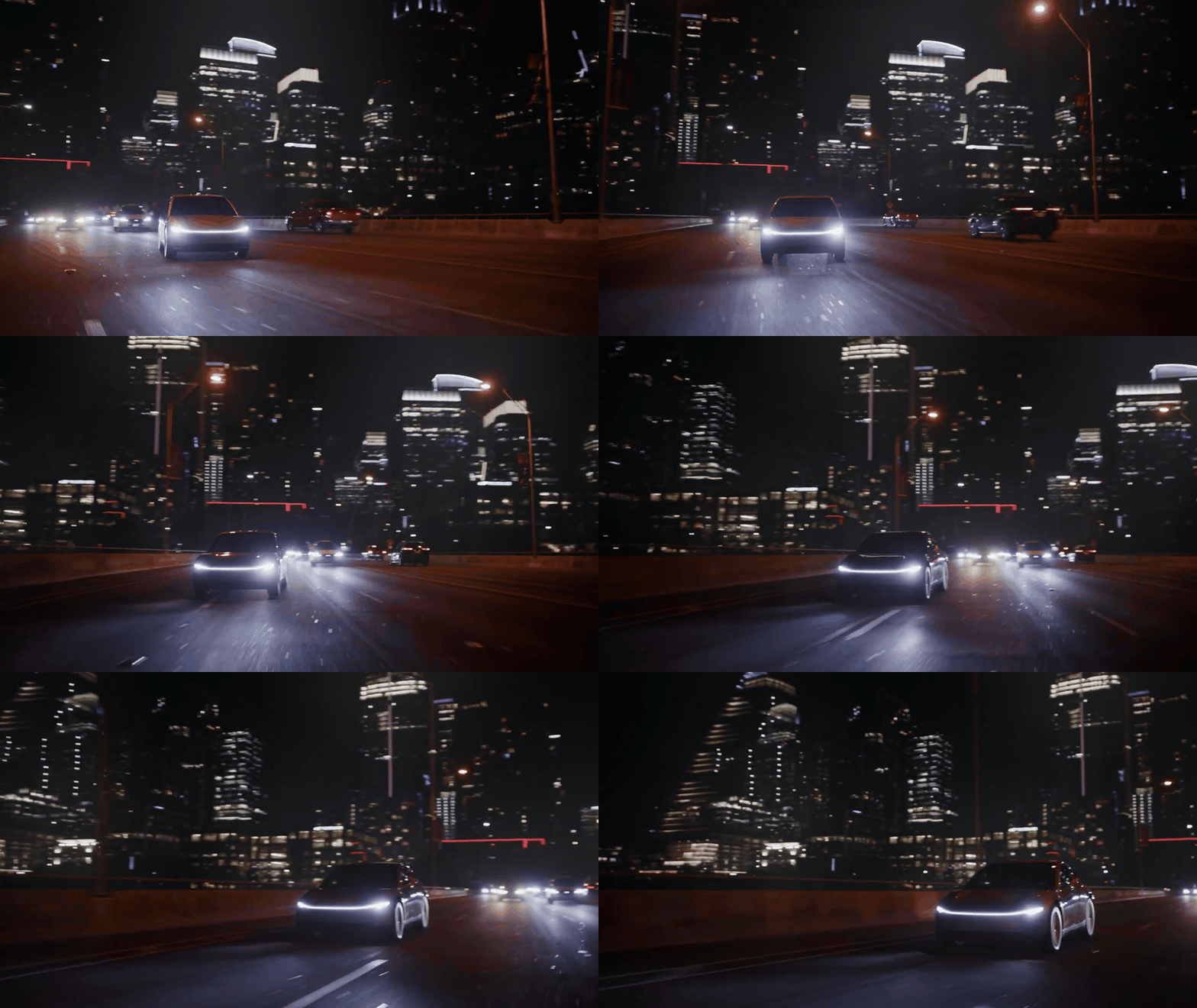
Regulatory documents show that Tesla began commercial deployment of a small amount of Cybercab in Austin, Texas on September 3 and notified regulators that the company has determined that these vehicles meet all applicable federal motor vehicle safety standards.
Tesla also stated that it plans to gradually expand commercial deployment, increase the number of vehicles and expand operating areas.
The focus of NHTSA's review is precisely the procedures and technical data based on which Tesla makes compliance judgments, especially the company's basis for determining that some federal safety standards do not apply to Cybercab.
It is reported that Cybercab has no fixed conventional manual control devices, no brake pedal, accelerator pedal, steering wheel and rearview mirror, and no manual control for passengers to take over in an emergency. NHTSA will review the extent to which Tesla used its own judgment to determine that these safety standards do not apply.
The U.S. motor vehicle safety supervision implements a manufacturer self-certification system.
NHTSA is responsible for setting standards for vehicle performance requirements. Automakers must certify that their vehicles meet relevant standards if they want to sell them in the United States, and regulatory agencies are responsible for supervision and verification.
NHTSA can initiate an investigation when a manufacturer's self-certified vehicle is deemed to be potentially non-compliant.This investigation is reminiscent of the precedent of Amazon Zoox. In 2022, Zoox also launched a steering wheel-less self-driving taxi through self-certification. NHTSA subsequently opened an investigation. In the end, Zoox applied for an exemption and did not receive final approval until July 2026.
Unlike Zoox, Tesla did not apply for an exemption from NHTSA, but directly operated on the road through self-certification. If the investigation determines that Cybercab does not meet safety standards, Tesla may face the risk of vehicle suspension, rectification, and even fines.
Comments