
Abstract:
In a recent Munro Live interview, Tesla Vice Presidents of Engineering Lars Moravy and Eric Earley revealed that
Tesla’s Optimus humanoid robot is learning to charge autonomous taxis and is expected to be responsible for recharging the Robotaxi fleet in the short term.
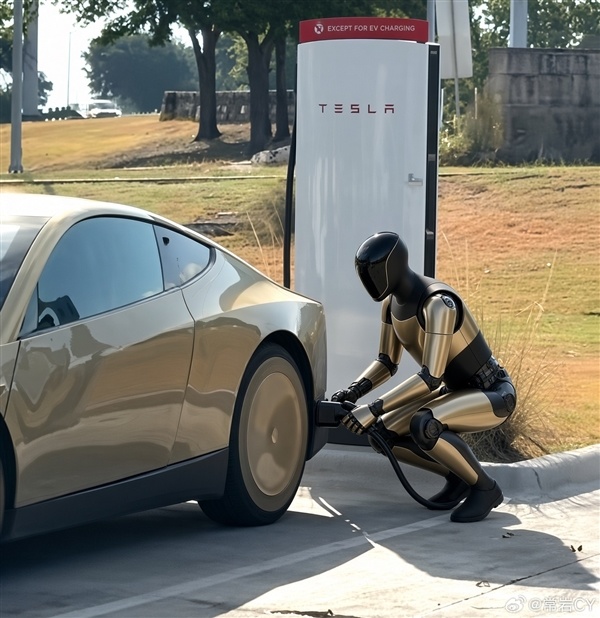
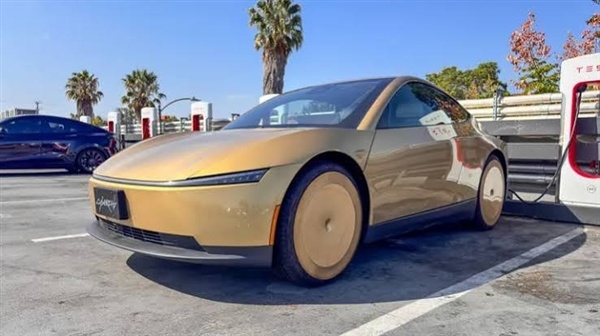
The two shared many details about Optimus and Cybercab during the interview. According to them, the battery of Optimus is an independent module of about 2.5kWh. Unlike a car, the battery pack accounts for one-quarter to one-third of the cost of the entire vehicle. The battery is not the main cost of the robot.
Charging is only the first job of Optimus.
Moravy said that it "may provide maintenance services for vehicles and may also enter the field of distribution."
He also painted a bigger picture, "If you think about Cybercab, Optimus and Robovan, the iron triangle combination of these three will be incredible, and you can also add Tesla Semi for long-distance transportation."
In addition, information about Cybercab's production line has also been exposed on a large scale for the first time. The car's final assembly line has only about 25 fully automatic stations, which is only one-fifth to one-tenth of the Model Y production line, and the degree of automation is close to 80%.
The "unboxing process" reduces the production area of each vehicle by approximately 50%, and the vehicle's design life is 500,000 miles.
Tesla has saved hundreds of millions of dollars by not having a paint shop (CyberCab does not spray paint).
What’s interesting is that the current production speed of the production line has exceeded the promotion speed of the Robotaxi fleet, so the production line is not running every day.
Cybercab's 4680 battery cells are packaged in independent potting modules. If a single module fails, it only needs to be replaced separately, without replacing the entire battery pack. The battery pack also uses a steel casing for the first time, and reserves space for replacing cheaper lithium iron phosphate cells in the future.
Moravy explained, "We found that the actual number of batteries needed was less than originally expected."
In terms of drive form, Cybercab uses front-wheel drive with a transmission ratio of 11:1 because it does not require a high top speed. Its new inverter will also be applied to Model 3 and Model Y this year.
Comments