
Abstract:
SpaceX rocket technology is not all the trump card of the "speeding car" Roadster
. Tesla Engineering No. 1 just explained all the technical details in a blog program: rocket injection system, ground effect suction cup, active deformation body... and revealed for the first time:The technology of Tesla's humanoid robot Optimus is also on the car
.
Rocket’s black technology, how to work on the car?
First of all, let’s briefly introduce
Lars Moravey, who is on the podcast
, graduated from Northwestern University in mechanical engineering, and was responsible for the chassis suspension system at Honda for a long time in his early years. When he joined Tesla in 2010, he started working on chassis suspension and worked his way up to his current position as Vice President of Tesla, No. 1 in Vehicle Engineering.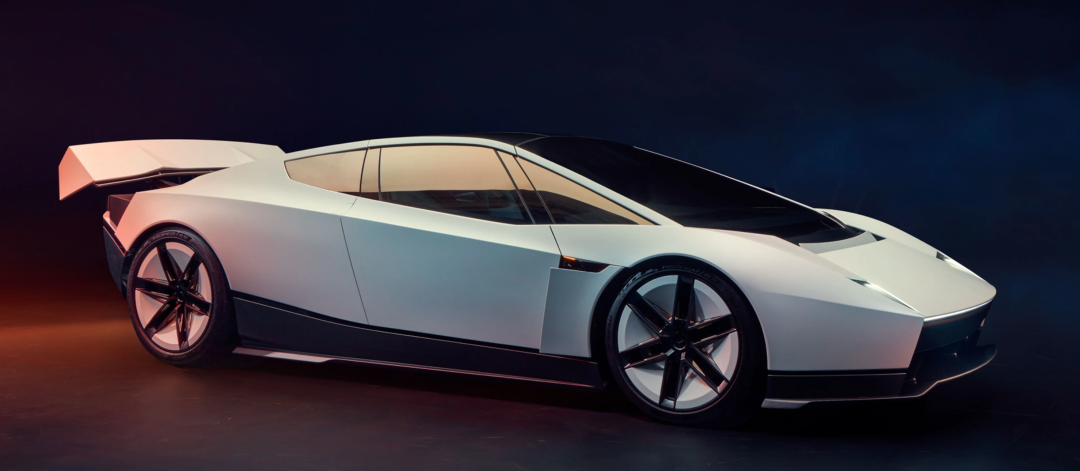
All his output revolves around one question: If a car is already so fast that people doubt life, how can the next step break the limit?
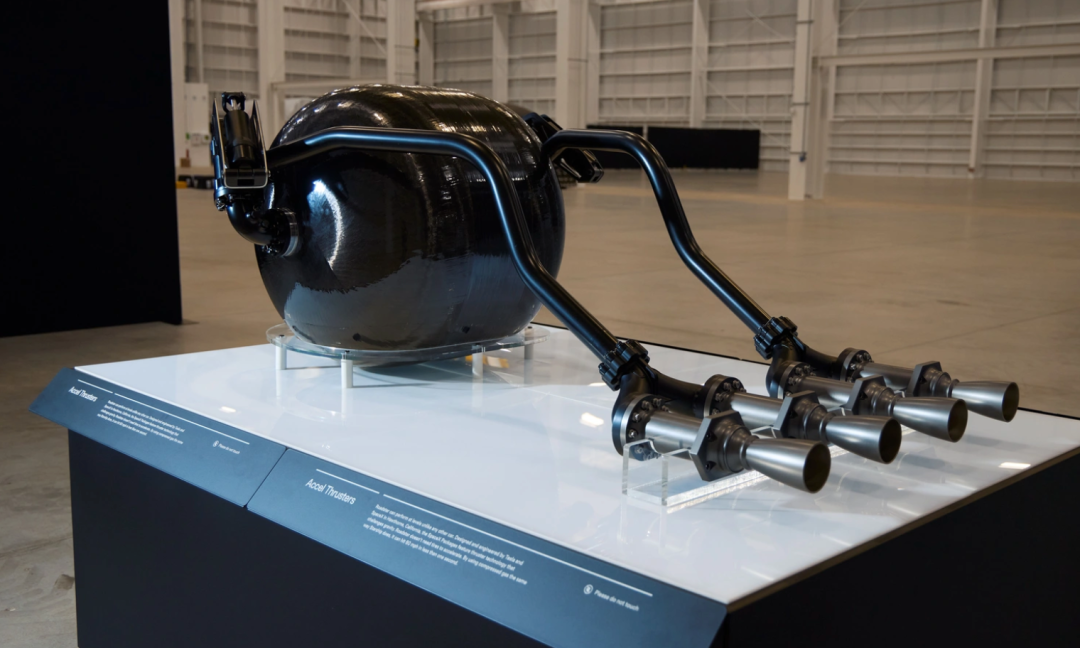
Qubit Robo has explained to you before that the Roadster uses a high-pressure cold gas propulsion system co-developed by SpaceX. It does not need to burn propellant to produce high-temperature gas. It mainly relies on the rapid release of high-pressure gas through the nozzle and uses reaction force to propel the vehicle.
This set of principles is no stranger to the aerospace field, namely action force and reaction force.
The vehicle first needs a high-pressure gas storage system - COPV, which can store nitrogen with a pressure up to 10,000 PSI, which is approximately 68.9 MPa. The tire pressure of ordinary passenger cars is usually only a few hundred kilopascals, a difference of two orders of magnitude.
The system thrust given by Moravy exceeds 80kN, which is equivalent to approximately 8.2 tons of force when converted into a more familiar unit.
——Equivalent to the thrust of a MiG-29 RD-33 engine with afterburner turned on——The Performance version accelerates from zero to 100 seconds in about 1.6 seconds, the Thrust version takes about 0.85 seconds, and the Rocket version claims to reach 0.55 seconds.
This kind of terrifying power performance is indeed not something that can be achieved by traditional automobile industries such as internal combustion engines and electric motors. It is assisted by rocket thrusters behind it.
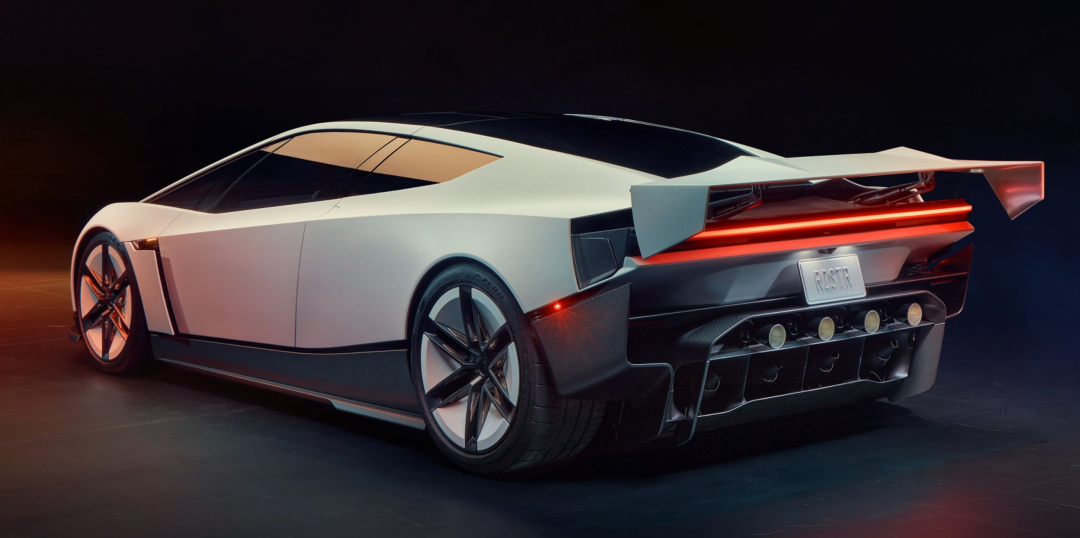
What determines the thrust includes gas mass flow rate, nozzle structure, gas temperature and pressure, and valve opening speed.
For the first time, officials have made it clear that the system is still online even on the ground
:This is the closed-loop control behind it: measuring the state, calculating the deviation, applying control, and then continuously correcting it based on feedback.
If the vehicle wants to maintain a stable attitude when accelerating, it must consider the relationship between the thrust line of action and the vehicle's center of mass; if it also wants to control yaw and pitch, it requires nozzles in different directions to work together.
So the propulsion plan includes nozzles at the four corners of the body and a front nozzle for yaw control.
Taking rocket flipping as an example, the system first determines the current attitude and rotation speed of the rocket body, calculates the torque that needs to be applied, and then controls the corresponding cold air thruster injection. After the rocket body starts to rotate, the IMU continues to feedback the new rotation state, and the computer adjusts the injection timing and duration accordingly; when approaching the target attitude, the system needs to reduce the thrust and, if necessary, apply reverse torque to slow down the rocket body and stop it at the target angle.
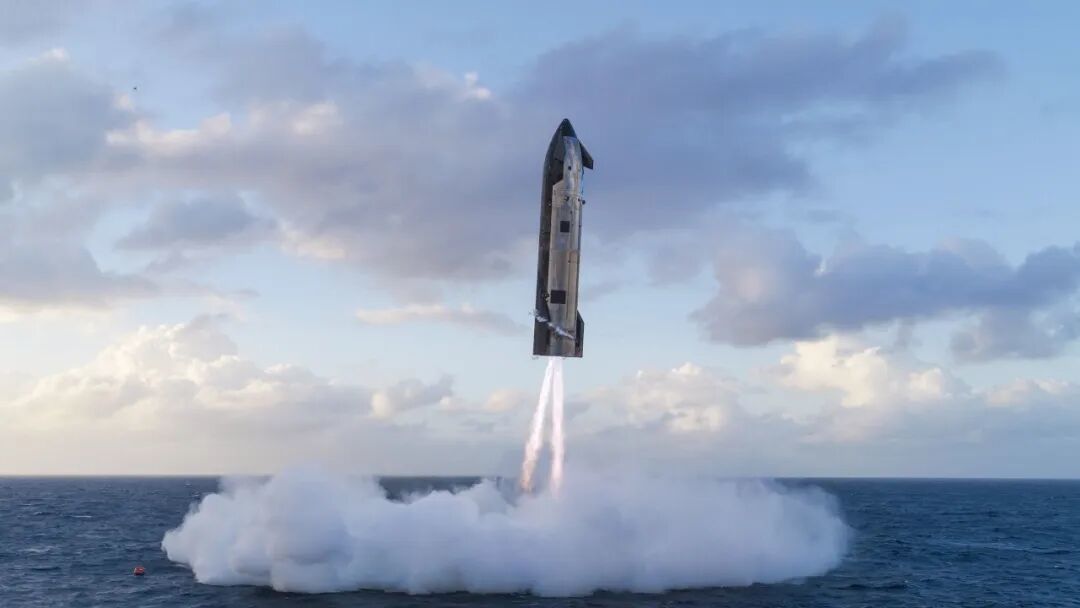
Therefore, it is only the basis that the propeller can produce thrust. What really allows the rocket to flip over accurately is the control system's continuous measurement of the status of the rocket body and its ability to adjust thrust in real time based on feedback.
Roadster uses thrusters to complete similar mid-air attitude adjustments. The control logic also needs to solve the same type of problems: determine the attitude and rotation speed of the car body in real time, coordinate the nozzles at different positions to generate the required resultant force and torque, and stop the rotation in time when the target attitude is reached.
It can be basically inferred that Roadster uses the same technical basic framework as SpaceX, but has been re-adapted based on the physical characteristics and nozzle layout of the vehicle itself.
At this point, the roots of the propeller hardware and attitude control algorithm of the flying supercar Roadster have been clarified.
People generally thought that this was all the secrets of Roadster, until Moravey was caught off guard and revealed another black technology——
Key components of embodied intelligence are also on board
It seems a bit jumpy at first glance.
Robots have to step, stand, and adjust their posture, while cars have to travel at high speeds. The working environments of the two products are very different.
But from the perspective of actuators, they have one thing in common: they all need to accurately control the position and movement of mechanical components and respond in time when the load changes.
The leg joints of humanoid robots need to withstand huge impact forces instantly when walking and jumping.
It naturally has the advantages of high power density, huge torque output and millisecond-level response
.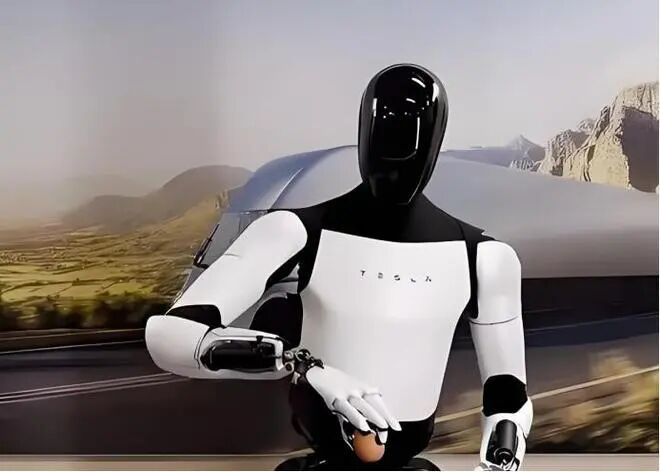
Tesla reused this core component of the robot into the supercar, which not only solved the control problem under extreme mechanical loads, but also demonstrated the ultimate reusability of Tesla's self-developed underlying hardware across product lines.
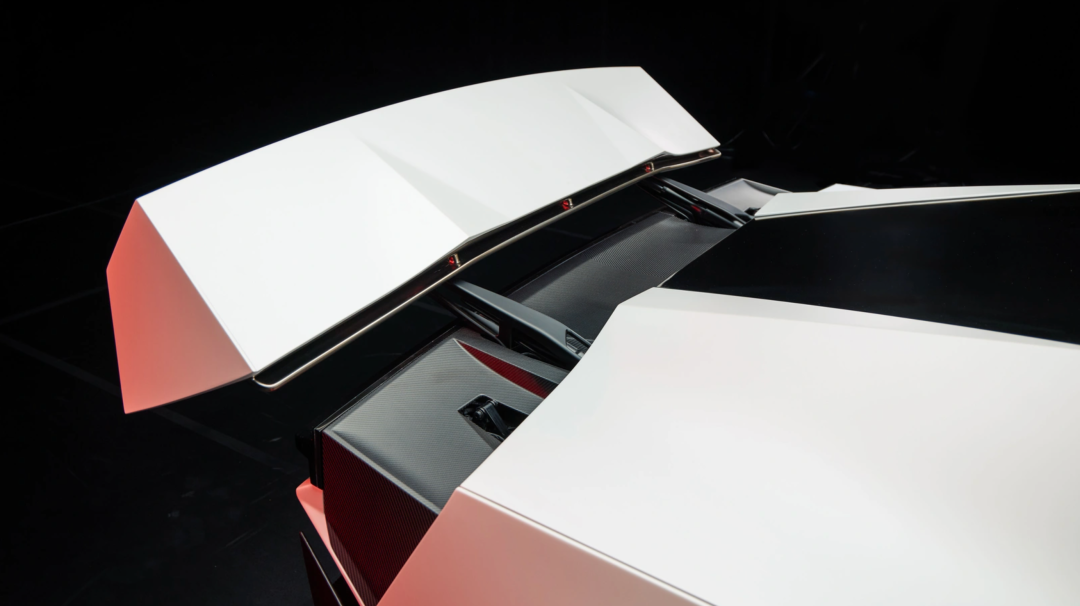
The first application is to actively adjust the rear spoiler
: At the extreme high speed of 200mph, the active aerodynamic rear wing needs to withstand huge wind resistance and downforce of up to several thousand Newtons.But the small motors of ordinary cars simply cannot adjust the attitude quickly under such a huge mechanical load.
Tesla directly borrows the high-torque actuators from the legs of the Optimus humanoid robot to powerfully drive the rear wing, and adds an additional mechanical brake locking mechanism (Brake), which allows the rear wing not only to switch between high downforce mode (High Downforce Mode) and low drag mode (Low Drag Mode) with millisecond precision, but also to be firmly locked under extreme airflow impact.
The second application is
precise high-pressure gas valves that control SpaceX’s cold air injection system
.The internal air pressure is as high as 10,000 PSI. Although the fluid structure design of the valve itself is indeed derived from SpaceX, in the ground environment, it is necessary to push open and accurately fine-tune a gas valve that can withstand a pressure of 10,000 PSI in milliseconds, which requires extremely high driving torque.
So Tesla once again introduced the Optimus leg actuator to control the opening, closing and stroke of the high-pressure valve, thereby achieving refined control of supersonic jet airflow and vector thrust.
What other breakthroughs are there in the Roadster chassis and Sanden?
Rocket propulsion and robotic actuators are responsible for creating a sense of freshness and pushing the limits of automotive physics.
But its performance foundation still relies on electric drive, chassis and tires to support it.
There are still a lot of innovations in the chassis and the three electric components.
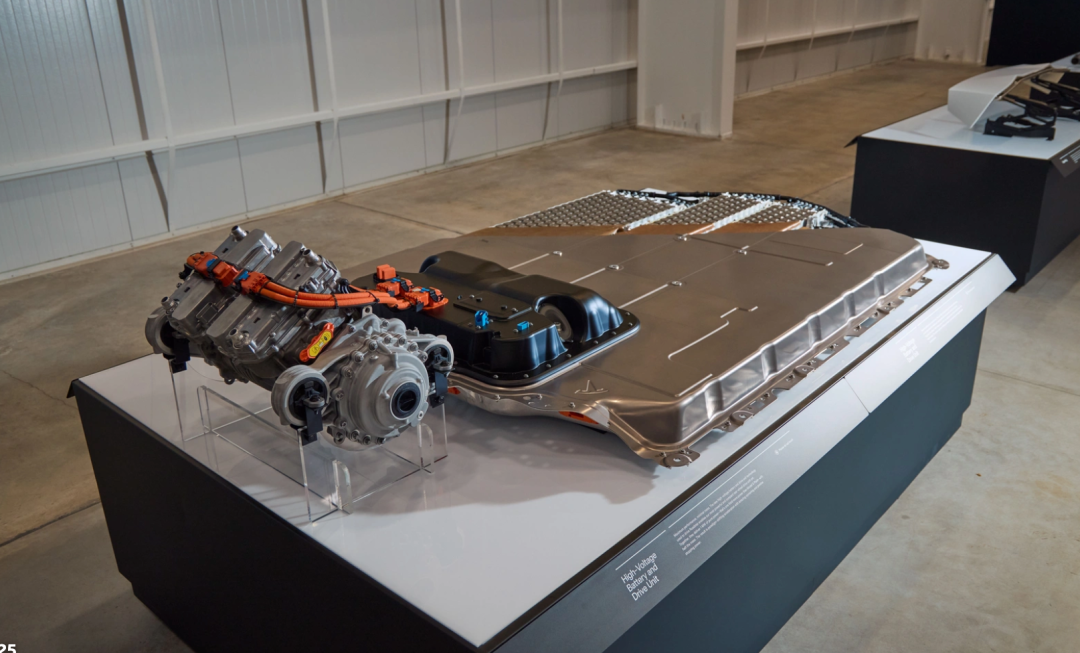
First of all, the Roadster does not have multi-motor four-wheel drive, but uses a rear-wheel dual-motor layout. The officially disclosed total power exceeds 1 MW and the torque exceeds 1400 N·m. With the planetary gear reduction mechanism and a reduction ratio of about 8.4:1, the vehicle can independently adjust the driving force of the left and right rear wheels.
This provides more control over power distribution in corners.
In terms of battery, Roadster uses 4680 cells, aluminum cell casing and double-sided cooling design, and uses a high-voltage platform of approximately 800V.
The significance of double-sided cooling is relatively straightforward: giving the battery core more heat dissipation paths helps improve heat transfer and temperature uniformity. For high-performance electric vehicles, this is important because the battery and electric drive generate a lot of heat when outputting high power, and temperature control will affect whether the system can work stably.
As for the 10-minute charging, the final effect also depends on the battery capacity, charging curve, ambient temperature and the actual output capability of the charging device.
The chassis has to face another real problem: the more radical the performance, the more the body needs to control the weight and posture.
The vehicle weight target given by existing data is below 1700 kg
; After entering track mode, the suspension can also be lowered by about 40 mm and adjust the stiffness.The lower body and tighter suspension settings help control body movements, but the final performance is still determined by the overall vehicle tuning.
The next step is Roadster’s most imaginative innovation:
Active aerodynamics
.The rear wing, chassis and body shape of a car mainly rely on the relative movement between the vehicle and the air to generate downforce.
The higher the speed, the more obvious the aerodynamic effect, so
Roadster is also equipped with adjustable front wings, side air deflectors and active rear wings
, trying to adjust the airflow according to different speeds and driving conditions - the actuator is the same model as the embodied intelligence mentioned earlier.The official statement is that the vehicle can obtain up to about 2G of downforce at speeds exceeding 200 mph.
However, the 2G here describes the relationship between downforce and vehicle weight. It cannot be directly understood to mean that the car can withstand 2G lateral acceleration when cornering.
How fast a vehicle can corner is still limited by factors such as tires, road surface, suspension and vehicle control.
The aerodynamic kit that can be actively adjusted actually solves the problem of "passive" grip, which is the performance requirement under high-speed airflow.
But the Roadster also wants to obtain stronger grip at low speeds, which leads to the fan system under the car.
Moravey revealed that the chassis is equipped with four fans of about 20 kW, and the airflow under the car is controlled through independent skirts.
The fan draws out the air under the chassis, creating a pressure difference between the bottom of the car and the outside world, thereby pressing the car body against the road. Since this mechanism is not entirely dependent on vehicle speed, it can theoretically provide additional downforce at low speeds.
However, fan power cannot be directly converted into downforce. Actual results are also affected by pressure differential, air flow, skirt sealing, road surface conditions and suspension movement. The fan will also bring additional weight, energy consumption and thermal management burden, so how to work with the active rear wing is the real problem that the entire solution needs to solve.
Looking at these technologies together, Roadster’s idea becomes clearer:
The electric drive system is responsible for the continuous output of power, the active aerodynamic components are mainly responsible for high-speed driving, the fan tries to make up for the downforce at low speeds, and the cold-air propulsion system provides short-term additional thrust.
How do these technologies work together in several extreme scenarios?
Let’s look at starting acceleration first. The dual motors on the rear wheels are responsible for transmitting power to the road, and the cold-air propulsion system attempts to provide additional thrust in a short period of time. The two systems need to coordinate the output timing and direction to avoid uncontrollable attitude changes of the vehicle during acceleration.
When it comes to high-speed corners, the active rear wing and body deflection structure come into play to help the vehicle build downforce; the independent driving force control of the left and right rear wheels also provides more space for adjusting the vehicle's attitude. If the vehicle is operating at lower speeds, underbody fans have the opportunity to supplement conventional aerodynamics.
Look again at the process of approaching the apex of the bend after high-speed braking. As the vehicle speed decreases, the downforce generated by the rear wing that relies on airflow will also weaken. The fan system can theoretically continue to provide a certain amount of adsorption force at this stage. But whether it can function stably in real driving depends on the system response speed, the cooperation between the skirt and the road surface, and the vehicle control strategy.
As for the short-term lift off the ground, the air-conditioned propulsion system is undoubtedly the most eye-catching part. However, generating enough upward thrust is only a prerequisite for getting the vehicle off the ground. The vehicle also needs to control pitch, yaw and roll, and handle attitude changes after leaving the ground and landing impact. Based on peak thrust data alone, it is impossible to judge whether the vehicle can complete this process repeatedly and stably.
These scenes also show that Roadster’s technical solution is not just about putting several high-performance components on the same car. The action time, control speed and working conditions of different components are different. How to integrate them into a reliable vehicle system is the key to engineering implementation.
One more thing
Q: How powerful is Musk’s fart?
Now there is an official answer: equivalent thrust of 8.1 tons.
And it is authoritative data confirmed by Lao Ma himself.
Roadster became a big hit, and people from all walks of life were discussing it, including LeCun, one of the three giants of deep learning who is very familiar to our Qubit readers. He questioned the efficiency of Roadster’s propulsion method and directly attacked:
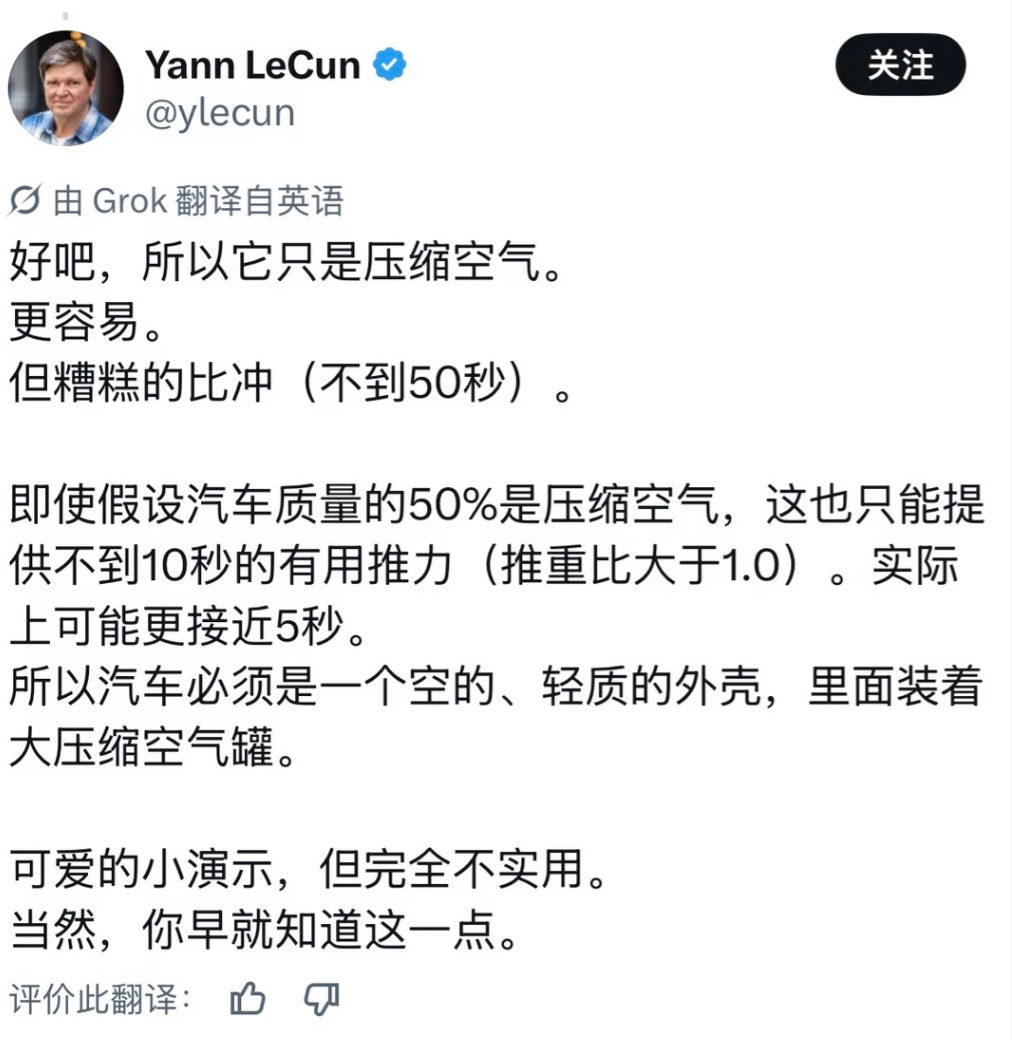
Lao Ma did not present any data to make sense, but directly replied:
I’ll blow your ass off
:
According to Tesla’s official data, we now know that this fart has a thrust of 8.1 tons, so Lecun counterattacked:
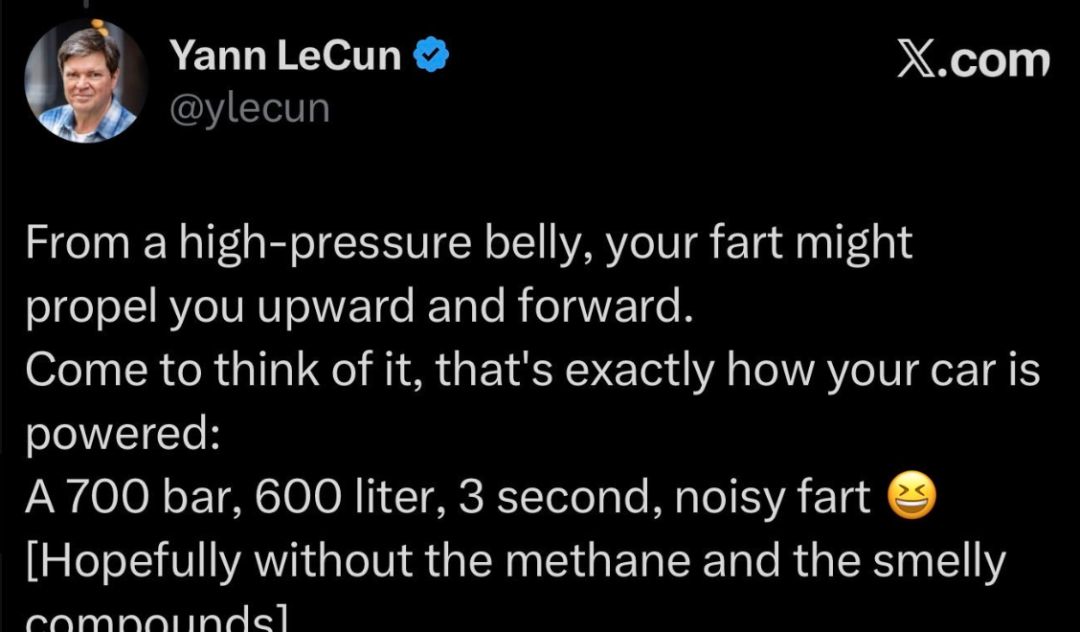
"This fart will knock you off your feet."
Comments