
Abstract:
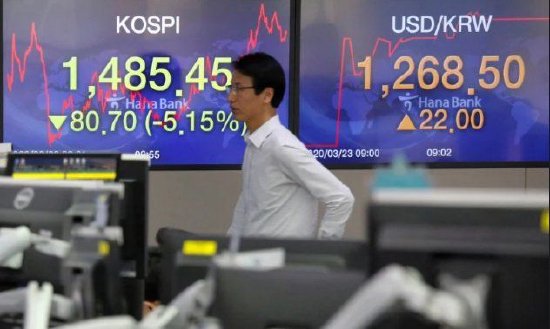
As the artificial intelligence investment boom cools down, South Korea’s stock market is facing the dual pressure of large-scale withdrawals of foreign investors and a sharp decline in market trading activity. Exchange data shows that since this year, foreign investors have withdrawn a total of US$131 billion from the Korean stock market, ranking first among major Asian markets in terms of outflows. The total market value of the Korean stock market is approximately US$4.3 trillion, and market turnover has shrunk by 70% from the high point at the end of May. The benchmark KOSPI index has fallen by 22% since the second half of 2026. Previously, driven by demand for AI memory chips, KOSPI became the world's best-performing major stock index in the first half of the year.
AI chip market reverses, Samsung and SK Hynix become main sources of pressure on the market
The strong rise in the South Korean stock market in the first half of this year was largely due to the growth in demand for memory chips driven by the construction of artificial intelligence infrastructure. As the world's major memory chip manufacturers, Samsung Electronics and SK Hynix have directly benefited from the expansion of investment in AI servers and high-performance computing. The two companies together account for more than 50% of the weight of the KOSPI index, and their stock price performance has an important impact on the overall Korean market.
However, as investors begin to question whether the growth cycle of the semiconductor industry can be sustained, the rising structure of the Korean stock market, which was previously highly dependent on the AI memory chip sector, has gradually become a source of risk. Samsung Electronics on Thursday reported a nearly nine-fold year-on-year rise in quarterly operating profit, but the company's shares still fell, reflecting that the strong earnings data for the period failed to allay investor concerns about future chip demand.
As the share prices of Samsung and SK Hynix came under pressure, the Korean stock market also turned from the world's leading market in the first half of the year to one of the major markets with larger declines in the second half.
Foreign capital withdrew US$131 billion during the year, and stock buyback support weakened
The continued divestment of foreign investors has further intensified the downward pressure on the Korean stock market. According to data from the Korea Exchange, foreign investors have net sold approximately US$131 billion in Korean stocks this year, the largest outflow among major Asian stock markets.
At the same time, market support from share buybacks of listed companies is also weakening. The total scale of the stock repurchase plans previously implemented by Samsung Electronics and SK Hynix reached 55 trillion won, approximately US$41 billion. Both companies are currently close to completing relevant plans.
As large-scale buybacks wind down, the market may lose some important share buying demand. Amid continued outflows of foreign capital, the weakening of buyback support has further made it more difficult for the Korean stock market to attract new funds.
Retail trading activity has declined, and both financing balances and securities margins have shrunk
In addition to foreign investors, the participation of local retail investors in South Korea is also declining. Since the stock market suffered a sell-off in July, the scale of financing transactions and the fund balances of brokerage clients in the Korean market have decreased significantly.
Look specifically:
The balance of margin financing and securities lending: fell to approximately 33 trillion won from the peak of 38.6 trillion won in June, a decrease of approximately 14.5%.
The margin and deposit balance of securities firm customers: dropped from nearly 140 trillion won to approximately 100 trillion won, a decrease of approximately 28.6%.
Market turnover: shrunk by 70% from the peak at the end of May, indicating a significant decline in stock trading activity.
The decrease in financing balances reflects the decline in the use of leverage by investors to participate in stock transactions, while the shrinkage of brokerage client fund balances indicates a decrease in funds available for stock transactions.
Under the combined influence of the withdrawal of foreign capital, the end of corporate buybacks and the decline in retail investors' willingness to trade, the problem of insufficient buying faced by the Korean stock market has further emerged.
The increase in the first half of the year still provides support, and the full-year yield performance is still relatively good
Although the Korean stock market suffered a sharp correction in the second half of the year, benefiting from the strong gains in the first half of the year, KOSPI is still one of the major markets that has performed relatively well since 2026.
At the same time, large global technology companies are still promoting investment in artificial intelligence infrastructure, and related demand continues to provide certain long-term growth support for the semiconductor industry.
However, the short-term trend of the Korean market has shown that investors’ expectations for different links in the AI industry chain have diverged. The market's confidence in the continued growth of memory chip demand has weakened, while interest in Taiwanese technology stocks, which cover a wider industrial chain, has increased.
The current core problem in the Korean stock market is that Samsung Electronics and SK Hynix together account for more than half of the weight of KOSPI, making the index highly sensitive to the memory chip boom cycle. Against the background of the large-scale withdrawal of foreign capital, cooling of retail transactions and the gradual end of corporate buybacks, whether the demand for AI memory chips and the profit growth of related companies can be sustained in the future will become an important factor in whether the Korean stock market can resume its rise.
Comments