
Abstract:
Apple has brought a new option called overwrite storage to the iPhone in the iOS 27.2 beta version. This option can be provided when the user attempts to erase data. When the overwrite storage option is selected, Apple will use a large amount of blank data to overwrite the storage area. After this operation, it is basically impossible to recover data through the memory chip.
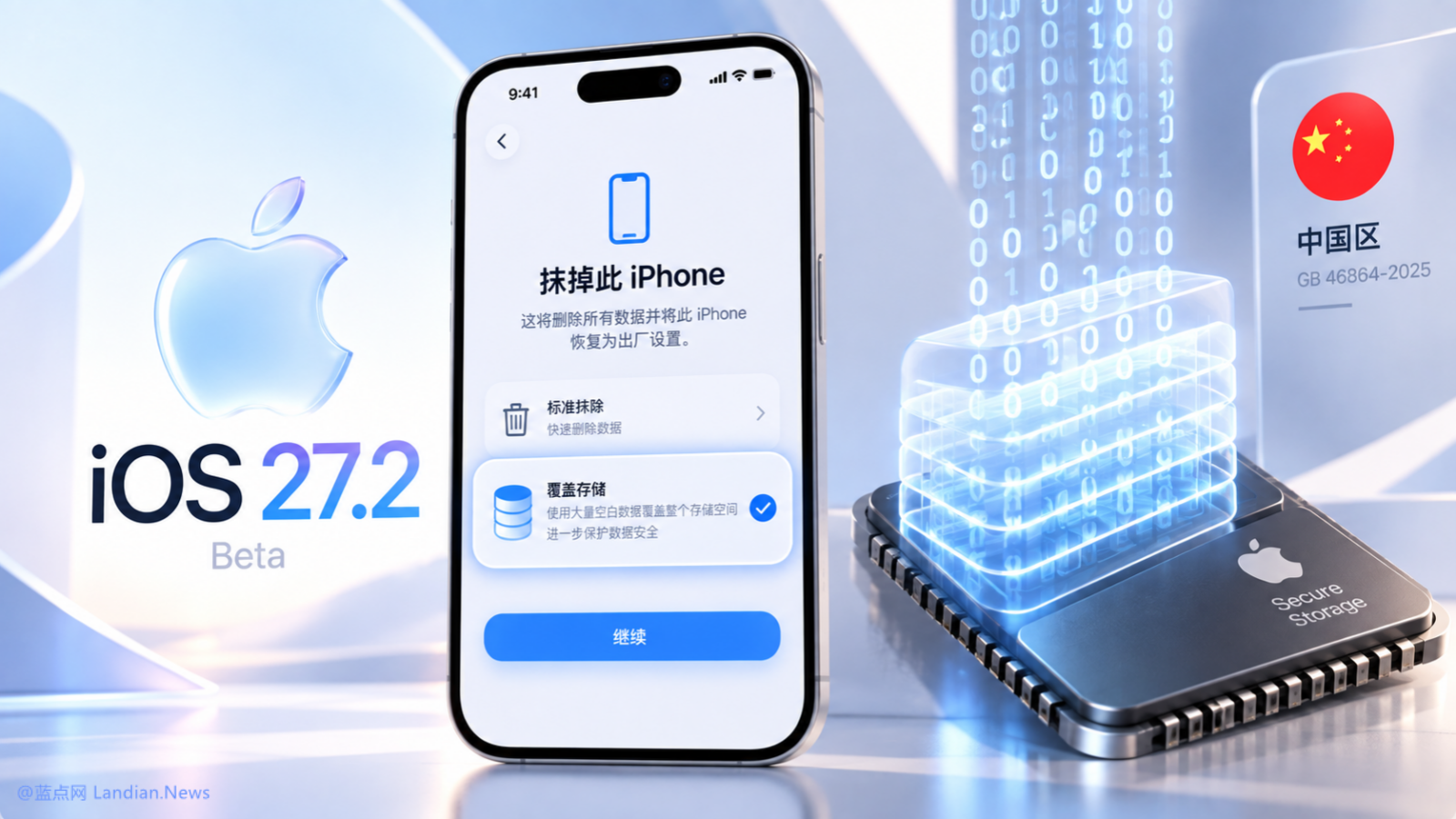
The principle is similar to PC data overwriting:
After deleting data from a mechanical hard drive through conventional methods, data can usually be recovered through special software. Flash drives such as solid-state drives have a lower probability of recovering data, but some professional teams may also be able to use professional software to recover some binary data and read out the contents stored therein.
This new feature added by iOS 27.2 Beta 1 is similar to the data overwriting we use on PCs, which generates a large amount of blank data to overwrite the storage unit. Apple's approach is to use blank data to overwrite the entire storage space, including unused storage space. In this case, it is unlikely that the original data can be restored.
However, overwriting with blank data means that all memory cells on the entire chip need to be overwritten. The larger the storage space, the longer the operation time. Therefore, Apple also stated in the prompt that using the overwrite function will take longer than the standard erase operation and may affect the life of the device (memory chip).
This feature is currently exclusive to the Chinese version:
Judging from the code, the data overwrite function will support devices such as iOS, iPadOS, watchOS, visionOS, and HomePod. What’s more interesting is that this feature is exclusive to devices in China. This may be a new feature developed by Apple to meet the GB 46864-2025 standard.
GB 46864-2025 is a national mandatory standard that will be officially implemented on January 1, 2027. The reason for drafting this standard is that the rapid replacement of electronic equipment, second-hand transactions and recycling may affect user data security, so electronic equipment must provide more complete data erasure methods to protect user privacy.
As for whether this function will be available to users in other countries in the future, it is still unknown. It stands to reason that this kind of function is better for users, so Apple may also open the data overwriting function to users in more markets in the future.
Comments