
Abstract:
The U.S. auto manufacturing industry is facing a new federally mandated hardware regulatory requirement. The U.S. House of Representatives recently formally voted to pass the AM Radio for Every Vehicle Act with rare cross-party overwhelming support. The bill requires the U.S. Department of Transportation and the National Highway Traffic Safety Administration (NHTSA) to issue formal regulations to force automakers to make traditional AM radios standard equipment on all new or imported passenger cars, trucks, and SUVs, and to prohibit charging additional fees or subscription service fees to consumers.
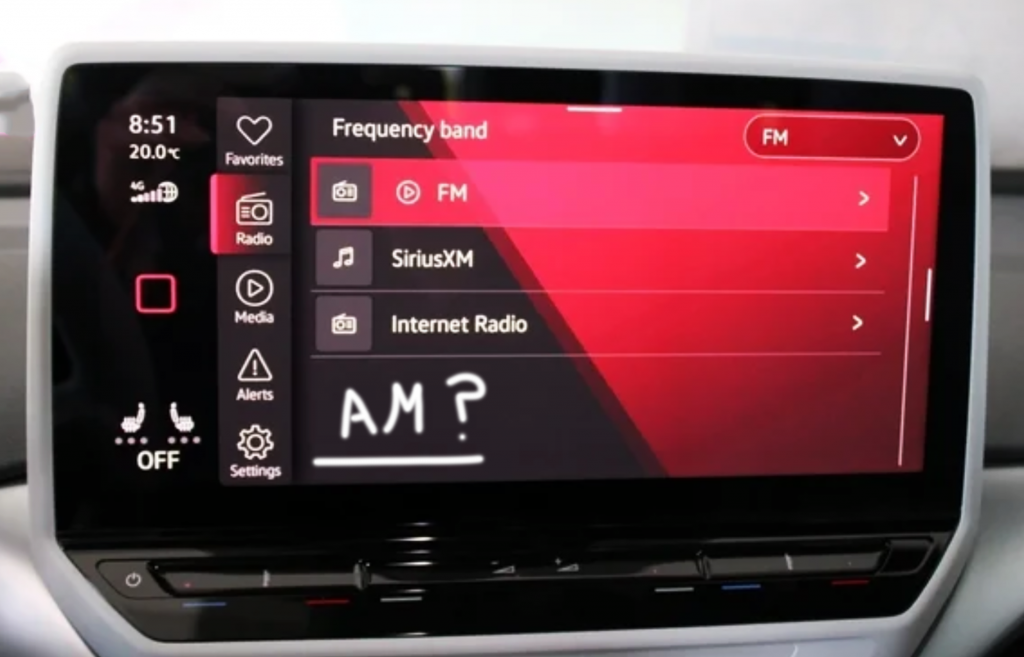
The advancement of this bill directly stems from the automotive industry's accelerated trend in recent years away from traditional AM broadcasting. With the popularity of intelligent connected cars and the overall transition to electric vehicles (EVs), many car companies, including Tesla, Rivian, BMW and Volvo, have successively canceled analog AM receiving modules in some new mass-produced vehicles, and instead implemented streaming media platforms (such as TuneIn or iHeartRadio) and satellite radio based on car-machine cellular network connections. The engineering explanation generally given by car companies is that the high-voltage motors and power electronic inverter systems of modern electric vehicles produce strong electromagnetic interference (EMI). This stray electromagnetic field can easily interfere with AM band signals and cause audio distortion. To eliminate interference and retain crisp sound quality, a lot of additional wiring harness shielding and hardware filtering costs are required.
However, U.S. lawmakers and emergency communications authorities have expressed strong concerns about this "reduction" move by car companies. Members of Congress who support the bill pointed out that AM broadcast has the natural physical characteristics of extremely long transmission distance, strong signal penetration and does not rely on modern fragile network infrastructure. It has always been a key backbone carrying network for the national public warning system across the United States. When extreme natural disasters or sudden public safety crises such as hurricanes, earthquakes, and snowstorms occur, causing ground power grids to be paralyzed, cellular base stations to lose power, and fiber-optic Internet to be interrupted, vehicle-mounted analog AM radios are often the only channel for trapped people and drivers to receive official disaster prevention and rescue instructions and life safety warnings. If it is downgraded to a streaming media application that relies on mobile networks, it will be completely reduced to a display in extreme disconnection scenarios.
After successfully passing the House of Representatives, the bill has been submitted to the Senate for consideration. Since the Senate version of the bill has been co-led by key senators from both parties and has received sufficient co-signer support in the Senate to cross the filibuster threshold, outsiders expect that the bill will have a high probability of being approved in the Senate and eventually signed into law by the president.
Once the bill officially takes effect, U.S. transportation regulators will have one year to formulate specific implementation details and enforce them on all car companies selling in the United States during the subsequent transition period. The Alliance for Automotive Innovation, which represents major vehicle manufacturers, has repeatedly lobbied against this, claiming that mandatory installation and shielding will bring billions of dollars in compliance modification costs to the entire industry. However, this commercial appeal ultimately failed to block the legislative will of public safety. That means automakers trying to completely retire old broadcast hardware that relies on software subscriptions and streaming services will have to weld this century-old communication device back into the smart cockpit of the future.
Comments