
Abstract:
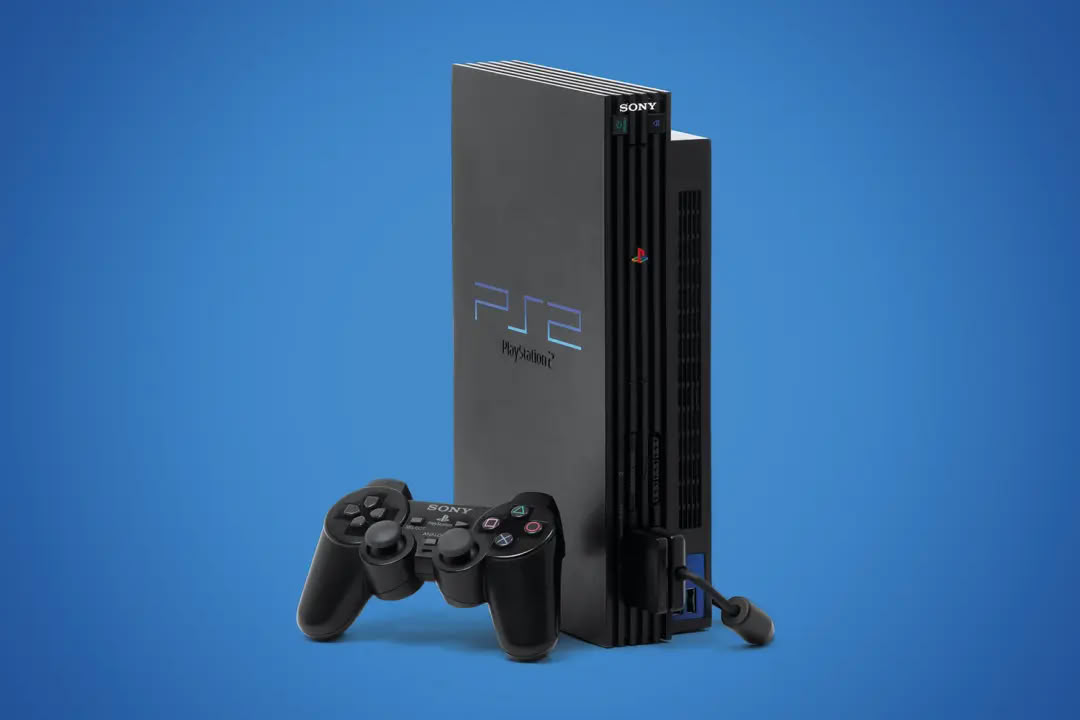
Twenty-six years after the launch of Sony's PlayStation 2 console, one of the platform's last major hardware secrets has finally been broken. DiscoStarslayer, a retro hardware enthusiast and security researcher from Canada, recently announced that after four years of reverse engineering research, it successfully broke through the key CXP102064 MechaCon security chip inside the original "thick machine" PS2 and successfully extracted its internal firmware data.
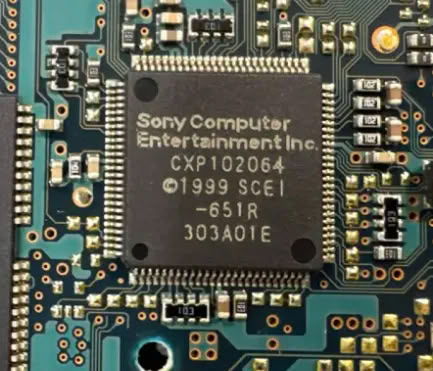
The MechaCon chip is mainly responsible for coordinating and managing the PS2 console's optical drive mechanical control, flash memory mechanism, and the entire machine's anti-piracy security verification system. It plays an extremely core role in Sony's hardware defense line. It not only directly handles disc certification, but is also responsible for coordinating the MagicGate memory card encryption and executable file (KELF) decryption process. For more than two decades, this highly integrated chip has always been a "hardware black box" that has not been fully decrypted.
In order to overcome this security line of defense, the research team carried out extremely rigorous and tedious physical and chip-level reverse engineering work. The researchers first used a chemical decapping process to peel off the outer package of the chip to expose the silicon wafer, and then used a microscope to conduct layer-by-layer optical scanning and circuit structure analysis. On this basis, co-developer Libby found the key logic loopholes in the chip based on preliminary optical dump data, and finally realized the complete extraction of all underlying data and firmware of the MechaCon chip through a pure software solution.
The influence of this reverse breakthrough is not limited to the field of home consoles. Since many classic arcade baseboards such as Namco's System 246 and System 256 and Konami's Python 1 are also built on the PS2 architecture and use the same MechaCon chip for firmware authentication and encrypted data execution, this research result will also directly promote the preservation and technical reproduction of a large number of classic arcade game heritage.
For the retro gaming community and hardware and software geeks, radical transparency into the inner workings of MechaCon will bring far-reaching changes. On the one hand, it can significantly improve the simulation accuracy of existing PS2 emulator projects and simplify the homebrew software development process; on the other hand, as original physical optical drives are increasingly aging and damaged, this research greatly increases the possibility that the community will develop a truly native optical drive emulator (ODE) in the future, allowing players to run digital game images perfectly on original hardware without relying on fragile mechanical laser heads.
Comments