
Abstract:
Apple was accused of putting pressure on Fine M-Tec, a parts supplier for its first foldable screen phone iPhone Duo, to withdraw a public statement denying that its parts had quality problems. As the cracked screen incident continues to unfold, the relationship between the Korean supplier and Apple has also come under scrutiny.
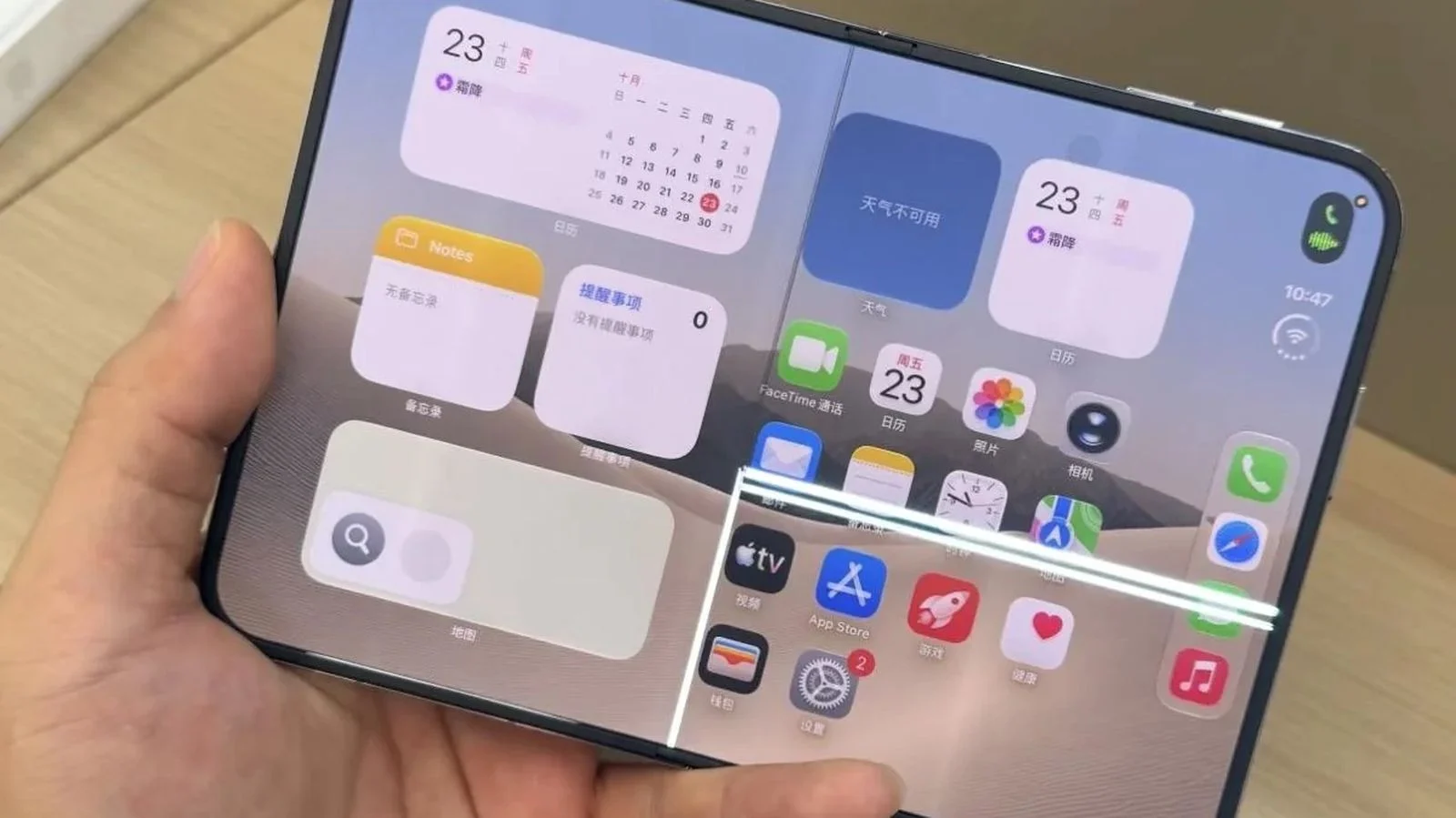
Fine M-Tec is a supplier of components related to the hinge structure of the iPhone Duo. It is said to be responsible for providing the internal metal plate that supports the folding screen. Previously, some iPhone Duo users reported that cracks appeared on the phone's inner screen along the folding hinge, and some devices were also accompanied by pixel abnormalities and screen damage.
Faced with external accusations about parts quality issues, Fine M-Tec issued a statement on its official website on October 26, titled "Official Position on Quality Issues in Customers' New Products." The statement stated that the recent quality problems with some products were not caused by quality defects in the parts supplied by the company.
Fine M-Tec did not directly name Apple or the iPhone Duo in the statement, but said it issued the statement in response to allegations related to suspected short-selling behavior and warned that it would consider taking legal action against spreading unverified information.
However, this statement disappeared from the official Fine M-Tec website shortly after its release. As of November 4, the relevant content is no longer accessible. Subsequently, Korean media DealSite reported, citing industry sources, that Apple may have pressured suppliers to withdraw their statements.
The Elec reporter Kim Geon further disclosed in an editorial published on November 17 that a Fine M-Tec representative had contacted him to request the deletion of a previous report about the company's withdrawal of the statement. According to the representative, Apple objected to the supplier publicly denying that its parts were responsible for the screen failure.
This means that the reason for Fine M-Tec's withdrawal of the statement may not only involve its own public relations strategy, but also Apple's attitude towards supply chain information disclosure. However, the current claims about Apple’s pressure mainly come from South Korean media reports on supplier representatives and industry sources. Apple has not publicly responded to this accusation.
The screen cracking problem of iPhone Duo first attracted attention on the day it was launched on October 23. Some users uploaded photos on social platforms and MacRumors forums of the device's inner screen cracking along the hinge. One of the Australian users said that the screen of his mobile phone was damaged after opening it less than 20 times, and he heard an obvious abnormal sound when opening the device.
Apple later admitted that a small number of iPhone Duo devices had display problems that affected the internal screen and provided replacement services to affected users. However, the company did not announce the specific cause of the failure, nor did it explain whether the problem originated from the hinge design, component materials, or quality control during the production process.
Currently, Fine M-Tec has not been officially identified as the party responsible for the failure by Apple or other parties. Supply chain sources have previously claimed that the problem may come from defective materials used by a certain hinge supplier, rather than problems with the overall design of the hinge, but this statement has also not been confirmed by Apple.
This controversy has caused Apple to face pressure on two different levels: on the one hand, the company needs to find out the real cause of the cracking of the folding screen and ensure the quality of subsequent products; on the other hand, whether supply chain partners can openly discuss related quality issues has also become a new focus.
For Apple, iPhone Duo is its first product to enter the folding screen mobile phone market. Screen reliability and hinge durability are directly related to consumers' trust in this new product category. If the failure is ultimately proven to originate from a certain batch of parts, the scope of the impact may be relatively limited; but if it involves structural design or long-term reliability, subsequent processing will be more complicated. At present, Apple has not announced the complete results of the investigation.
Comments