
Abstract:
The U.S. Army recently awarded two contracts totaling US$192 million to Palantir and Anduril, of which Palantir received US$127 million and Anduril received US$65 million to promote the "Tactical Intelligence Targeting Access Node" (TITAN) artificial intelligence mobile ground station from the prototype stage to the mass production stage.
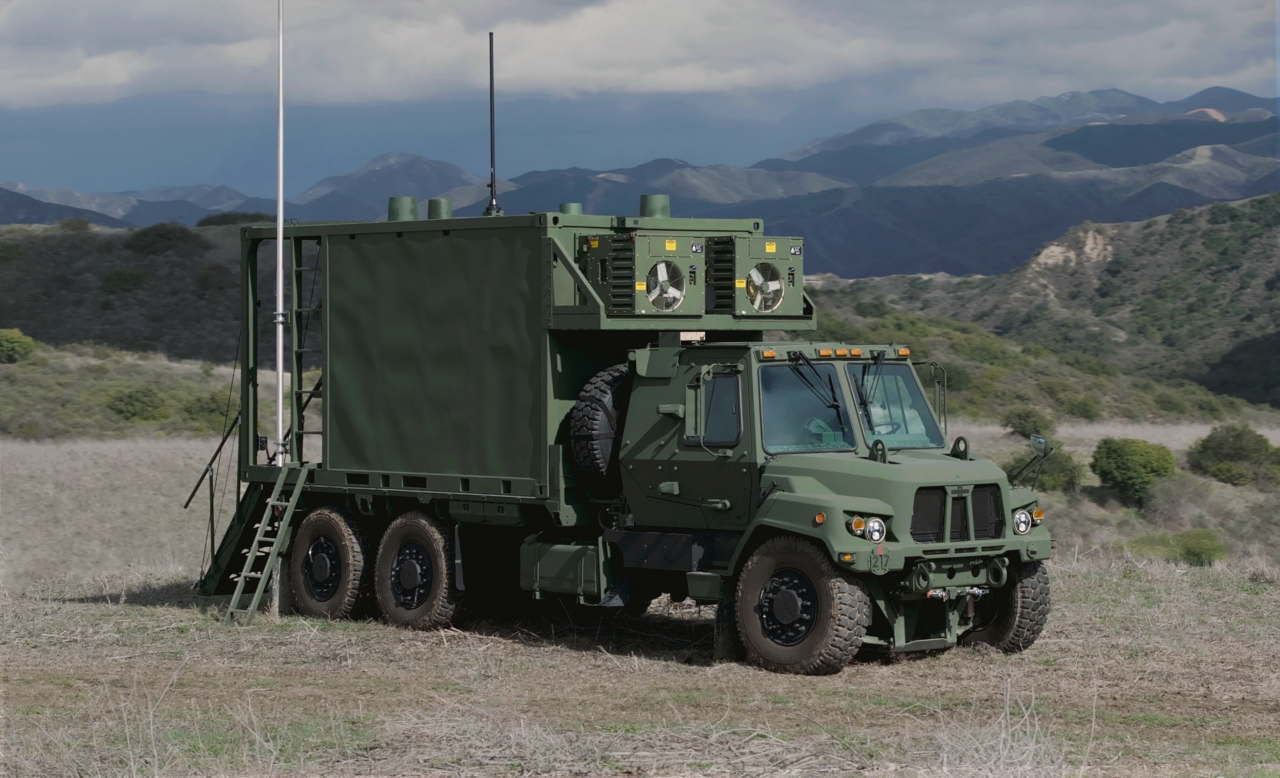
This order covers the first batch of 8 TITAN systems, including 4 "advanced models" with stronger processing capabilities and 4 "basic models" with smaller size and higher maneuverability. The systems will be delivered over the next 18 months.
As the main integrator of the project, Palantir will cooperate with Sierra Nevada Corporation, L3 Harris Corporation, etc. to promote the project. Anduril serves as the "chief architect of hardware systems" and is responsible for providing hardware subsystems and mission modules.
The U.S. Army stated that these 8 TITAN systems will directly join the 9 prototype systems currently retained and used in combat. After all mass production systems are delivered, the Army will initially have at least 17 TITANs.
The TITAN project is essentially a motorized, artificial intelligence-enabled sensor data fusion, processing and target indication center built by the U.S. Army for long-range precision firepower. The system is designed to integrate data from space, high altitude, air and ground sensors to provide commanders with directly actionable target information and compress the time between sensor detection and strike at the front edge of the battlefield.
Palantir introduced that the advanced TITAN is mounted on medium-sized tactical vehicles and has stronger data processing and system integration capabilities. The basic type emphasizes mobility and rapid deployment capabilities, and adopts a design that is independent of vehicle platform. However, the TITAN prototype system has been mounted on the joint light tactical vehicle and the lighter infantry team vehicle practical platform.
For a new project of the US Army, TITAN moved from prototype to mass production very quickly, with the whole process taking only about 5 years.
In 2021, Palantir and Raytheon Technologies won the initial software and system design tasks for TITAN. The following year, two companies were selected again to develop competing prototype systems.
In 2024, Palantir defeated Raytheon Technologies and won a contract worth US$178 million to deliver 5 advanced and 5 basic TITAN prototype systems. This is also the first time that a software company has been selected as the main contractor for a large hardware project.
Anduril has served as TITAN's chief architect of hardware systems since the project's inception. According to the latest volume production contract, the company will rely on its $20 billion enterprise agreement with the U.S. Army to manufacture "ruggedized vehicle systems" and integrate power, thermal management, control and operator subsystems to ensure that TITAN can operate in various environments where the Army deploys it.
The U.S. Army tested TITAN during the Project Convergence-Capstone 6 exercise. The exercise was the culmination of a multi-month Next Generation Command and Control series of exercises in which the Army ran sensor fusion and target designation processes through Anduril's Lattice command and control software. Lattice is the core software platform for the Next Generation Command and Control project.
The U.S. Army stated that the TITAN project will continue to advance and said that it "expects to award contracts to purchase additional TITAN systems in fiscal year 2027."
Akash Jain, chief technology officer and president of Palantir, said: "TITAN is shaped by the soldiers who actually use it, born in the environment where they perform missions, and tested to the standards they set. For a system like this, only through this process can it be qualified to truly enter the battlefield. We are honored to have the trust of the Army and thank the team that has always maintained the same investment and commitment. At the same time, we clearly understand that there is still a lot of work to be done ahead."
Comments