
Abstract:
Recently, four departments have issued new regulations to address the chaos of "crash cars" and move the regulatory focus forward to the source of research and development. Industry experts have also interpreted the risks and testing boundaries of crash cars.
Many people equate "crash cars" with models with short development cycles. Cui Dongshu, an industry expert, pointed out that judging whether a car is a crash car does not depend on the length of development time. The core lies in whether the verification process has been shortened.
Due to market competition and capital pressure, some car companies skip structural durability, high-temperature plateau and extreme cold calibration, and long-mileage reliability testing, and rush to market products that have not undergone complete reliability testing.
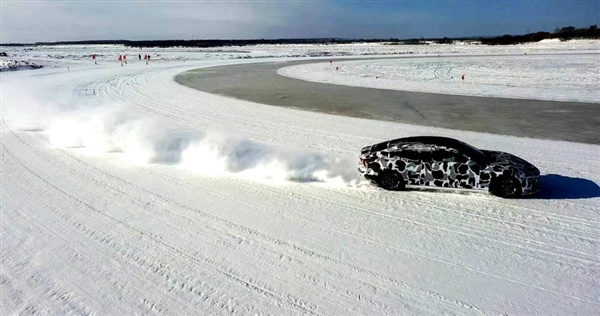
Platform reuse and digital simulation itself are reasonable means for the industry to improve R&D efficiency. Zhang Xiang, a researcher at the Automotive Industry Innovation Research Center of North China University of Technology, said that the acceleration of compliance is based on the reuse of mature technologies that have been verified by a large number of real vehicles. Simulation can reduce repeated experiments and save research and development costs.
However, the simulation model is built based on existing data and cannot 100% restore the complex physical conditions in reality. It cannot directly copy the simulation results of old models and apply them to new vehicles. If you rely solely on simulation and abandon physical verification to rush to the delivery node, this is the rapid car manufacturing criticized by the industry.
The safety risks of express vehicles are widespread. Chassis stress-bearing components, braking systems, door locks, door handles and other components are prone to breakage and failure in extreme environments. New energy vehicles are equipped with three electric systems and complex electronic architectures, and the coupling of the entire vehicle system is higher. Abnormal software codes and sensor signals will also bring driving risks.
Merely meeting the minimum access standards of the national standard does not mean that all reliability tests have been completed. Some car companies have only completed the basic verification necessary for launch, leaving a large number of potential problems for users to use and then OTA iterative rectification, passing the risk to consumers.
“Simulation can only be used as an auxiliary tool for research and development and cannot be used as a shield to skip real vehicle testing.”
Zhang Xiang emphasized that most working conditions of components can be simulated, but for projects such as collision testing, structural fatigue, and battery thermal runaway that are directly related to life safety, physical testing must not be omitted.
In reality, some companies are limited by costs and test site schedules, so they directly use simulation data to fill the gaps in real vehicle testing, using simulation results instead of real testing, posing safety risks.
The reason why the industry trend of "emphasis on listing and light on verification" arises from fierce market competition and capital survival pressure. The earlier a new model is launched, the more opportunities it has to seize market share. Many new energy vehicle companies are under operating pressure. Once the new vehicle delivery node is delayed, financing and corporate cash flow may be affected. Therefore, some companies choose to sacrifice the verification process and prioritize ensuring time to market.
Nowadays, the regulatory thinking has shifted from post-marketing result review to process control at the source of R&D, consolidating the main responsibilities of automobile companies and reversing the bad industry habit of "listing first, rectifying later".
It is difficult for ordinary consumers to have access to internal testing data of companies, but they can also pay attention to some reference signals:
The time from the official announcement of the project to the delivery of a model is greatly compressed, hardware failures occur one after another in a short period of time after the launch of new cars, frequent reliance on OTA to repair hardware-level problems, or large-scale recalls shortly after launch, all require consumers to pay more attention.
Comments