
Abstract:
As the global shipping industry continues to seek low-emission ocean shipping solutions, a new concept project with nuclear energy at its core is unfolding on both sides of the Atlantic. The “Pink Corridor” project, jointly participated by Lloyd’s Register, Maersk Group, the Port of Felixstowe in the United Kingdom and the Port of Charleston in South Carolina in the United States, was officially launched recently to assess the safety, regulatory and infrastructure conditions required for the construction of a transatlantic route for nuclear-powered container ships.
The so-called "pink channel" is named after the color code for nuclear energy in the energy and shipping industries. Unlike "green channels" that rely on clean energy such as green fuel and hydrogen, "pink channels" specifically refer to transportation corridors and supporting systems planned for the operation of nuclear ships.
Project participants pointed out that in the next ten years, a considerable number of nuclear-powered merchant ships may appear in the global maritime field. Some industry forecasts believe that by 2035, there may be as many as 50 nuclear-powered cargo ships in operation around the world. It is against this background that relevant companies and ports have begun to study in advance the various issues that nuclear energy merchant ships need to face when entering practical operation.
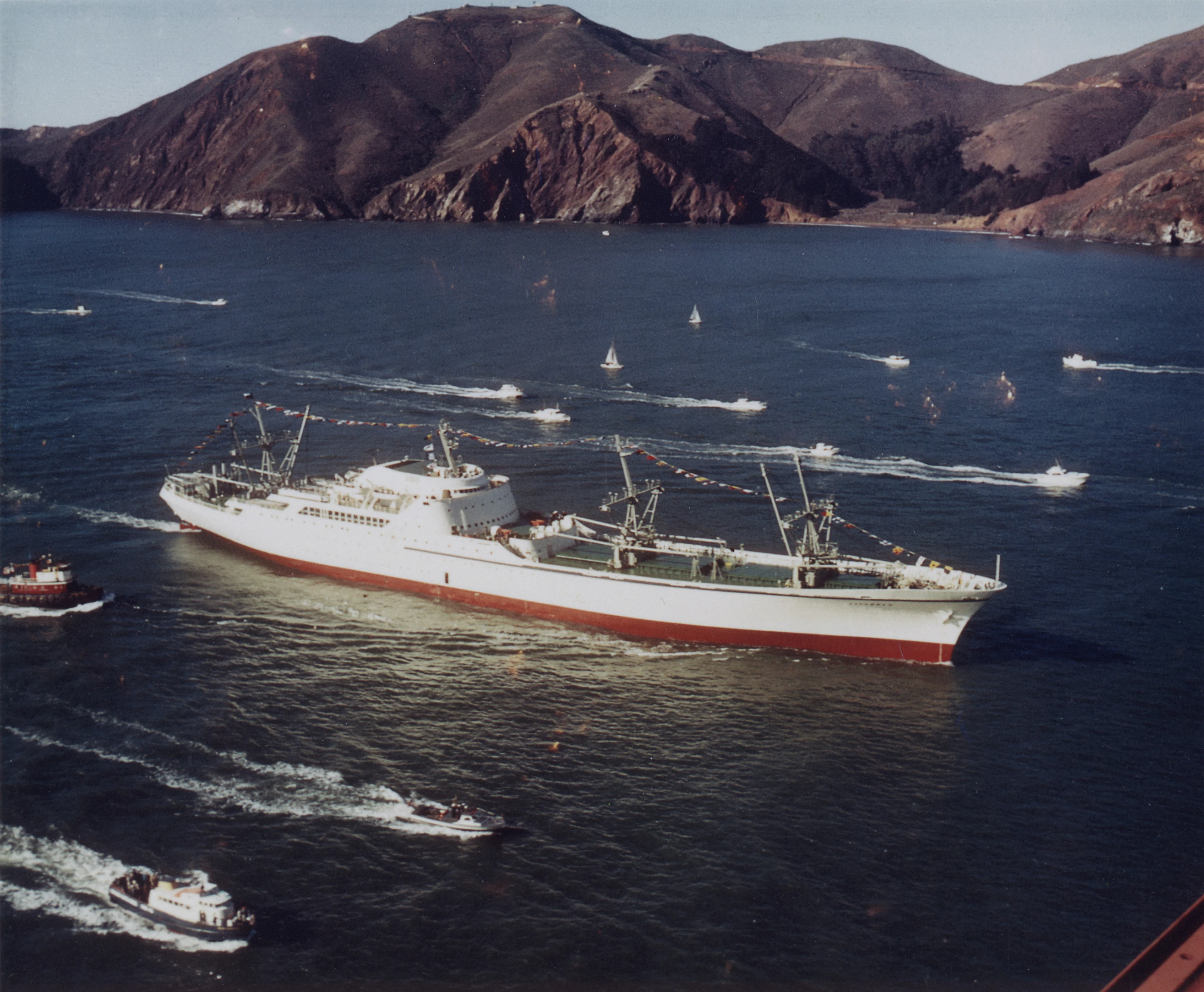
In fact, nuclear-powered merchant ships are not a new concept. As early as the 1950s, the U.S. government built the nuclear-powered merchant cargo ship "NS Savannah" under the framework of the "Atoms for Peace" program. At that time, people once envisioned ships powered by nuclear reactors to undertake global trade transportation tasks and achieve near-zero emission ocean navigation.
However, this vision did not ultimately become popular. Looking back at history, the problem lies not entirely with the ship itself, but with the fact that the entire support system has not yet been established. The port lacks corresponding facilities, the regulatory framework is not yet complete, and safety standards and emergency mechanisms are far from mature, making it difficult for nuclear-powered cargo ships to form a commercial operation network even if they are technically feasible.
This "Pink Channel" project attempts to solve these long-standing practical obstacles. Participants plan to use a conceptual nuclear-powered container ship as a research object to conduct a systematic evaluation of the transatlantic route from the Port of Charleston in the United States to the Port of Felixstowe in the United Kingdom. The ship design draws on previous research around floating nuclear reactors and uses advanced civilian nuclear reactor concepts as a basis.
The research focus will cover port access conditions, operation management models, and radiation safety measures suitable for large container terminals. The project team hopes to use this to understand what special facilities need to be established for the docking, loading, unloading and maintenance processes of future nuclear-powered cargo ships, as well as what modifications need to be made to the existing port system.
Security issues will become one of the core research directions of the entire project. Participants believe that for nuclear-powered cargo ships operating in the North Atlantic, the possibility of encountering hijacking on the high seas is relatively low, and trying to directly break into the reactor area itself will bring extremely high risks to the intruders. Therefore, the focus of future safety work will be more on nuclear fuel supervision and the protection of reactor control systems.
Among them, how to ensure the traceability of nuclear fuel during transportation and use, and how to prevent cyber attacks and physical damage to ship control systems, are all listed as key issues. In addition, the project will also study ship security systems, network resilience, emergency response mechanisms, insurance systems, and coordination issues between maritime supervision and nuclear supervision systems.
Lloyd's Register stated that the goal of the project is not to immediately put nuclear-powered merchant ships into operation, but to establish a cooperation framework for the possible future era of nuclear energy shipping and help the industry identify existing gaps, regulatory gaps and subsequent technical issues that need to be resolved, so as to prepare for the construction of a true nuclear-powered international shipping corridor in the future.
The project is also seen as part of the deepening cooperation between the United States and the United Kingdom under the framework of the Technology Prosperity Agreement. Both parties have previously committed to exploring civilian maritime nuclear energy applications, and this transatlantic “pink channel” study is considered an important attempt to promote the implementation of relevant goals.
As the global shipping industry faces increasingly stringent emission reduction requirements, nuclear energy, as a technical route that can provide long-term stable power and almost no direct emission of greenhouse gases during operation, is re-entering the horizons of governments and shipping companies. Although there is still a long way to go before large-scale commercial operation of nuclear-powered container ships, the "Pink Channel" project shows that the industry has begun to make preliminary arrangements for this possible future.
Comments