
Abstract:
Australia's vast Nullarbor Plain looks almost flat and featureless, but it hides a massive network of caves beneath the surface. A recent study by a Curtin University research team found that some seemingly ordinary shallow trenches on the plain may actually be surface traces left by a deep underground cave system that gradually collapsed upward over a long period of geological time.
This discovery will not only help find underground caves that were previously difficult to find, but may also provide a new method for finding underground caves on other planets such as Mars in the future.
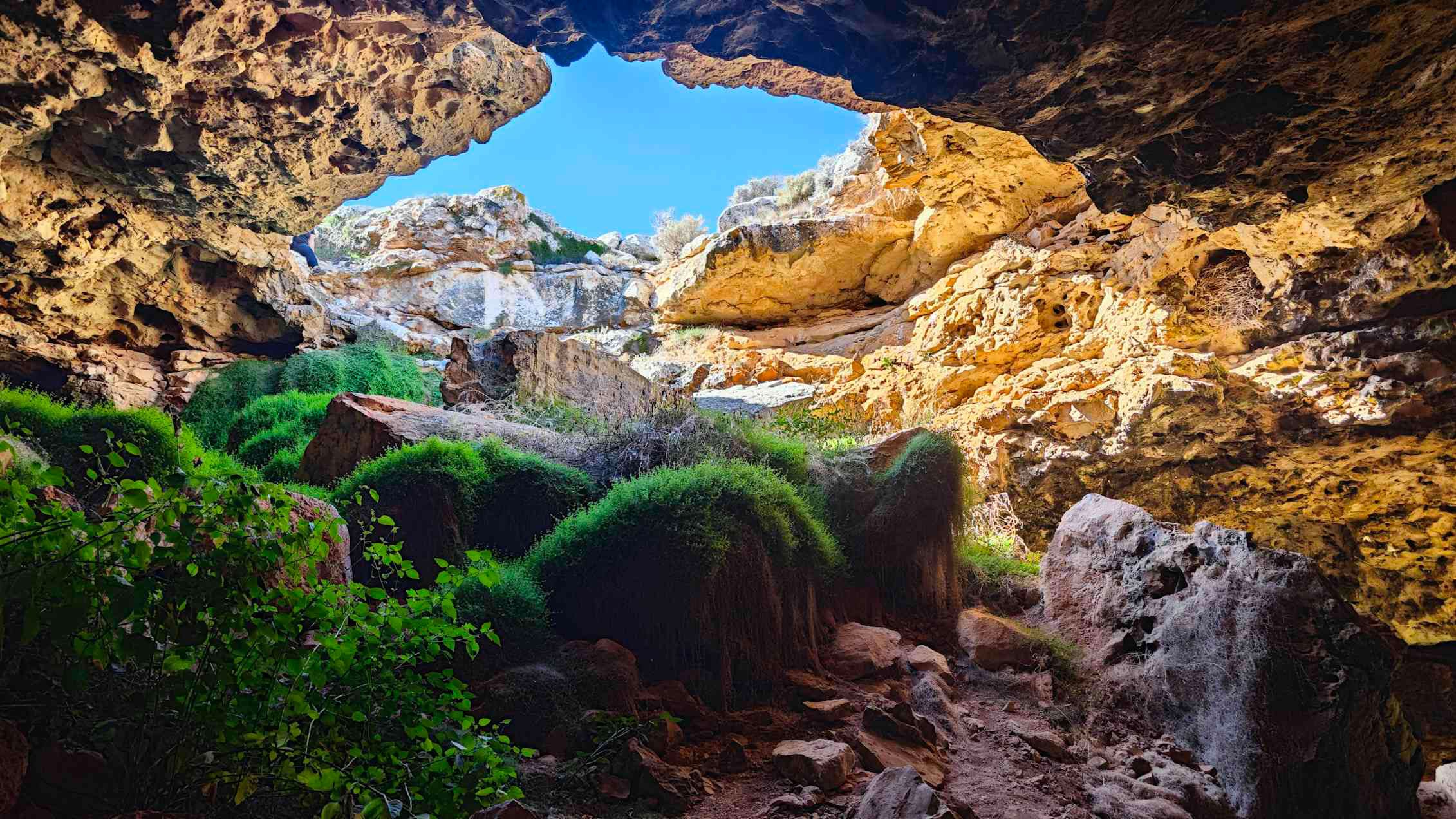
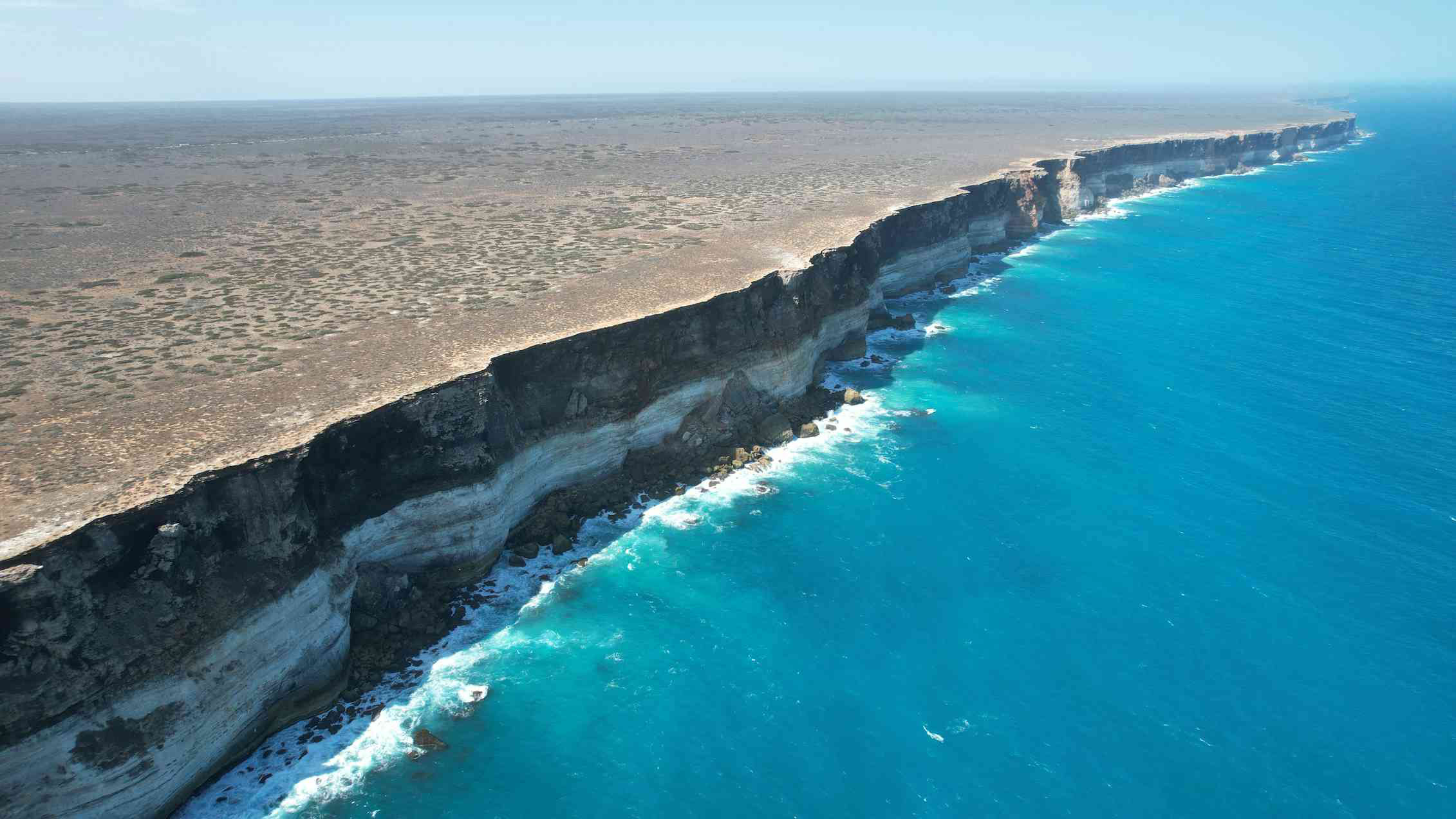
The Nullarbor Plain stretches across southern Australia, covering an area of more than 200,000 square kilometers, and is one of the largest limestone areas in the world. This limestone was formed in a shallow sea environment tens of millions of years ago. About 14 million years ago, the ancient ocean gradually receded, leaving behind the huge limestone plateau today.
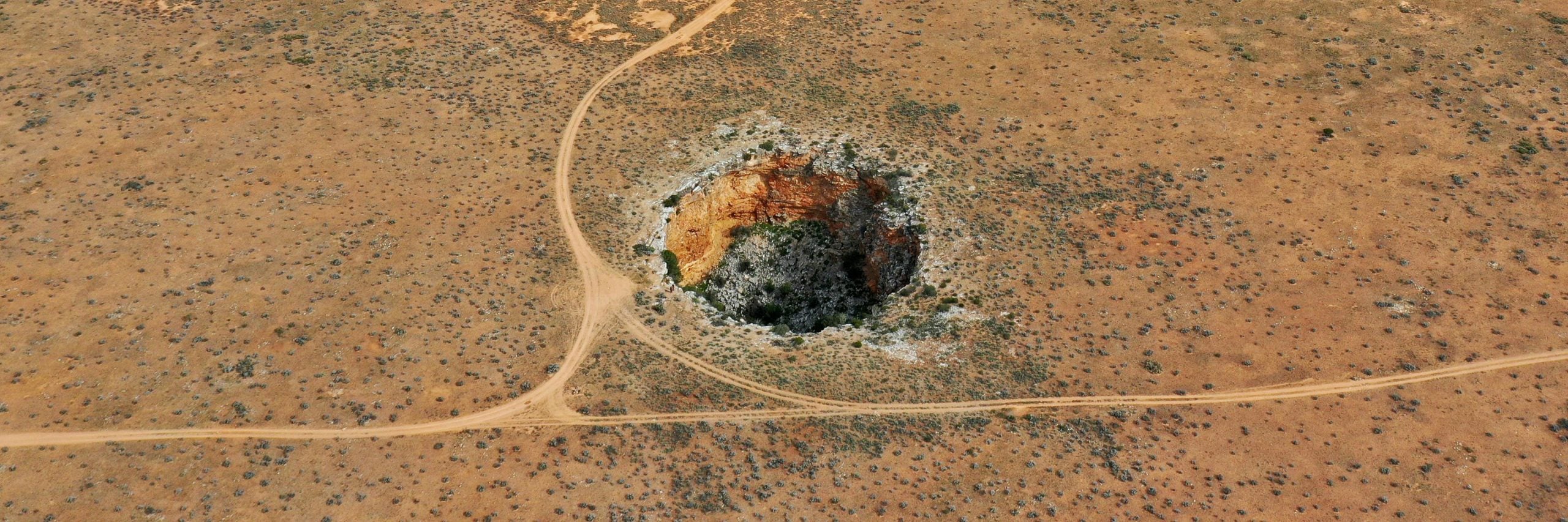
Over the past millions of years, groundwater has continued to erode the limestone, gradually forming a complex network of underground caves and cavities, some of which can stretch for kilometers. However, since most of these underground structures are hidden below the surface, scientists have been able to study them only when caves break through the surface to form openings, sinkholes, etc. Therefore, they still lack a complete understanding of the scale and distribution of the entire underground cave system.
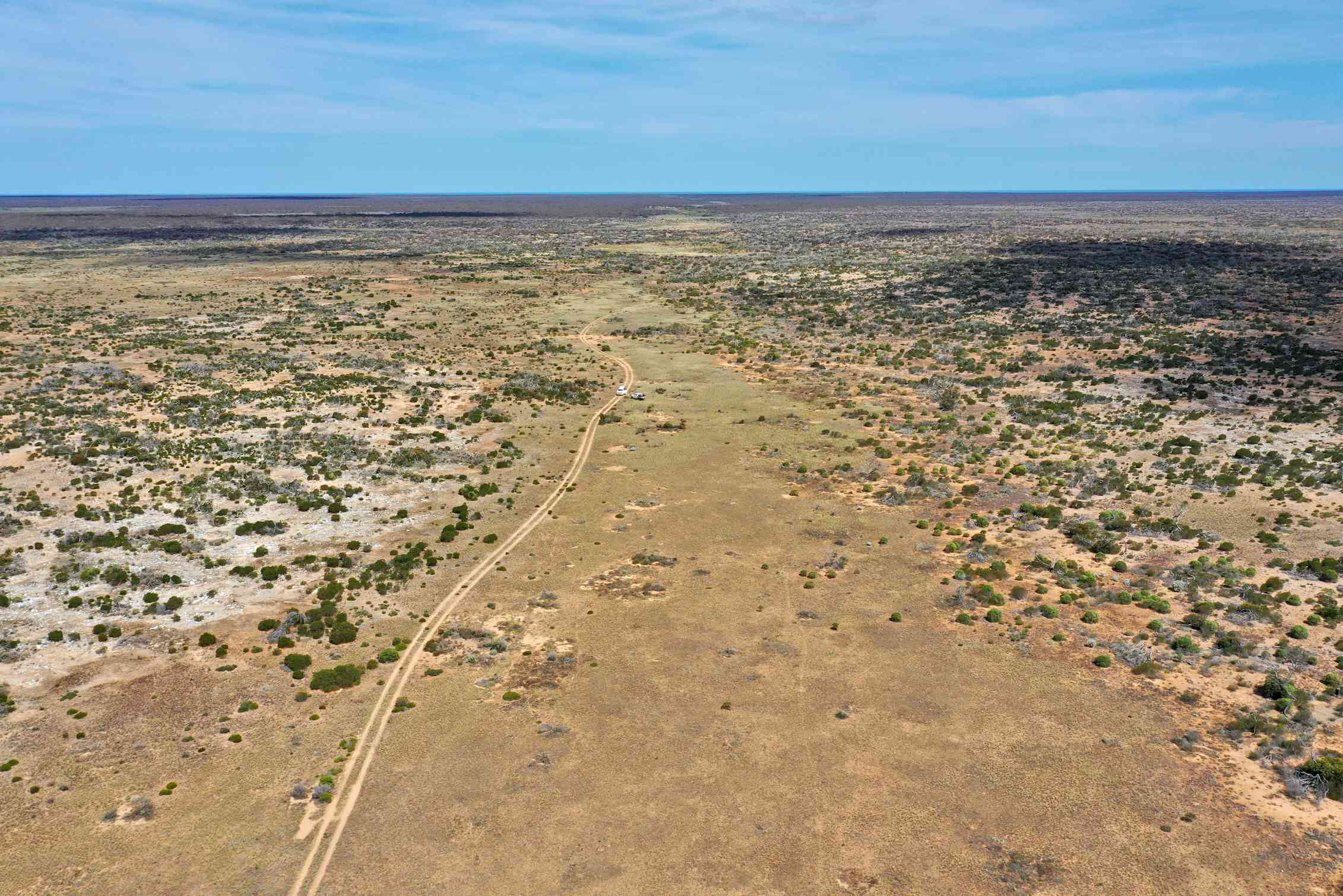
The research team focused this time on a type of landform on the Nullarbor Plain whose origin was previously unknown. These structures are in the shape of narrow, shallow trenches that extend roughly in a north-south direction. Some can reach 20 kilometers in length, but are only a few meters deep. They are so inconspicuous on the ground that they could easily pass for ordinary terrain relief, but they show up clearly in modern digital terrain models.
At first glance, these grooves look like shallow valleys cut by rivers, but researchers found that they do not fit the typical features of landforms formed by river erosion. They tend to begin and end abruptly, are not connected to rivers or drainage systems in the surrounding highlands of the Nullarbor Plain, and lack the branching structure that rivers typically have.
After further inspection of the sediments inside the trench, the researchers also found no obvious evidence of flowing water deposition. This means that these landforms are not cut by long-term surface runoff, but may result from geological processes occurring underground.
To find answers, the research team conducted a systematic study of these shallow trenches using a combination of drone and aerial photography, satellite digital terrain models, borehole surveys, cave measurements, and a variety of geophysical detection techniques.
Geophysical detection can observe underground structures without large-scale excavation of the ground. The principle is similar to medical imaging using X-rays to understand the inside of the human body. The researchers compared surface geomorphological data with data from underground rock formations, boreholes, and known cave systems, ultimately finding clear zones of broken rock beneath these shallow trenches.
Even more crucially, some of the trenches sit directly above known cave systems and sinkholes. This suggests that the shallow trenches seen on the surface are actually just "surface projections" left behind by underground cave systems.
Researchers believe that after an underground cave is formed, the rock at the top of the cave will gradually crack and collapse under the influence of gravity. Because this process is so slow, perhaps taking millions of years, the cave does not suddenly collapse all at once, but instead extends toward the surface through a series of gradually upward-developing fracture zones.
Ultimately, underground caves appear to slowly "collapse upward" within the rock formation, leaving small, shallow trenches on the surface. Because the surface remains relatively flat, the existence of these underground caves has long been difficult to detect with the naked eye.
The discovery changes the way people understand cave landscapes, researchers say. In the past, researchers often speculated on underground structures based on the shapes seen on the surface, but research on the Nullarbor Plain shows that some very unremarkable surface features may actually correspond to deeper and larger underground cavities.
Looking for these hidden caves is not only of scientific significance, but also of practical value. Areas with large underground cavities may face geological stability issues when building buildings, roads, tunnels and sewers. Knowing the location of underground cavities can help engineers identify potential risks in advance.
Caves are also very important for underground water resources. Typical karst landforms account for about 15% of the world's ice-free land area, and groundwater resources associated with these geological structures provide water sources for about 10% to 25% of the world's population. Therefore, accurately locating underground caves and groundwater channels is also of great significance for water resource protection and management.
In addition, caves are important natural archives for studying past environments. Because the interior of the cave is relatively closed and is less affected by surface weathering and erosion, sediments, minerals and other materials can be preserved for a long time, thereby recording past climate, environmental and ecosystem changes.
Some caves even contain highly unique communities of life. The environment that is isolated from the surface for a long time can promote the independent evolution of organisms over a long period of time, forming many special species adapted to darkness, lack of food, and extreme environments. These underground ecosystems remain among the least studied biological environments on Earth.
To study these ecosystems, however, you first have to know where the caves are. New research on the Nullarbor Plain provides a new clue for finding these hidden structures: scientists do not necessarily need to find the entrance of the cave first, but can start with very weak, even ignored, past landform changes on the surface to infer whether there are caves underground.
The researchers believe the approach could have implications far beyond Australia. Because caves not only exist on the earth, but can also be formed on other celestial bodies.
Especially on Mars, scientists have discovered a large number of suspected underground caves, lava tubes and structures similar to underground cavities through orbiters and other exploration missions. Mars has now lost the active water cycle that Earth has, but past water activity and volcanic activity may have created complex cavities underground.
Underground caves are of interest to astrobiologists because they provide a relatively stable environment. The surface of Mars has long been affected by strong cosmic radiation, solar radiation, and extreme temperature changes, and underground caves can use the upper rock layers to provide natural barriers. Therefore, in theory, they may be more suitable than the surface of Mars for preserving organic matter and even providing shelter for microbial life.
This also means that if humans hope to search for signs of life on Mars in the future, underground caves may become an important detection target. Even if no life is ultimately found in these caves, they could serve as potential bases for future manned missions to Mars, providing astronauts with natural radiation shielding and a relatively stable environment.
The Nullarbor Plain happens to provide a very valuable "simulation scene" of the Earth. The surface here is dry and stable, and the underground caves have been hidden under the relatively flat landscape for a long time. It is similar to some areas on Mars that lack modern water circulation and have less surface changes.
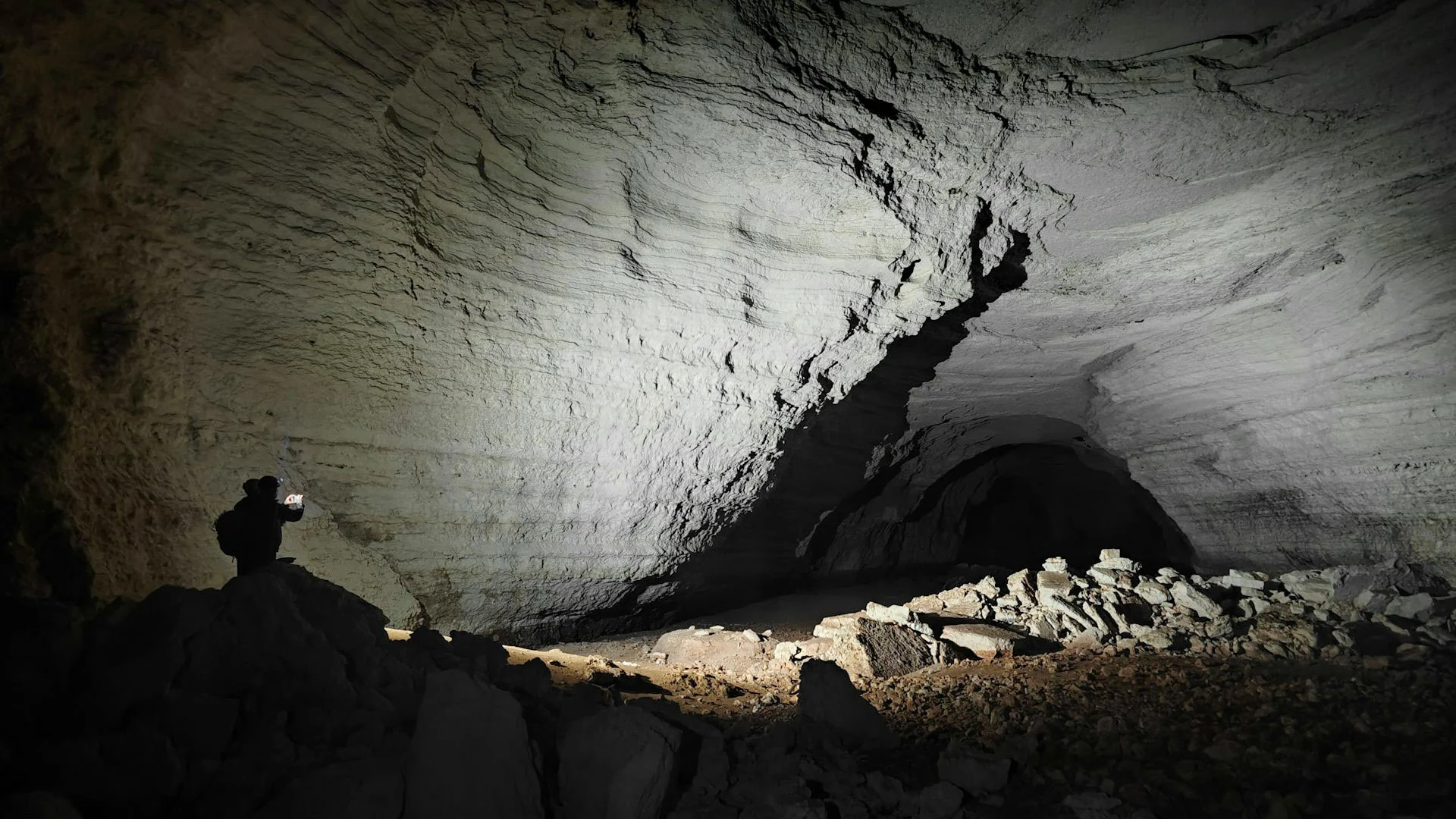
The researchers therefore believe that if deep caves can be accurately located through weak grooves on the surface in the Nullarbor Plain, similar methods can be used to analyze surface data on other planets in the future. For Mars, orbiting probes have been able to obtain high-precision digital terrain models. If scientists can identify similar surface "fingerprints" from this data, it may be possible to further locate underground caves.
It is currently unclear how many undiscovered cave systems the Nullarbor Plain hides, let alone whether there are underground structures with similar surface features on other planets. However, the research team believes that this discovery shows that some seemingly simple, flat and even familiar landforms may still hide a huge world underground.
Relevant research was published in the journal Communications Earth & Environment. Researchers pointed out that the idea of finding underground caves from the surface can not only help humans re-understand the earth, but may also provide new geological tools for future exploration of other celestial bodies such as Mars. For those caves that have no obvious entrances but may have huge underground spaces, the real entrance may not be on the surface, but hidden under shallow trenches that are almost inconspicuous.
Comments