
Abstract:
TikTok has begun to roll out the portrait detection feature in phases to eligible creators and users around the world. This feature mainly helps creators and celebrities discover and report AI content that appears on the platform and uses their portraits without consent. TikTok has also made available to the public an AI detection tool that can detect whether audio, video and images were generated by tools owned by TikTok.
Creators and celebrities can find and report suspected fraudulent content:
Currently, there are many illegal accounts on the short video platform that use AI to fake celebrity videos to sell goods or even commit fraud. It is very difficult for relevant people to find these videos in batches and lodge complaints because there are so many such videos and they are scattered among many different accounts.
The new portrait detection feature can look for any unauthorized AI fake content in batches after a famous person has been authenticated, and then report it to the TikTok security team. Reported content will be handled in accordance with community guidelines. For example, videos suspected of fraud will be deleted.
Currently, this feature is not available to all users. At this stage, portrait detection is only available to TikTok platform content creators and public figures, including government, political figures, and political party accounts. Since identity verification is involved, the creator or public figure can decide whether to use the portrait detection function at their own discretion.
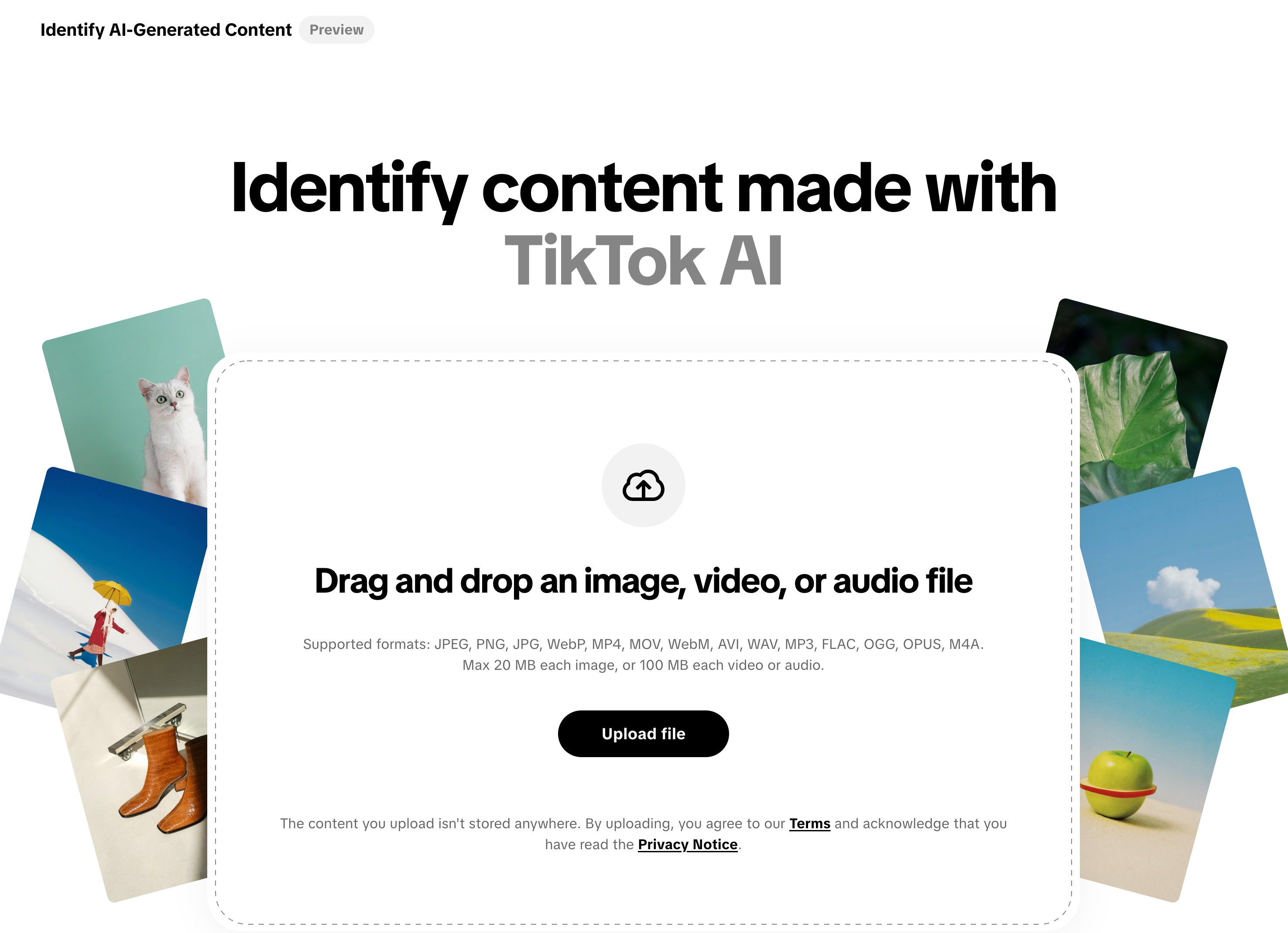
TikTok AI generated content inspector:
TikTok also launched a new public-facing
AI-generated content checker
, users can upload videos, audios or images to check whether the content was generated by TikTok’s AI tools. The tool will look for C2PA content certificates and blind watermarks added by TikTok. The tool can mainly check content generated by tools such as TikTok and clipping.It should be noted that C2PA metadata and blind watermarks can be deleted through certain technical measures. Therefore, content with detected metadata and blind watermarks can be determined to be generated by AI. Content that is not detected may not be generated by AI, or may be generated by other AI tools.
Comments