
Abstract:
Despite years of warnings from cybersecurity companies and experts about the risks posed by weak passwords, large numbers of users still prefer simple, predictable login credentials. New research shows that convenience and memorability remain the most important considerations for people when setting passwords, while security often takes a back seat.
A new report released by password management service provider NordPass, NordLayer and cybersecurity researchers shows that the research team analyzed password data exposed in public data breaches and malware attacks from September 2025 to September 2026, and conducted statistics and comparisons on password usage in 44 countries and regions around the world.
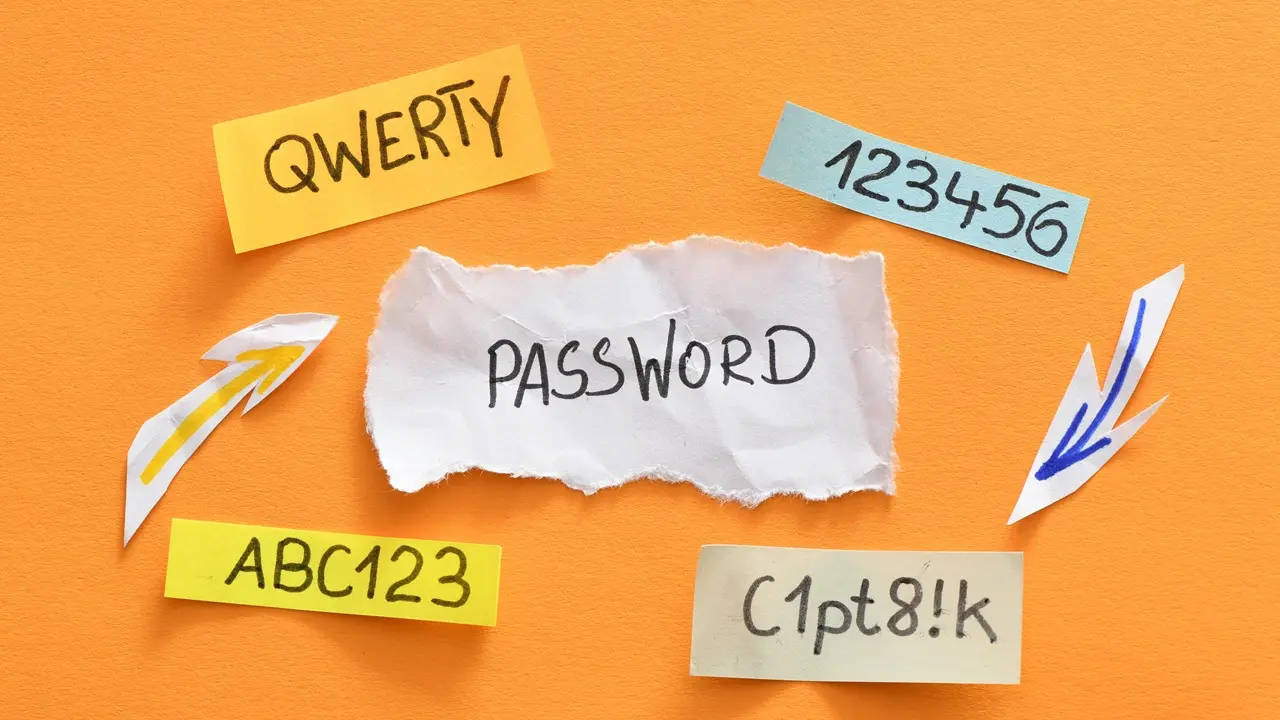
The report found that the most common passwords in the world in 2026 still include extremely easy to crack combinations such as "123456", "admin" and "12345678". Among them, "123456" has topped the list in seven of the past eight years, while the top three passwords have remained unchanged for a long time. This means that although public awareness of network security has increased, a large number of users still prioritize the convenience of remembering passwords rather than account security.
The study also found that people show a clear tendency to be lazy when creating passwords, and this phenomenon spans languages and regions. Many users simply use the native language version of "password" as their password, such as "motdepasse" in French and "contraseña" in Spanish. At the same time, countries using the Latin alphabet are more likely to use passwords composed of words, while regions using other writing systems more often use purely numerical passwords.
Pop culture also has a clear influence on password choice. The report lists a series of password samples from video games, animation, music and Internet culture, such as game and animation-related words such as "minecraft" and "sasuke20", as well as metal band names such as "Slayer@666" and "Pantera1234". In addition, Internet memes and social media platforms also appear frequently in passwords, such as “skibiditoilet” and “Tiktok2002.”
Sports stars have also become an important source of inspiration for users to set passwords. The report pointed out that after NBA star LeBron James completed a triple-double in three consecutive games in 2024 at the age of 39 years and 319 days, "Lebron0319" containing related numbers entered the top 200 password list compiled by NordPass. In addition, the names of football players Messi, Lampard and Lewandowski have also been used by a large number of users for password settings.
Although these passwords come from a wide range of sources and come in many forms, NordPass believes that almost all of them can be cracked within seconds. To this end, the agency recommends that users create passwords that are no less than 15 characters long and combine uppercase and lowercase letters, numbers, and special symbols. At the same time, users can also use a passphrase composed of multiple unrelated words to improve security.
The report also recommends setting unique passwords for each account, enabling multi-factor authentication, using a password manager to save and generate complex passwords, and regularly checking whether account credentials have been exposed in a data breach.
In addition, researchers once again called for the promotion of passwordless authentication methods such as "Passkey". This technology allows users to log in to websites and applications through biometric means such as fingerprints and face recognition without having to remember complex passwords. As technology companies such as Microsoft, Google, and Facebook continue to promote the popularization of related technologies, the industry generally believes that pass keys can effectively reduce the risk of phishing attacks and reduce users' continued reliance on fragile passwords such as "12345678" and "qwertyuiop".
Comments