
Abstract:
With the rapid development of the artificial intelligence industry, the demand for power in global data centers is rising at an unprecedented rate. In order to meet the energy needs of future computing infrastructure, Google announced a landmark cooperation agreement with Quaise Energy, an American geothermal energy company, to purchase 50 megawatts of continuous power from ultra-high temperature rock geothermal power generation projects to provide stable energy for its data center operations.
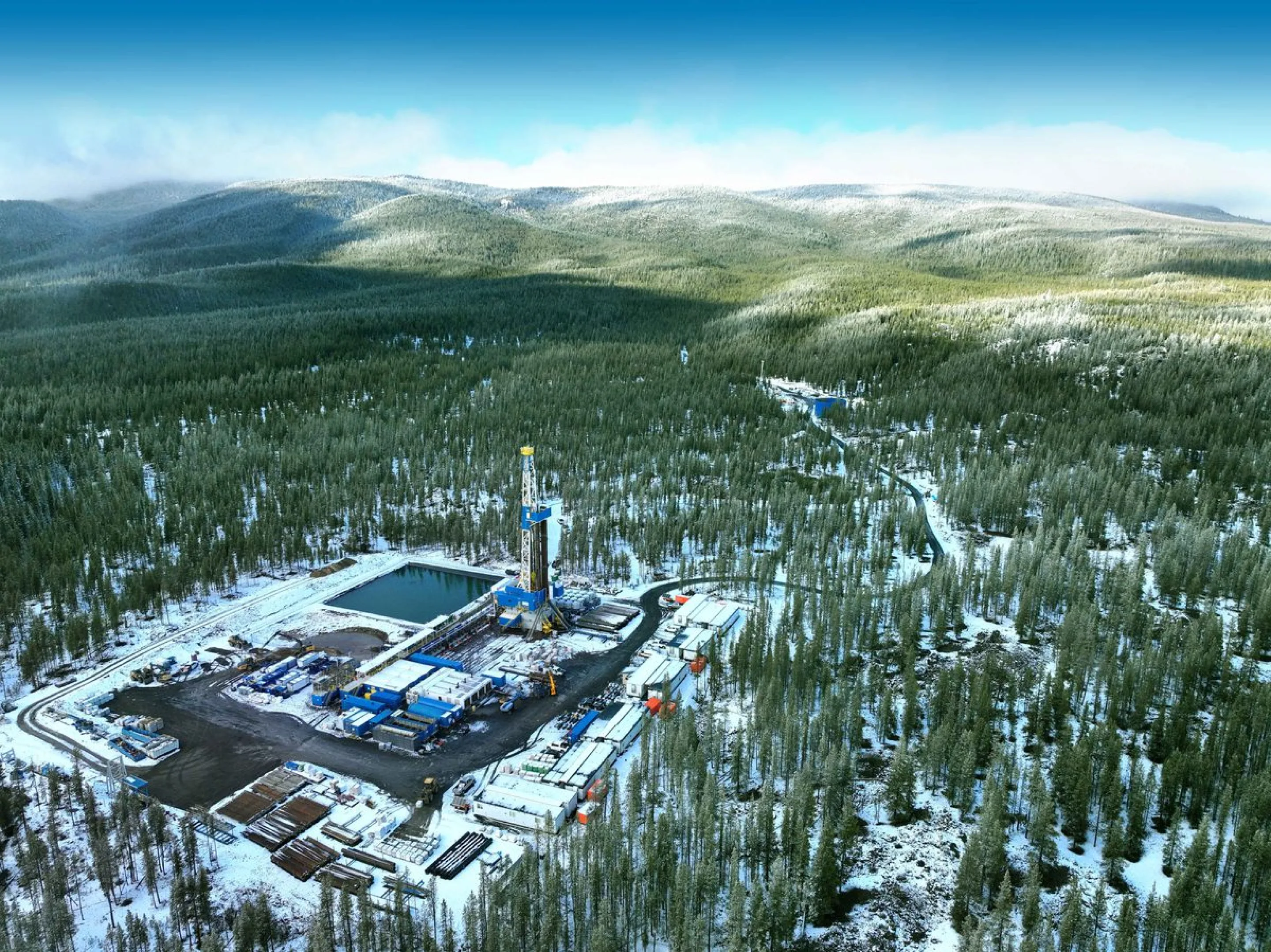
Under the agreement, Google will purchase 50 megawatts of power from Quaise Energy's "Project Obsidian" in Oregon, USA. This is believed to be the world’s first commercial-scale ultra-high temperature rock geothermal power purchase agreement. After the project is completed, the carbon-free electricity generated will provide energy support for Google's data center in The Dalles, Oregon, and is expected to start supplying power as early as 2030.
In recent years, the rapid expansion of artificial intelligence, large-scale cloud computing and Internet services has promoted the continuous growth of data center scale. Today, some very large data center campuses consume hundreds of megawatts of power, and the entire industry continues to consume huge amounts of base load power. This growing trend has put tremendous pressure on power grids everywhere, and has also prompted technology companies to actively look for new energy solutions that can operate around the clock while meeting emission reduction goals.
Unlike some technology companies that choose to invest in or restart nuclear power projects, Google this time chose to focus on the next generation of geothermal energy technology. Although traditional geothermal power generation has matured, it has only been deployed in a few areas with natural high-temperature underground heat sources for a long time, and its scale expansion has been significantly restricted.
The core obstacle lies in drilling depth. Traditional drilling equipment faces serious challenges when the temperature reaches a depth of about 3 to 5 kilometers underground and reaches a temperature of 200 to 260 degrees Celsius. High-temperature environments can quickly damage drill bits, seals, and downhole electronics, making it economically unaffordable to continue drilling deeper.
To overcome this limitation, Quaise Energy is developing a highly innovative drilling method. The company plans to use millimeter-wave beam technology to directly heat hard rock to a vaporized state, thus achieving the effect of "melting through" the earth's crust, rather than relying on mechanical drills to cut through the rock. With this solution, the drilling depth can theoretically reach about 20 kilometers, contacting ultra-high temperature rock formations with temperatures as high as 500 degrees Celsius.
The company believes that this ultra-high temperature geothermal resource has extremely high development value. Compared with traditional geothermal systems, each well is expected to produce several times or even ten times more energy output, thereby significantly reducing power generation costs and expanding the scope of application of geothermal energy.
According to the plan, the first phase of the Obsidian Project will still use traditional drilling technology to reach a depth of about 4 kilometers to obtain underground heat sources exceeding 300 degrees Celsius, inject water into the underground and use the generated high-temperature steam to drive turbines to generate electricity. In the second phase, it is planned to introduce millimeter-wave drilling technology into a commercial project for the first time to go deeper underground and obtain higher-temperature rock resources.
Quaise Energy said that one of the biggest advantages of ultra-high temperature geothermal power generation is its ability to provide continuous and stable power output, regardless of day and night changes, weather conditions or seasonal factors. This is especially important for artificial intelligence data centers that need to operate 24 hours a day throughout the year. Compared with solar and wind energy, geothermal power generation can provide stable baseload power without the need for large-scale energy storage systems.
Google stated that the company has continued to expand its clean energy investment layout in recent years and hopes to accelerate the transformation of the global energy system by supporting emerging technologies including advanced geothermal, long-term energy storage and new nuclear energy. This cooperation will not only meet the growing energy demand of data centers, but also help promote ultra-high temperature geothermal technology from the experimental stage to commercial application.
Industry analysts believe that the agreement between Google and Quaise has injected important confidence into the next generation geothermal energy industry. If the project can be implemented as planned and achieve the expected power generation capacity, the concept of using millimeter wave technology to "vaporize rocks" and develop deep geothermal resources may become an important breakthrough direction in the global clean energy field in the future.
Comments