
Abstract:
An international scientific research team recently developed a new method for monitoring internal changes in glaciers. Researchers have discovered that an ordinary fiber optic cable can act as a highly sensitive sensor, helping scientists detect cracks and structural changes deep in glaciers that are invisible to the naked eye, providing an important tool for understanding glacier stability and predicting future sea level changes.
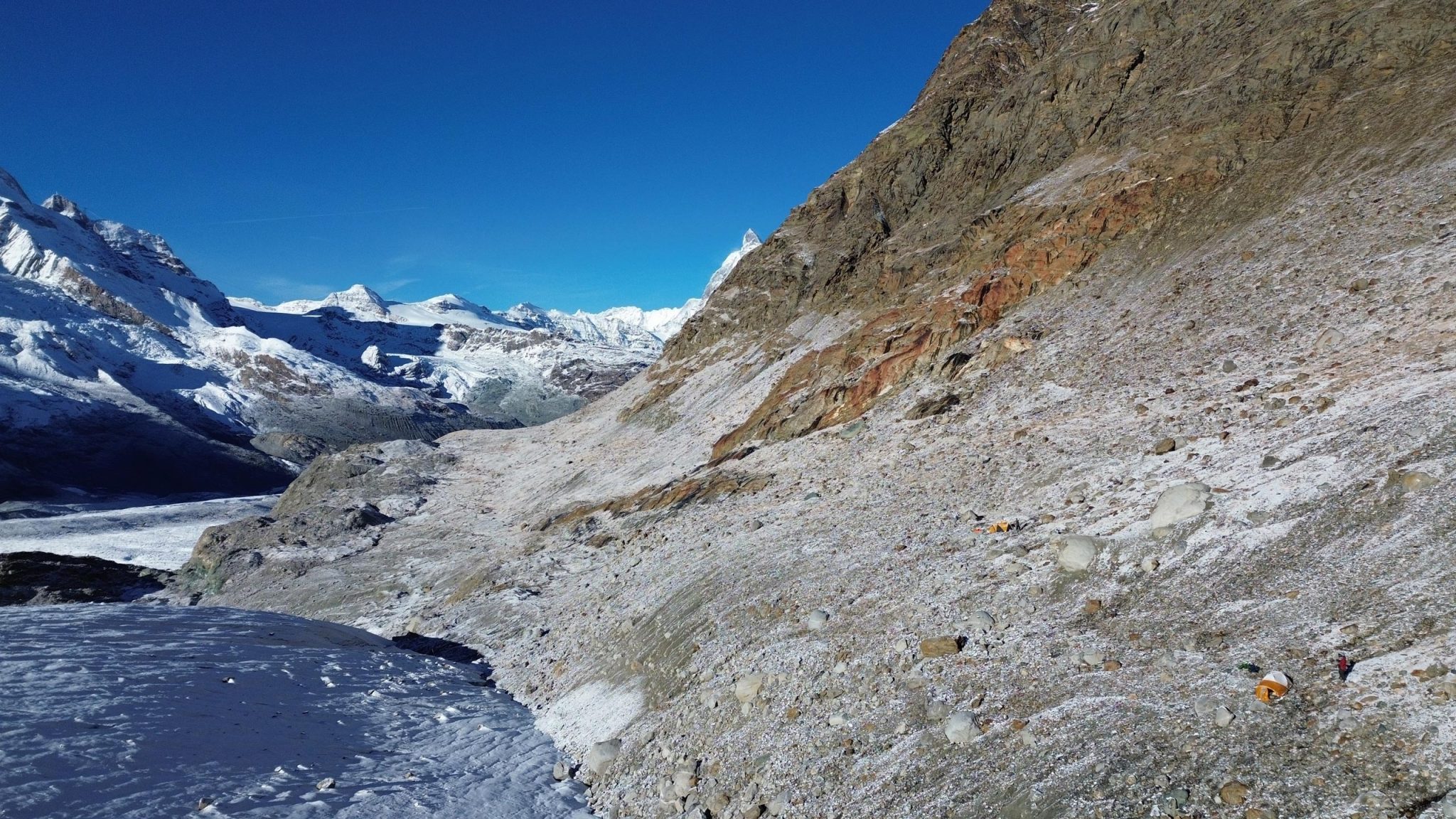
Glaciers are not huge blocks of ice that are completely still, but are always in the process of slow flow and deformation. During this process, small cracks will continue to form inside the ice body. Although these cracks are small at first, they can gradually expand over time, eventually weakening the structural integrity of the glacier, and even prompting the breakup of large ice shelves and accelerating ice loss.
For a long time, scientists have mainly relied on satellite remote sensing, seismic monitoring, and borehole observations to study glacier activity. However, these methods often have difficulty tracking the formation and development of tiny cracks inside glaciers, making it difficult for researchers to fully grasp the changes taking place inside glaciers.
To solve this problem, the research team laid a fiber optic cable inside the glacier and used a technology called Distributed Acoustic Sensing (DAS) for monitoring. The system can send laser pulses to optical fibers and analyze subtle changes in reflected signals to determine vibration and stress changes in the surrounding environment.
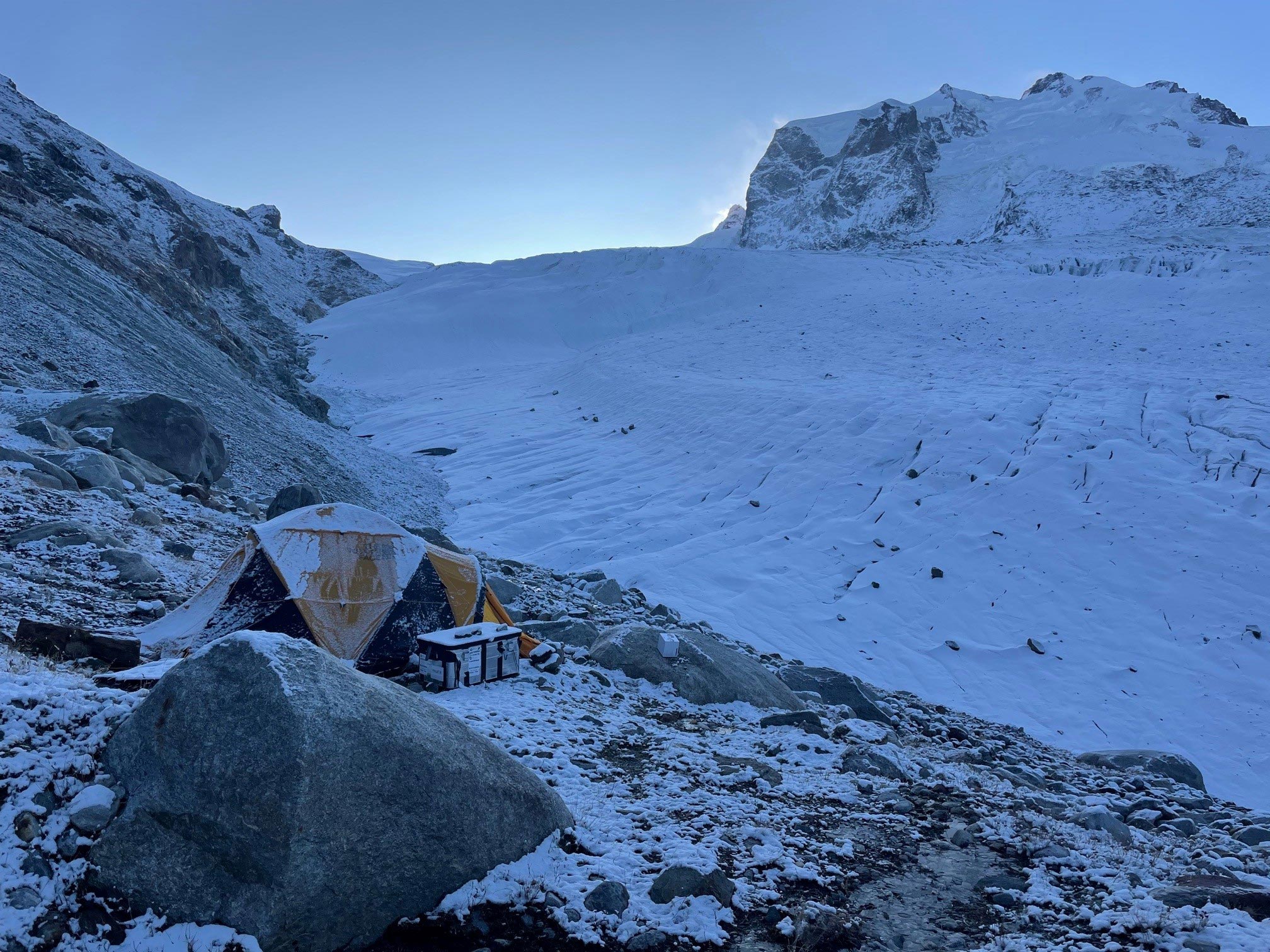
Test results show that optical fiber can not only record the tiny movements inside the glacier, but also identify the subtle signals generated during the expansion of cracks. Many internal fracture activities that were difficult to detect or even completely unobservable in the past can be captured and located in real time through this system.
Researchers say these hidden cracks have an important impact on the future evolution of glaciers. As cracks expand, meltwater may seep deeper into the glacier along the cracks, weakening the ice structure from within. As cracks increase in number and size, glaciers may become more susceptible to breakage or calving, accelerating the flow of ice to the ocean.
The scientific research team believes that the biggest advantage of the new technology is that it can cover a large area at a low cost while continuously monitoring the internal state of the glacier. Compared with traditional borehole observations that can only obtain data at limited locations, the optical fiber sensing system can provide high-resolution observations distributed along the entire line and more comprehensively reflect the mechanical changes within the glacier.
Researchers pointed out that as global climate warming continues to advance, polar regions and mountain glaciers are facing an increasingly obvious melting trend. Accurately understanding how cracks form and expand within glaciers is an important step in judging the stability of glaciers and predicting the rate of future sea level rise.
In the future, the research team plans to apply this technology to more polar and alpine glacier areas and establish a long-term monitoring network to conduct more in-depth research on the response mechanism of glaciers to climate change. Scientists hope that by continuing to collect these previously difficult-to-obtain data, they can further improve the accuracy of global glacier models and sea level prediction models, providing a more reliable scientific basis for combating climate change.
Comments