
Abstract:
Police in Oulu, Finland, recently launched a preliminary criminal investigation into Google’s construction activities during the construction of a data center in Muhos, Finland. The investigation involves suspected environmental damage and focuses on problems with drainage and water management at the construction site. Previously, Finnish regulators had asked Google to suspend construction preparations for two data center projects in Muos and Kajaani-Otanmäki.
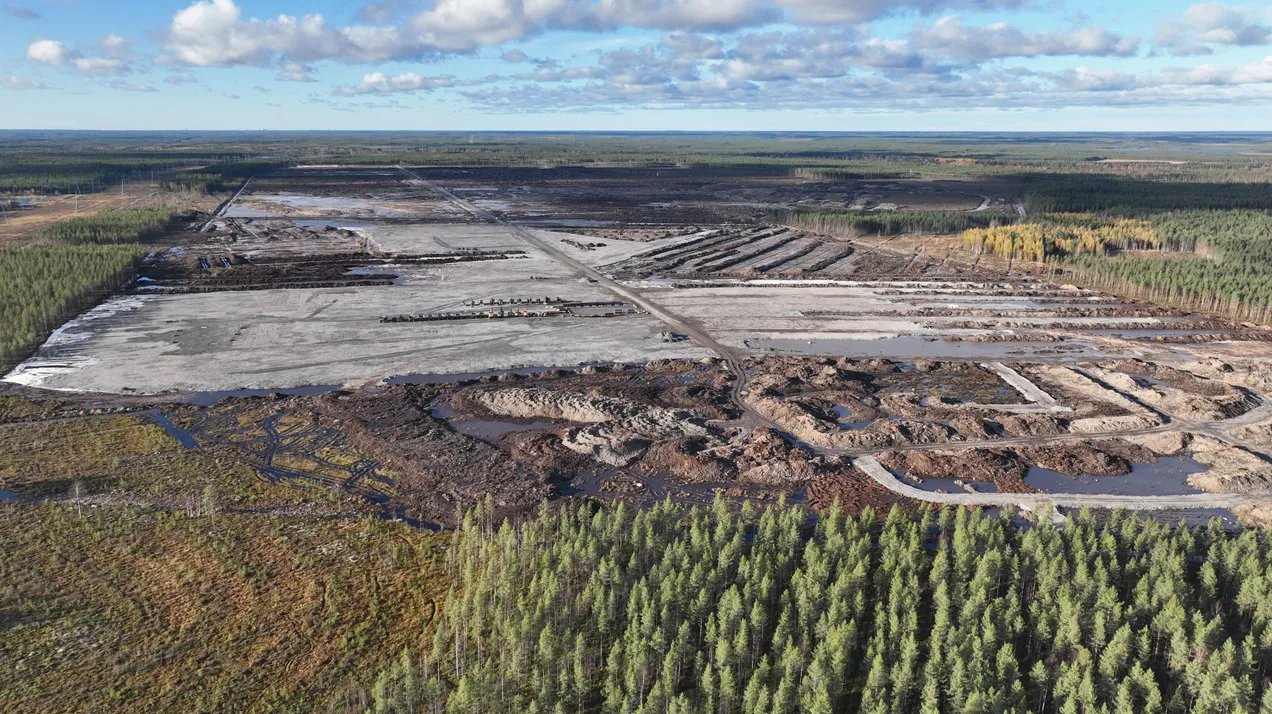
According to a report by Finnish national broadcaster Yle on October 29, the Oulu police have received five investigation applications related to the Muos data center construction project and decided to incorporate these applications into this preliminary investigation. The police said that the information currently available shows that there are violations and deficiencies in drainage and water resources management at the project construction site. The investigation is currently focused on suspected environmental damage. As the investigation deepens, it is not ruled out that other possible illegal matters will be further clarified.
The project in question is implemented by Tuike Finland, Google’s local subsidiary in Finland. The police expect that the investigation will take a long time and aim to be completed within 2027, and plan to release further information in December this year.
This investigation stems from the suspension measures previously taken by Finnish regulators on two Google data center projects. Regulators found that the Muos and Kayani-Otamaki projects had not completed the necessary environmental impact assessments and therefore asked the company to suspend related construction activities. Tuike Finland subsequently confirmed that it had stopped preparations for the two project sites on October 14.
The regulatory agency specifically pointed out that the water management plan submitted by Google was insufficient to prove that the possible water environmental impacts of the project could be effectively controlled. The construction of the data center involves large-scale land leveling, excavation and ground drainage system renovation. Without adequate hydrological assessment and management measures, the flow of local surface water may be changed and have an impact on the surrounding ecological environment.
Finnish regulators have given Tuike Finland until November 5 to submit a more detailed water management plan. The new plan must clarify the proposed drainage facilities, project schedule and independent water quality monitoring arrangements, while taking into account possible local heavy rainfall, melting snow and other conditions.
Another issue of concern is local soil conditions. Regulators specifically asked Google to assess the possible environmental risks posed by the acidic black shale soil in the construction area. After such geological materials are excavated and exposed, sulfides may oxidize, forming acidic drainage, and bringing metals and other substances into surrounding water bodies. Therefore, special attention needs to be paid to soil treatment, drainage paths and water quality monitoring when carrying out large-scale civil works in the relevant areas.
Regulators have warned that if Google fails to take adequate measures to address the above issues, further formal enforcement proceedings may be initiated, including the imposition of conditional fines.
It is worth noting that this incident occurred after Google announced a significant expansion of investment in Finland. In September 2026, Google announced that it would invest an additional 13 billion euros in Finland to expand data center infrastructure. This investment is an important part of Google’s long-term development plan in Finland. It also reflects that the Nordic region is becoming an important area for global technology giants to deploy artificial intelligence infrastructure due to its relatively sufficient power resources, low temperatures, and natural conditions suitable for data center operations.
Finland has abundant hydropower and wind power resources, and its cold climate also helps reduce data center cooling costs. Google has previously operated a large data center in Hamina, Finland, and continues to expand investment in local infrastructure. This new investment was expected to further strengthen Finland's position in the European cloud computing and artificial intelligence industry chain.
However, the regulatory issues encountered by the Muos project also show that even large-scale multinational technology companies must comply with strict environmental protection and land development regulations when carrying out infrastructure construction in Finland. For data centers, energy consumption is certainly an important issue. Land use, groundwater protection, surface drainage and the impact of construction on the ecosystem are also concerned by regulatory authorities.
At present, the police are still launching a preliminary criminal investigation, which does not mean that Google or its local subsidiaries have been found to have committed a criminal offense. Follow-up investigations will further determine whether construction activities violate relevant environmental regulations and how specific responsibilities should be divided.
This incident also adds new uncertainties to Google’s 13 billion euro investment plan in Finland. Whether the two projects can resume construction will depend on whether the company can improve its environmental impact assessment and water resources management plans in compliance with regulatory requirements.
Comments