
Abstract:
Google is taking additional steps to keep the AI search experience open to free users. As AI Mode gradually becomes an important part of Google Search, Google not only expands the coverage of related functions, but also allows users to connect personal services such as Gmail and Google Photos to the search system, so that artificial intelligence can combine the user's own information to provide personalized answers without forcing users to subscribe to paid packages.
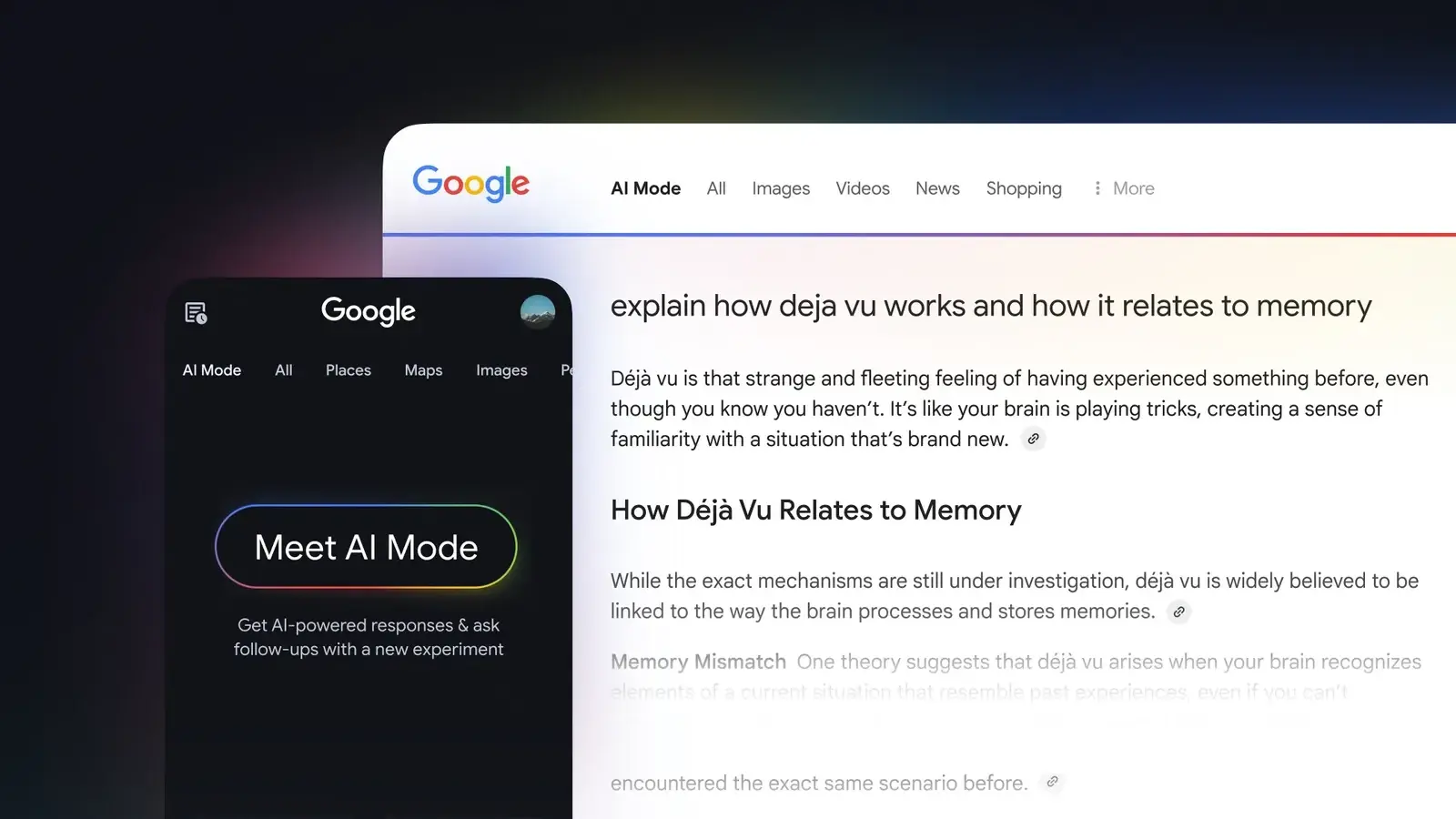
Google will continue to promote the expansion of AI search functions around October 28, 2026. According to the company's previously announced plans, Personal Intelligence is expanding to nearly 200 countries and regions and 98 languages around the world, and free users can also use related functions. This means that Google is trying to incorporate more personalized AI search capabilities into the free service, rather than making it all an exclusive feature of the premium subscription service.
Personal Intelligence is a set of personalized capabilities developed by Google for its artificial intelligence products. After obtaining authorization, users can connect Gmail, Google Photos and other services with AI Mode, allowing the system to answer questions based on emails, photos and other personal information. For example, users can ask AI to recommend products based on past purchase records, or assist in planning itineraries based on travel booking information in emails.
The key to this feature is that the AI no longer relies solely on information from public web pages, but is able to use personal data to supplement the context needed for answers with the user's explicit authorization. For users who frequently use the Google ecosystem, this integration may further develop search from a general information retrieval tool to an intelligent assistant that can understand individual needs.
Google said that users can decide whether to connect to relevant applications or close the connection at any time. The company also emphasized that Gemini and AI Mode will not directly use the user's entire Gmail inbox or Google Photos photo library to train the model, but may use limited information such as specific prompt words and model responses to improve the service. Still, users need to understand what it means to connect personal apps and which Google services may gain access.
The background of this feature expansion is that Google is adjusting the boundaries between free and paid services for its artificial intelligence products. The company has recently adjusted some model access rights in the Gemini application. The range of models available to free users is limited. More powerful models and some advanced inference functions require a subscription to the Google AI Pro or Ultra package. This makes Google’s practice of tightening the free use rights of some models on the one hand, and continuing to expand the free functions of AI search on the other hand particularly worthy of attention.
These two strategies are not necessarily contradictory. Google can offer basic AI search and personal intelligence as free services to attract more users to stay in the search ecosystem, while providing additional value to paying users through more powerful models, higher usage limits, and professional tools. AI Mode can also generate revenue through advertising and other methods without having to rely entirely on subscription fees to maintain operations.
Google has recently continued to adjust the AI search interface, adding direct links in answers, official web page entrances, news article carousels, and display methods of related reports. The company stated that it hopes that after users obtain AI-generated answers, they can still easily access the original webpage, understand the source of the information, and continue to explore related content in depth.
These changes reflect Google's attempt to solve two problems at the same time: on the one hand, users hope that AI can understand questions faster and give comprehensive answers; on the other hand, search still needs to retain a certain connection role for websites, content creators and advertising businesses. By adding source links and news content entrances, Google hopes to make AI search more than a closed answer interface, but continue to assume the function of discovering web pages and connecting information sources.
From a business model perspective, the free opening of AI Mode will also help Google expand its user base. Traditional search advertising relies on users entering keywords to display relevant ads, while AI search can understand more complex needs and continue to provide information in multiple rounds of conversations. As users become more accustomed to asking questions through natural language, Google can explore new ad formats and provide more relevant information about goods or services based on the context of the conversation.
However, free use does not mean no cost. Running large-scale artificial intelligence models requires a lot of computing resources, especially functions such as complex reasoning, multi-round conversations, and personal data retrieval, which may result in higher infrastructure expenses. Google needs to find a balance between free user scale, usage limits, advertising revenue and paid subscriptions to keep these features running in the long term.
For users, the most noteworthy change is that the personalization capabilities of AI search are no longer completely limited to paying users. As long as the account meets the relevant conditions and actively authorizes the connection to personal applications, users may receive answers based on their own information in the free service. However, specific functions may still be affected by region, language, account type and phased push schedule.
Generally speaking, Google is adopting a more segmented AI commercialization strategy: basic search and some personalization capabilities will continue to be free and open, while the most advanced models and higher usage limits will gradually shift to paid packages, while exploring new revenue sources through advertising. For Google, this will not only help expand the use of AI search, but also create space for future subscription and advertising businesses. Next, the coverage of free AI functions, the convenience of personal data connection, and whether advertising can be effectively monetized without damaging the search experience will become the key to the success of this strategy.
Comments