
Abstract:
Toshiba plans to double its hard drive production capacity for artificial intelligence data centers by fiscal 2027 to cope with the growth in high-capacity storage demand brought about by AI infrastructure construction. According to reports, the company will invest approximately 60 billion yen, or approximately US$380 million, to expand its HDD production facilities in the Philippines. This will be Toshiba's first large-scale hard drive-related investment in about five years.
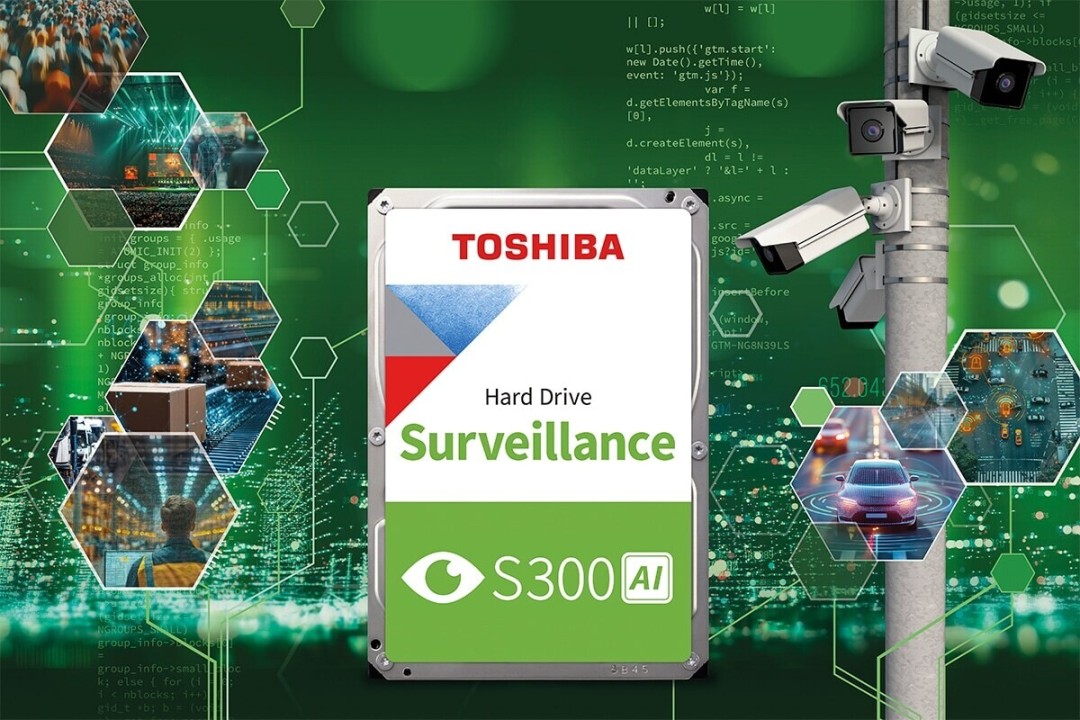
Toshiba is currently one of the three largest HDD manufacturers in the world along with Western Digital and Seagate. The company hopes to use this expansion to increase its global market share in terms of storage capacity, with a mid-term goal of increasing it from just over 10% currently to 30%.
This expansion not only includes increasing the production capacity of existing products, but also introducing new production lines to manufacture hard drive products with a maximum capacity increase of approximately 40% per disk.
In terms of product roadmap, Toshiba plans to achieve mass production of 65TB HDDs by around 2030 and further advance towards 100TB products.
This reflects that the demand for storage infrastructure in AI data centers is continuing to spread from GPUs and high-bandwidth memory to back-end large-capacity storage. As the amount of data generated by generative AI model training and inference continues to increase, data centers not only require stronger computing power, but also cheaper large-scale data storage solutions.
Compared with SSD, HDD does not have an advantage in access speed, but the cost per unit storage capacity is lower, so it still has obvious advantages in scenarios that require long-term storage of massive data.
Especially in AI data centers, large amounts of training data, logs, backups and cold data do not always require the use of high-performance flash memory, so high-capacity HDDs are still highly cost-competitive.
This is also an important background for Toshiba's renewed large-scale investment in HDD production capacity.
If the expansion proceeds as planned, Toshiba not only hopes to seize the growth in storage demand for AI data centers, but also attempts to improve its competitive position through higher-capacity products.
Therefore, the core of this 60 billion yen investment is not the simple expansion of the traditional hard disk business, but the construction of AI infrastructure that is re-raising the strategic value of large-capacity HDDs. Toshiba hopes to take advantage of this demand cycle to significantly increase its capacity share from slightly more than 10% currently to 30%.
Comments