
Abstract:
There are often traces of U.S. suppression, and Huawei can concentrate resources to fill holes; what is really difficult to prevent is internal misjudgment, transgression, and loss of control. The Zunjie V800 test, the Zhuzhi incident, and the Zunpai case reminded Huawei from three levels: product, public opinion, and intellectual property rights: the longevity of a company not only depends on how strong the technology is, but also depends on the ability to distinguish between supervision, competition, infringement, and hostility. ——Blue Blood Inscription
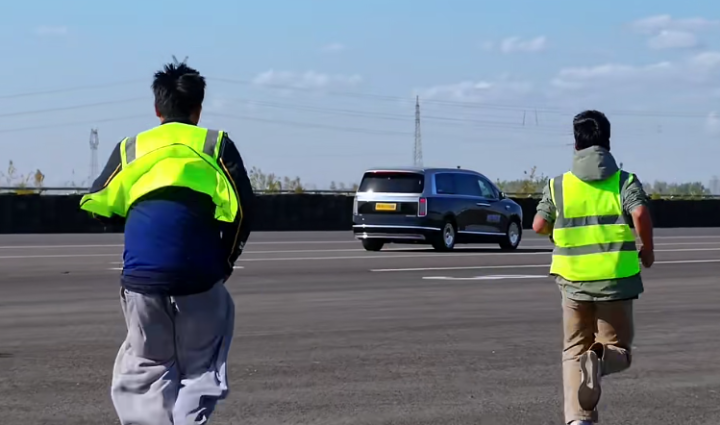
On October 8, Dongchedi released a braking test video of the Zunjie V800. Three vehicles, three tests, the brake pedal bracket broke at the same location. As soon as the video came out, public opinion immediately divided into two groups: one group said that this was the most basic 100-kilometer braking test in the automotive industry, and the other group said that it was an extreme working condition of continuous heavy pedaling that far exceeded daily use.
Knowing Car Emperor later responded that the 100-kilometer braking test was not an extreme working condition. The "4589N" reported online was an afterimage produced when shooting the LCD screen, and the real peak data was 1612N. Zunjie Automobile issued a statement saying that the relevant system has been developed and verified in accordance with national and industry standards, but it will further optimize the design of the component and provide free upgrade options for users who have delivered it.
As of now, further retesting and investigation are needed to determine exactly where the technical responsibility falls. But it has exposed another problem: Huawei's most dangerous opponent may not always be on the other side of the ocean, but may also be in its own ecology, its partners, its own internal affairs, its own fan base, and even its own way of expression.
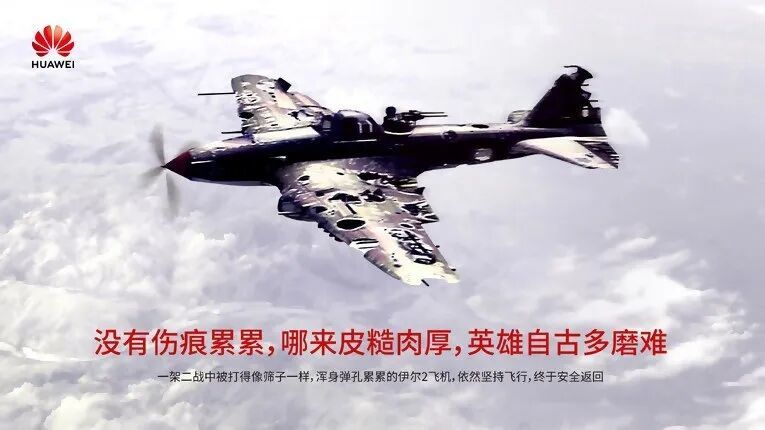
Huawei generally knows how the United States will attack Huawei. If the supply of chips is cut off, the supply chain will be replenished; if software authorization is cut off, it will be Hongmeng; if equipment purchases are restricted, new markets will be found. The clearer the opponent's tactics are, the easier it is for organizations to focus resources on dealing with them. Ren Zhengfei once described Huawei as a "broken plane full of holes". This does not mean that the plane has no problems, but that the plane is still flying, and it needs to repair holes and adjust its route while flying.
01
External suppression can be predicted, but internal risks are difficult to identify
The real trouble is that external enemies can clearly see their intentions when they put out their fists, but internal risks are often disguised as "help", "supervision", "rights protection", "traffic" and "professional testing". It is difficult to identify in advance, and it is also difficult to completely block it with a one-paper system. An organization can withstand successive rounds of frontal attacks from the enemy, but it may turn a normal supervision into a brand crisis, a reasonable rights protection into a public backlash, and a talent flow into a core technology leak because its own people blur the boundaries.
So, the "bringing down" mentioned in this article does not mean that a certain organization must have malicious intentions, nor does it mean that the test of Qingche Di has been proven to be against Huawei. On the contrary, the current public information can only confirm: the test occurred, the components suffered continuous fractures, the two parties have disputes over the test conditions and data interpretation, and Zunjie has promised to optimize the design. Writing down unproven motives as facts is unprofessional and obscures the real issues.
What is really worth asking is: Why did a car test quickly turn from a product quality issue to a Huawei brand issue? Because consumers never buy just a car made by JAC. What they bought was Hongmeng Zhixing’s channels, Huawei’s brand, Yu Chengdong’s press conference, Qiankun Zhijia’s technical imagination, and the trust promise that “Huawei will take care of things.” Huawei can distinguish between vehicle manufacturing, parts procurement and intelligent solutions in terms of legal responsibilities, but users will not psychologically divide these responsibilities into segments.
02
Spillover risks of Zunjie V800
This is exactly the management problem that Huawei must face after entering the automotive industry: Huawei has gained a brand premium, so it must bear the risk of brand spillover. Huawei cannot only have a strong brand in the press conference and sales process, but return to the "partner's responsibility" in terms of mechanical structure, supply chain quality, test boundaries and after-sales support. The brand is a whole, and risks will be transmitted along the brand.
If the final conclusion is that the test conditions exceed daily use, Huawei can of course explain it accordingly; if the retest proves that there is insufficient design redundancy, it should also be dealt with as a safety issue. There is no shame in either conclusion. What is really shameful is that before complete data is available, the question is first classified as a "malicious test" and the person who raised the question is classified as a "black PR". Because when it comes to safety issues, what users are most concerned about is not who wins online, but whether the vehicle will really lose its braking ability in a previously unimagined scenario.
Huawei's early management thinking did not actually reject this kind of external pressure. When talking about products, Ren Zhengfei said that passing product identification is only the first step, and the stability and reliability must be continuously tested in practice; "We must absorb all beneficial nutrients through continuous self-criticism, so that our products will continue to be in line with the excellent products of major international companies." Today, this sentence should be understood as: when third parties push products to the edge, they are not necessarily targeting Huawei, but may also be discovering holes for Huawei that Huawei has not discovered internally.
Of course, third-party testing is not inherently correct. Testing institutions need to disclose the source of prototype vehicles, vehicle status, test methods, original data and video integrity; platforms cannot use huge traffic to create preconceived judgments; media supervision cannot cover up business competition in the name of professionalism. The more a test affects safety and public interests, the more it needs to be reproducible, questionable, and reviewable, rather than just relying on a conflicting video to create conclusions.
The problem is that when Huawei faces disputes, it cannot just ask "whether the other party is targeting me", but also first asks "whether the phenomenon pointed out by the other party is true." If the phenomenon is true, then study whether the working conditions are reasonable; if the working conditions are reasonable, then study why the design does not cover it; if the working conditions are unreasonable, explain why it is unreasonable, where the normal boundary is, and whether users may encounter similar scenarios. The most taboo thing for managers is not criticism from others, but putting the critics’ motivations before reviewing the product facts.
03
The dark clouds of Bamboo Cicada remain
The "Bamboo Cicada" incident provides another perspective. At the end of July 2026, the "wow" sound made by a traditional bamboo toy was similar to the exclamation of the audience at Yu Chengdong's press conference, and became a meme material for netizens to mock Huawei. Hongmeng, a subsidiary of Huawei, complained in batches on the grounds of "damage to goodwill", resulting in some videos being removed from the platform. As a result, instead of suppressing public opinion, it triggered an even greater backlash. The official account of the Propaganda Department of the Zhejiang Provincial Party Committee issued an article stating that "the more powerful the company, the more open it is to accept discussions" and "being able to listen to the 'noise' itself is a kind of confidence." Jiangsu official media immediately issued a rebuttal, asking, "Those who advise Huawei to be generous, are you suitable?" The two official media accounts exchanged words over each other, and Hu Xijin also criticized it, further escalating the situation.
From a legal perspective, it is not surprising that companies protect goodwill and deal with infringing content; from a communication perspective, the collision between a three-dollar bamboo cicada and a large technology brand is easy to create a contrast in itself. The more you deal with it, the more likely it is to escalate from "a toy's voice" to "a big company with no room for jokes" as a public event.
04
After Zunpai crossed the border
The Zunpai case is a more serious and clearer type of "own risk". In 2025, the Shanghai No. 3 Intermediate People's Court issued a first-instance verdict on the case of Zunpai infringing Huawei's HiSilicon trade secrets. A total of 14 former HiSilicon employees were sentenced. The first offender was sentenced to six years in prison and fined; the report quoted judicial appraisal as saying that 40 core technical points in the chip technology involved were more than 90% identical with Huawei's trade secrets.
This is not a misunderstanding of public opinion or a dispute over testing boundaries, but a trade secret crime that has been confirmed by the judiciary. It shows that the "insiders" Huawei really needs to guard against are not just resigned employees, but also people who try to turn the technology accumulated by others over the years into their own entrepreneurial shortcuts through high-paying poaching, equity inducements, team relocation, and capital packaging. For technology companies, talent flow is a source of vitality, but once talent flow loses its boundaries, it may slip from normal competition to collective theft.
The Zunpai case, the Zhuzhi incident, and the Zunjie V800 controversy seem to be a criminal case, a public opinion case, and a product quality dispute. In fact, they are all questioning the same ability: Can Huawei accurately distinguish between "external supervision, internal criticism, commercial competition, and malicious infringement"? If you can't tell the difference, there will be two opposite errors. When it’s time to punish severely, it’s about grayscale. When it’s time to listen, it’s about friend and foe. When it’s time to disclose data, it’s about confidentiality. When it’s time to take responsibility, it’s about the boundaries of cooperation.
Huawei's past strength was partly due to an almost harsh internal pressure transmission. Ren Zhengfei once said that Huawei should keep its internal mechanisms always active through independent market pressure; he also proposed "small improvements, big rewards, big suggestions, and only encouragement", emphasizing that every shortcoming should be filled in little by little. The core of this culture is not to always believe that you are right, but to allow problems to penetrate the face of the organization and enter the products, processes and cadre evaluations.
However, when the scale of the enterprise becomes larger, the brand value becomes higher, and the business boundaries become wider, the pressure transmission may be deformed. In the past, when an engineer pointed out a product defect, the organization would view it as an opportunity for improvement; later, the same voice might be interpreted as "impacting the brand." In the past, fans defended the brand as a spontaneous act; later, if fans regarded all doubts as hostility, the brand would lose its ability to speak to ordinary users.
05
The holes that Huawei really needs to fill are not just in technology
The "holes" Huawei needs to fill most are not only in chips, auto parts and supply chains, but also in the organization's cognitive system. It needs to establish a more refined classification capability: for those who clearly steal secrets, they must be held accountable in accordance with the law; for normal competitors, they must rely on their products to speak for themselves; for third-party testing, they must require transparent data and reviewable methods; for consumer doubts, they must give priority to explaining the facts; for innocuous ridicule, they must avoid using heavy weapons to create secondary dissemination.
This classification capability may not sound like a technological breakthrough, but it determines whether a technological breakthrough can be transformed into long-term trust. Because users do not require a company to never have problems, nor do they believe that a company can eliminate all risks in advance. What users really observe is: when a problem arises, does a company look for scapegoats first or look for facts first; whether it protects face first or fixes loopholes first; whether it kicks out critics or keeps problems alive.
When Ren Zhengfei talked about self-criticism in the early days of Huawei, he said that the basis for a company's long-term stability is that its core values are confirmed by its successors, and the successors must have the ability to self-criticize; "As long as you persist in analyzing yourself for a long time, find your own shortcomings and weaknesses, constantly improve, and avoid being arbitrary in major decisions," an enterprise can continue to develop. This is not an organizational culture slogan, but a survival condition.
U.S. suppression often pushes Huawei into a corner, forcing it to concentrate resources on supplementing its supply chain, technology, and market. The domestic complex environment is different: it may not necessarily appear as an enemy, but may appear as testing, traffic, capital, talent, cooperation and fans. The most dangerous thing about it is that it makes companies mistakenly think that they are defending the brand, but in fact they are consuming the brand; they mistakenly think that they are fighting back against the enemy, but in fact they are rejecting feedback.
So, when will Huawei be brought down by its own people? It’s not when an organization releases a test video, it’s not when a toy is complained about, and it’s not when an employee leaves to start a business. Huawei could not have predicted the truly dangerous moment, and neither could we...
At that time, the broken plane did not fall because of a few more holes in the outside, but because the people in the cockpit no longer believed in the instruments, no longer accepted the alarm, and no longer allowed anyone to remind them that there was another area in front that was leaking oil.
Comments