
Abstract:
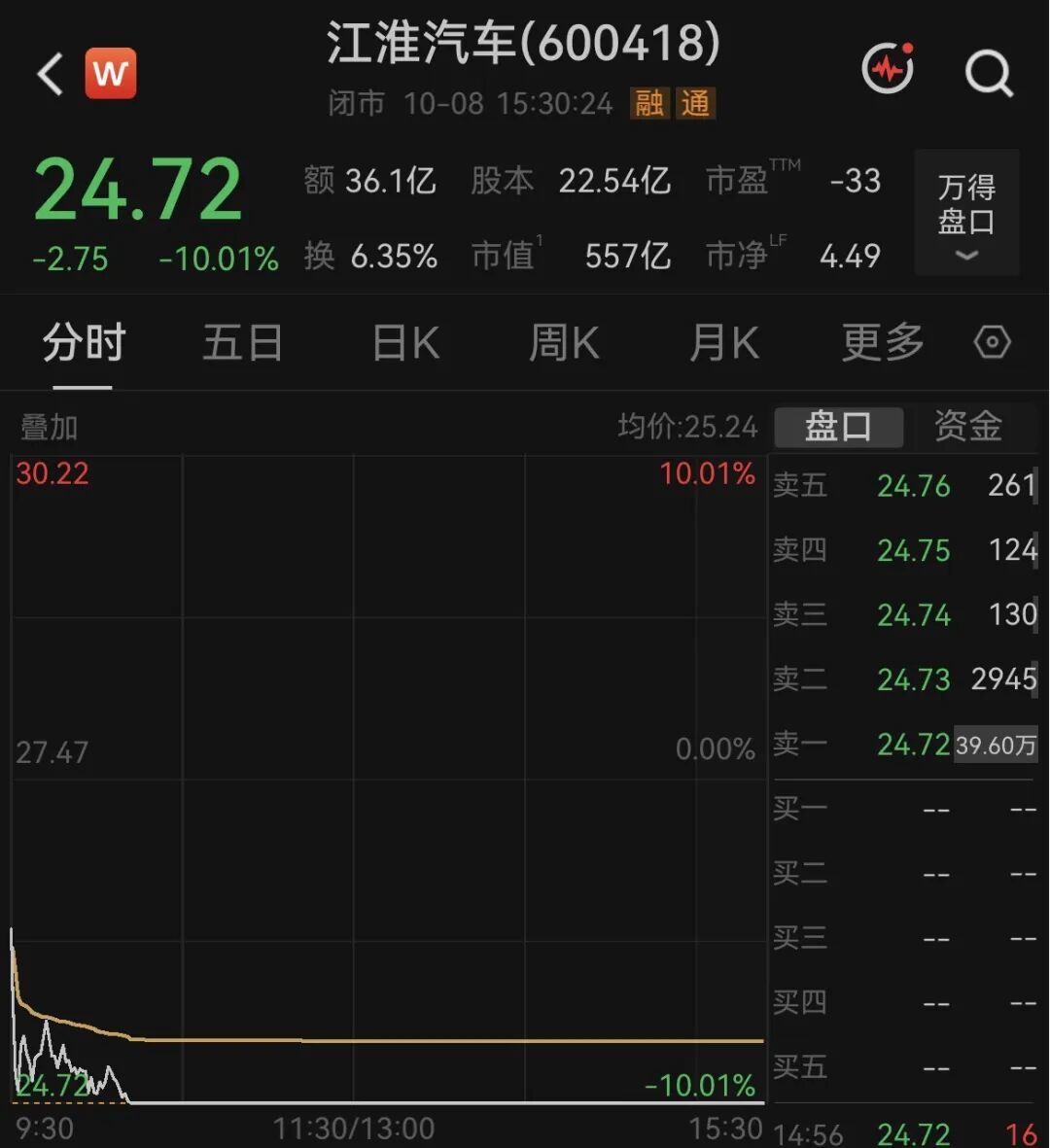
Just after the National Day holiday, the car industry staged a drama that shocked everyone across the country. Jianghuai Automobile fell by the limit during the session, with a turnover of more than 3 billion. Well, the reason is not a shocking financial report or something happened to a senior executive, but a test video. The account "Knowing Cars Corgi Dongmen" under the banner of "Knowing Cars" bought three Zunjie V800s, a million-level luxury MPV jointly built by Huawei and JAC, and took them to the test site to perform emergency braking from 100km/h to 0.
The result was shocking. All three cars and their brake pedal brackets were broken.
Yes, it’s Santai! A million-dollar luxury car, the car-savvy guy bought his first one and it broke. He bought another one and it still broke. He bought another one and it still broke.
The brake pedal is the ultimate vehicle safety accessory, but it can actually break?
Public opinion instantly fermented and became extremely controversial.
You might say it’s a design flaw, but the testing methods are indeed controversial. The sensor shows that the pedal force reaches 4000N, which is approximately equal to 408 kilograms. What concept? If you ask an adult male to stand on the brake pedal and dance, that's probably the intensity.
While talking, the brake pedal of a million-dollar luxury car can be broken by stepping on it. Isn’t this an act of murder?
The other side said, with a force of 4000N, do you usually drive like this? Are you testing or dismantling the car?
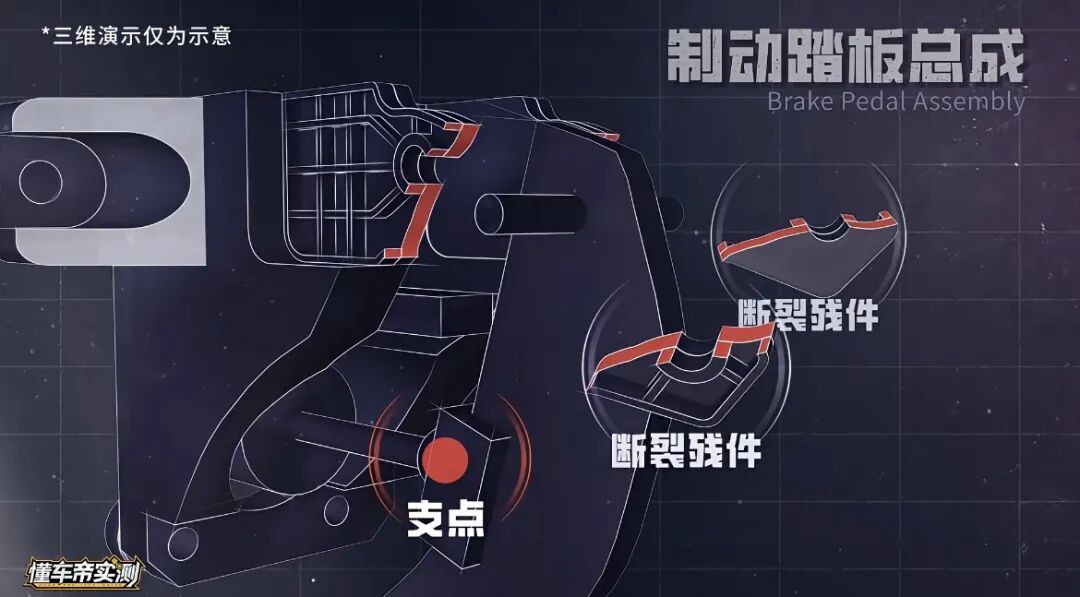
But there is a voice that is ending this controversy. This voice says that no matter what, no matter how much strength a person uses, this thing should not be broken!
Whether there is any problem with the Zunjie V800 still requires self-examination by the car company and further analysis by professionals on the test. However, this incident reminds us to think about a mechanism. As a safety issue involving human life, what kind of mechanism can improve consumer safety.
Please note that this incident was detected by the private company Chedi, which spent millions of dollars at its own expense. It is not the product of testing by public testing institutions or various national quality standards.
The mechanism emerging in this market is the most important issue for product safety.
Traditional authority may be just a legend
Many people have a simple understanding that government testing is the most reliable.
After all, it is an official organization that represents the public interest and is not interfered by commercial interests. It holds the power of forced recall and is very authoritative.
But reality is often much more magical than ideal.
There is an agency in the United States called NHTSA, National Highway Traffic Safety Administration. This is the U.S. federal auto safety regulatory agency, which has great powers and can investigate defects and force recalls.
But NHTSA has an open secret called the revolving door.
In 2010, California Highway Patrol Officer Mark Seiler and his family of four were driving a rented Lexus ES350 when they suddenly accelerated and the entire car was killed.
Why didn’t federal agencies discover this security problem?
When the Senate investigated this matter, it was found that the former NHTSA employee joined Toyota directly after leaving his job, and his job content was "trying to limit the scope of Toyota's recalls."
You read that right. The people who supervise you will go back to work at the company being supervised, and their job will still help you reduce recalls.
According to statistics, as many as 33 former NHTSA and Department of Transportation employees, after leaving government agencies, went to large car companies to engage in work related to vehicle recalls and safety compliance.
What is this called? They graduated here and found employment there, matching their majors and seamlessly connecting.
There is also a joint agency in the United States called the Consumer Product Safety Commission, CPSC.
At a congressional hearing in 2019, a senator asked that there is a private organization called Consumer Reports. This private organization disclosed a safety issue with children's products. The report pointed out that at least four babies died due to the Kids II tilting bed. Is the CPSC, a public organization, aware of these deaths?
The CPSC's answer is: "Yes, I know."
"I have been actively pushing for suspensions and recalls for at least a year."
Got it. I knew it a year ago. Then what? Then nothing happened. Because we had to go through the process and faced lobbying from big companies, in the end no action was taken.
Who ultimately pushed for the recall? It is the report of this private organization "Consumer Reports" and the public's anger.
What is the CPSC doing? Their answer has always been to actively promote, but then there is no result.
I am not saying that public supervision is useless. What I mean is that public supervision is not inherently more reliable than market-based institutions.
It may be affected by industry lobbying, it may be delayed by bureaucratic inertia, it may lose its independence due to personnel turnover, and it may even be more likely to "manage everything" but actually "cannot control anything."
If you expect an organization to be in charge of food safety, car safety, toy safety, electronic product safety, and drug safety, how many people does it have to have? What's the budget? How much energy?
The reality is that it can't be controlled.
Private third-party evaluation
It is precisely where public supervision fails that third-party evaluation agencies have shown irreplaceable value.
Consumer Reports is a non-profit organization in the United States, and what it does is meddle in other people's business.
In 2026, while testing the Nissan Leaf 2026, their engineers discovered that the rear seat belts could not lock properly when securing child seats.
This report was first sent to public opinion and reported to Nissan at the same time. Nissan checked and confirmed the defect, so it recalled 3,788 vehicles.
From discovery to recall, the entire process is driven by independent testing.
No waiting for NHTSA, no waiting for Congressional hearings, quick and efficient.
In 2010, "Consumer Reports" tested and found that the Lexus GX460's electronic stability system intervened too late and was at risk of rollover, and directly gave it a "Do Not Buy" rating.
Toyota immediately suspended sales of this model in North America without saying a word.
This is the power of third-party reviews.
You might say, isn’t this just a media? What's so great about it?
The great thing is: it is more agile than the government, more focused than the government, and more accountable than the government.
Agile because it does not require layers of approval to start testing. If a problem is discovered today, it can be tested tomorrow, and a report can be issued the day after tomorrow.
Focus is because it only does one thing, evaluate whether the product is good or not. There is no need to worry about the budget, no need to worry about personnel, and no need to worry about the coordination of the other eighteen departments.
It is accountable because its conclusions are open and transparent, and if it is wrong, it will bear the consequences.
There was a case in Germany in 2026. Stiftung Warentest, a private testing agency, was judged by the court to be liable for the company's economic losses due to wrong test ratings.
You see, third-party reviews are not about casual talk or spreading rumors to cause trouble. On the one hand, their impartiality must be evaluated by consumers. On the other hand, if they are false or false, they must bear legal responsibility.
On the contrary, if a public testing agency fails to detect a problem, or takes money from the company and deliberately fails to report the problem, no one will be held responsible.
China’s third-party reviews
Now back to the Zunjie incident.
There is indeed something to discuss about the testing methods of Car Emperor. Is the pedal force of 4000N reasonable? Does continuous violent braking represent real working conditions? These controversies are healthy in themselves.
A healthy review ecosystem does not allow mistakes, but allows disputes, corrections, and approaches to the truth in debates.
But more important than discussing testing methods is understanding the deeper meaning of this matter.
China is going through a transition period from official testing having the final say to third-party evaluation participating in the review.
After decades of development, Chinese companies have begun to have private testing institutions that are willing to spend millions to test the quality of a product.
In the past, Chinese consumers’ understanding of product quality relied almost entirely on government random inspections and official notifications.
However, there are two inherent flaws in government random inspections. First, the coverage is limited, making it impossible to conduct in-depth testing of every product; second, the feedback cycle is long, and problems are often not noticed until they accumulate to a certain extent.
The biggest problem is that the personnel of public testing institutions also have their own private interests. They are easy to accept bribes, easy to relax standards, and easy to turn a blind eye.
Third-party evaluation agencies fill precisely these two gaps.
Understanding that the car emperor himself is collecting advertising fees from car dealers, how can he ensure fairness?
It has developed a "separation of business and testing" system, which rigidly separates evaluation content from commercialization from the four dimensions of personnel, business, assessment, and finance. The program execution team does not participate in any commercial cooperation, the performance of the evaluation team is not linked to commercial income, and the evaluation project has an independent budget and financial accounting.
In other words, people who do testing cannot reach the business list; people who do business cannot have a hand in testing.
At the test execution level, the platform purchases mass-produced vehicles by itself, unifies the test standards, and leaves traces of original data throughout the process. The 2024 global winter test spans China, the United States, and Sweden, with more than 90 vehicles from nearly 40 brands, at the same venue, under the same working conditions, and in the same process.
The significance of these systems is that they transform objective neutrality from a moral commitment into a mechanism that can be tested.
But frankly speaking, it is hard to say whether this mechanism can truly win trust.
After all, advertising revenue still accounts for a large proportion of its business model. Public suspicion will not be automatically eliminated by a one-paper system.
If you spend more money on advertising on Qingchedi, will his inspection team let it go?
This depends on whether the car-savvy emperor will regard reputation as a long-term asset.
There are many private companies in the world that sell fair testing as their core business. For example, SGS, as the world's largest private testing organization, is far more impartial in many product testing than governments around the world, and its business has lasted for hundreds of years.
Selling fair testing is also a commodity. If a company values long-term interests, it will not easily damage its brand.
Third-party testing should become the main force
In a world of increasingly complex products, why should we trust that a product is safe?
The official seal of the government? Corporate commitment? Or is it recommended by KOL?
European and American experience tells us that these are not enough.
Official government seals may be corroded by the revolving door, corporate commitments may be overwhelmed by cost pressures, and KOL recommendations may be bribed by top-ups.
What is truly reliable is an evaluation mechanism that is independent of the government and enterprises. It purchases its own products, tests them publicly, has transparent data, and accepts supervision. It may not be perfect, but it at least gives "trust" a basis that can be tested.
In 2026, the Cyberspace Administration of China and the State Administration for Market Regulation jointly issued the "Standards for Online Assessment Activities" to draw red lines in terms of sample selection, testing standards, qualification verification, and interest disclosure. The China Association of Automobile Manufacturers has also made it clear that it supports the establishment of third-party evaluation institutions.
What does this mean? This shows that the country has also realized that official testing alone cannot control the epidemic. Market forces are needed to supplement, compete and form checks and balances.
The quality of the market ultimately depends on the power of the market to protect it.
China’s third-party evaluation industry has indeed just started. Its system is not yet perfect, its credibility still needs time to accumulate, and its testing methods still need to be continuously polished.
But that doesn’t mean it has no value.
On the contrary, precisely because it has just started, it needs more attention, discussion, and supervision.
Can the separation system of business and testing stand the test of time? What will be the final conclusion of the investigation into the Zunjie incident? Will these controversies move the industry forward, or will it make companies more cautious about third-party reviews?
There are no standard answers to these questions.
But one thing is becoming increasingly clear. In a mature market economy, third-party evaluation agencies are a firewall between consumers and products, and are the infrastructure of market trust.
You can question its methods, challenge its conclusions, and demand more transparency. But you can't deny that its existence itself is an effective constraint on product quality.
Because someone is watching, I don’t dare to mess around. This is the simplest and most powerful power of third-party evaluation.
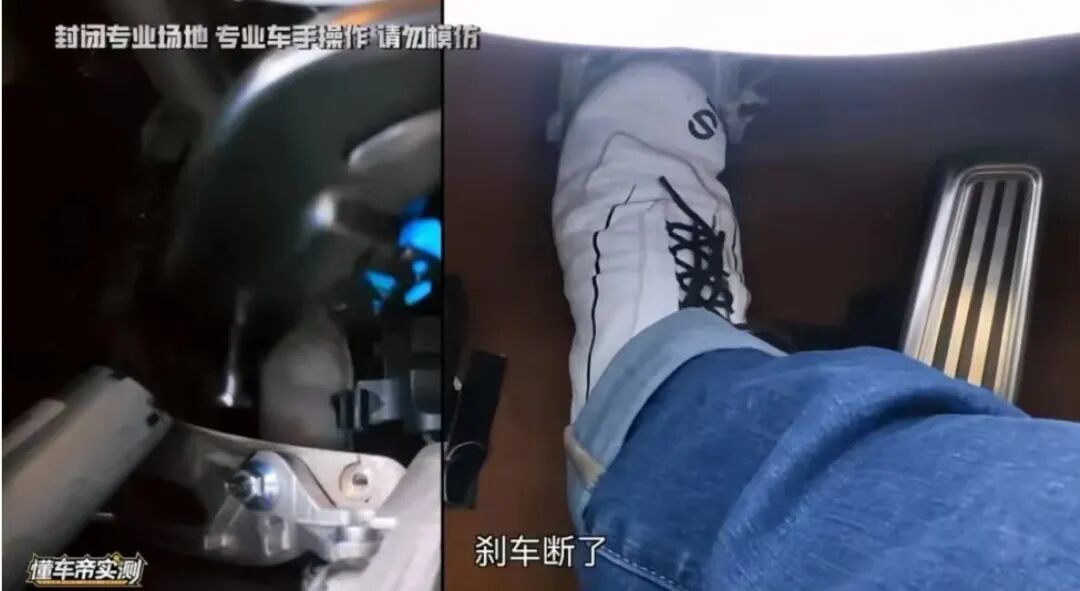
Whether the brake pedal of the Zunjie V800 will eventually prove to be problematic, I don’t know.
But I know that if there were no third-party evaluation organizations like Qidichedi, this question might not even be raised.
That's enough.
Comments