
Abstract:
A high school in Pennsylvania, USA, recently decided to deactivate a weapons detection system using artificial intelligence technology. Even though the system had been collecting data and training in schools for months, it had been unable to reliably distinguish between firearms and common items students carry around every day, frequently issuing false alarms. The school ultimately concluded that the equipment had not yet reached the standard for actual use.
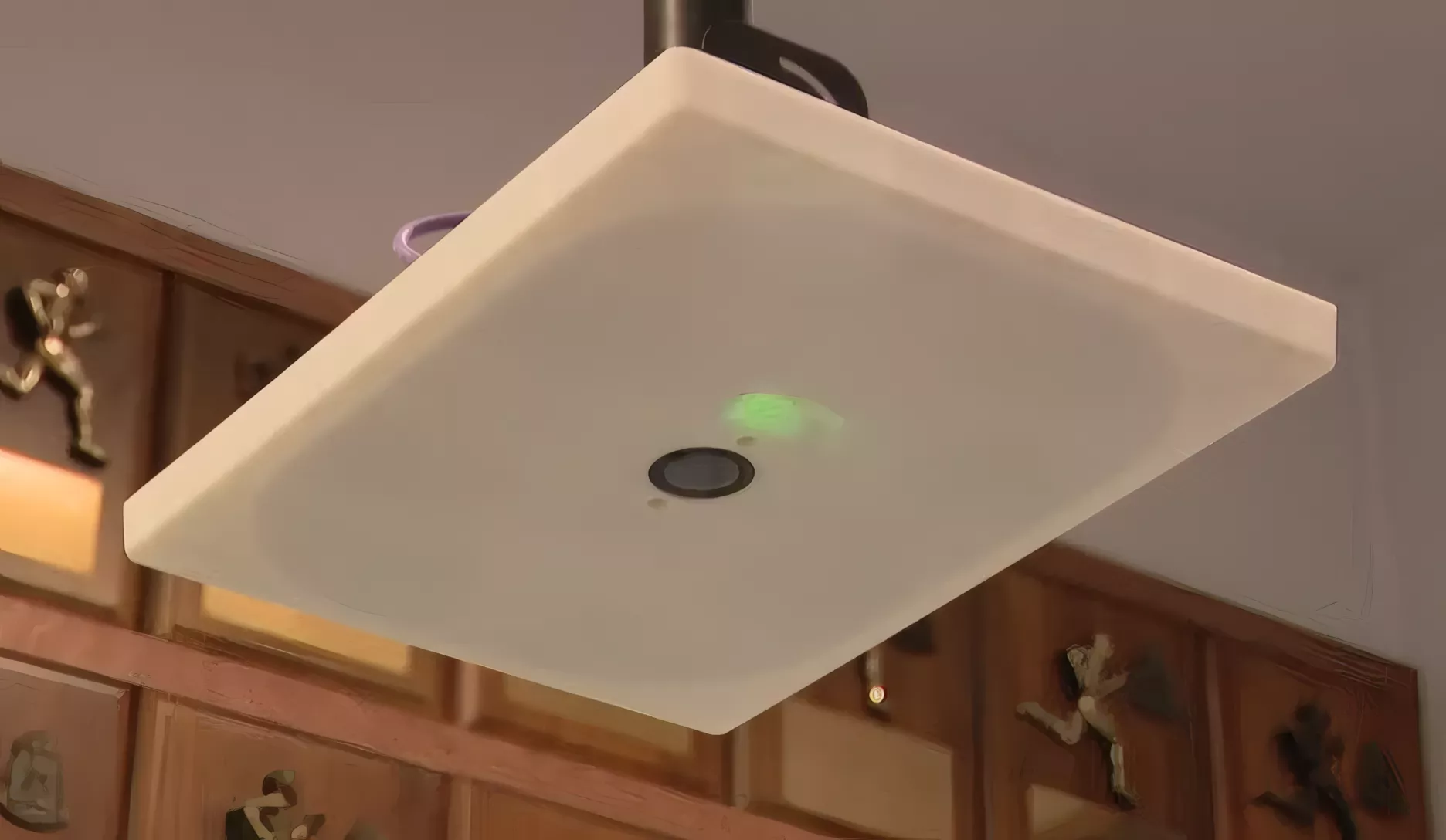
The school involved is Hempfield Area High School in Pennsylvania. The school participated in a pilot project conducted by CurvePoint to test an artificial intelligence weapons detection system called Wi-AI. CurvePoint is a start-up company originating from Carnegie Mellon University that specializes in developing technology that uses wireless signals for security detection.
Wi-AI is different from traditional metal detectors in that it does not require students to put their belongings into the tray, nor does it rely on cameras to identify targets. Instead, it uses Wi-Fi radio signals to determine the shape and characteristics of people and their belongings.
The system installs small sensors called SensePods near the school entrance. When a person passes near the sensor, the device measures the changes in radio waves reflected on the surface of the human body and belongings, and then software analyzes these signals to look for characteristics similar to hidden weapons. Once a suspicious target is discovered, the system can alert school staff via text message, email, or the administrative control panel.
CurvePoint said the system does not require cameras and can analyze people flow and building occupancy without storing personally identifiable information.
Hempfield schools began participating in the testing last school year. Sensors installed near the entrance continuously collect data as students pass by, and even after students enter the building, the system continues to collect data in order to improve the recognition model.
However, the actual test results were not ideal. The system often identifies common items carried by students as potential weapons, including binders, metal water bottles and power banks. Due to the wide variety of electronic devices and other items students carry with them on a daily basis, it is difficult for systems to accurately differentiate between truly dangerous items and ordinary paraphernalia.
The school originally hoped that the model would eventually reach a recognition accuracy of 95%. Only after reaching this standard would it be possible to use it as the school's main security detection system. But Hempfield School District Superintendent Dr. Mark Holtzman admitted that the system is still far from the 95% goal.
The problem, Holtzman said, is not that the system cannot detect anything at all, but that there are too many false positives to meet actual deployment requirements. He pointed out that environmental factors and problems during data transmission have affected the stability and consistency of the system.
Skip Smith, co-founder and CEO of CurvePoint, said Hempfield has been a testing and evaluation site for the company's school security technology, rather than a formal deployment site.
Smith acknowledged that testing has helped the company understand the system's performance while also exposing environmental issues that impact reliability and consistency. He said the company will continue to develop and evaluate the technology, but does not currently support formal operational deployment and has no firm timeline for its return to service.
Because the pilot project ultimately did not enter the full operational stage, the school's previous payment for the detection equipment will be refunded. Holtzman said that the school is still willing to continue to provide a testing environment for CurvePoint in the future. If the company needs to use campus facilities for further training, the two parties can continue to cooperate.
After Wi-AI is retired, Hempfield High School will continue to use the OpenGate walk-up weapons detection system that has been in operation for many years. The school said that it is currently quite satisfied with the operation of this set of traditional equipment.
This is not the first time that the AI campus security system has seriously misjudged. In 2025, a similar incident occurred at Kenwood High School in Baltimore County, Maryland, USA. A 16-year-old student was surrounded by police and handcuffed after an AI system running a school surveillance camera mistook a bag of Doritos in his hand for a gun.
AI weapon detection technology has attracted attention from American schools and local governments in recent years. Some systems try to use artificial intelligence, wireless sensors and electromagnetic detection technology to identify potential dangers without requiring students to take out their belongings. However, in actual deployment, the balance between false alarm rate, detection sensitivity and complex campus environment is still a difficult problem.
Hempfield’s test results also show that the AI system performing well in a laboratory or limited environment does not mean that it can directly adapt to complex scenarios where hundreds or even thousands of students carry various items in and out of campus every day. For devices involved in campus security, too many false alarms not only increase staff burden, but may also cause real alarms to be drowned in a large number of invalid prompts.
Comments