
Abstract:
On November 5, the "blue wave" swept Wall Street. The three major U.S. stock indexes plummeted across the board, and stocks related to AI, semiconductors and data centers suffered concentrated selling. The next day, technology stocks rebounded, with the Nasdaq rising by 1.09% and the Philadelphia Semiconductor Index rebounding by about 4.2%. However, the Nasdaq still fell by about 3.4% for the whole week. Anthropic, which has not yet been listed, is at the center of the AI storm. It does not have a real-time stock price, but it is also subject to severe scrutiny.
According to foreign media reports,
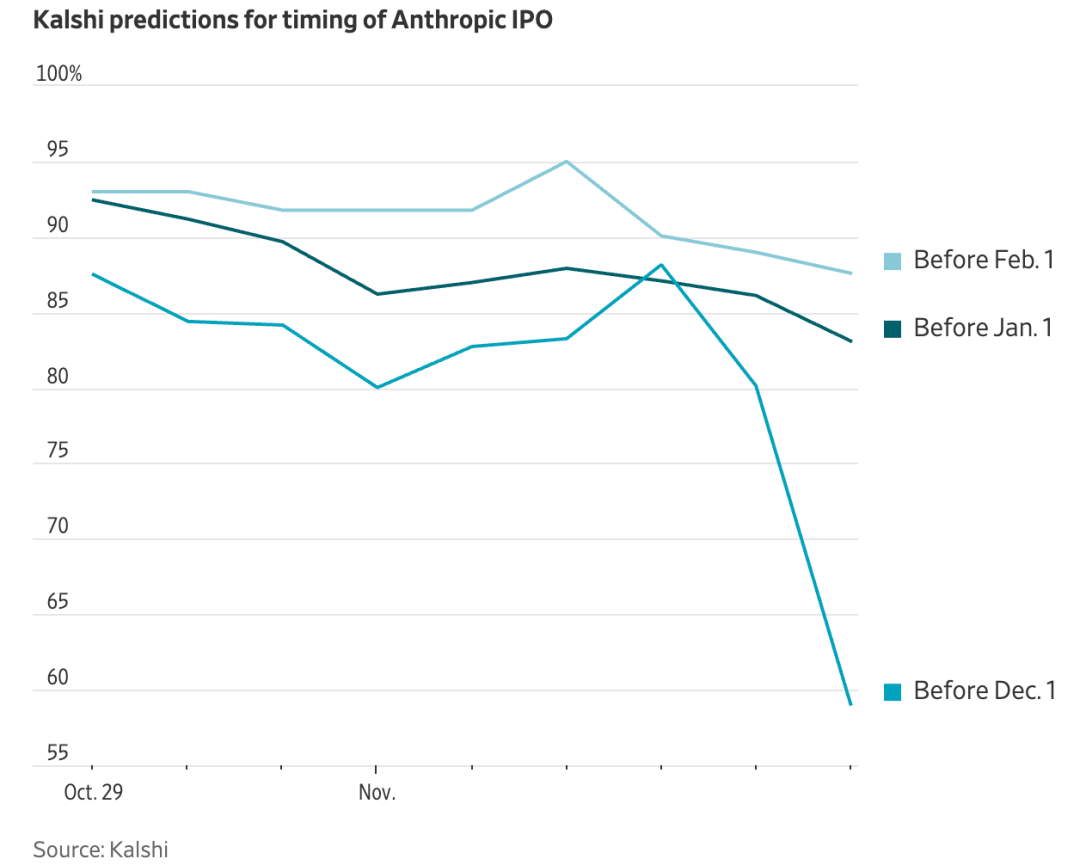
On the prediction market Kalshi, traders believe that the probability of Anthropic completing its IPO within the year has dropped from nearly 90% before the U.S. midterm elections to less than 60%. Some potential investors even doubt whether Anthropic can reach the expected valuation of 1.5 trillion.
Misfortune never comes singly, and personnel changes occurred one after another within Anthropic. Claude Code lost three important members in two weeks. Former product leader Cat Wu and first growth employee Austin Lau joined competitor OpenAI.
As the market for technology stocks deteriorates, doubts surrounding the trillion-dollar IPO are growing.
On November 5, U.S. stocks plummeted across the board. The Dow Jones Industrial Average fell 1,833 points, or 3.44%; the S&P 500 Index fell 4.36%, the largest one-day decline since the U.S. tariffs hit in April 2025; the Nasdaq fell 5.52%, the largest one-day decline in 19 months.
The AI industry chain has become the hardest hit area by selling. The Philadelphia Semiconductor Index plunged about 12.3% in a single day, the largest single-day decline since March 2020. Nvidia fell about 9% and AMD fell about 17%. CoreWeave fell about 10%, and Nebius fell about 15%. The stock prices of both companies were halved from their highs on October 6. Microsoft fell 3.6%, while Amazon and Alphabet both fell 2.2%.
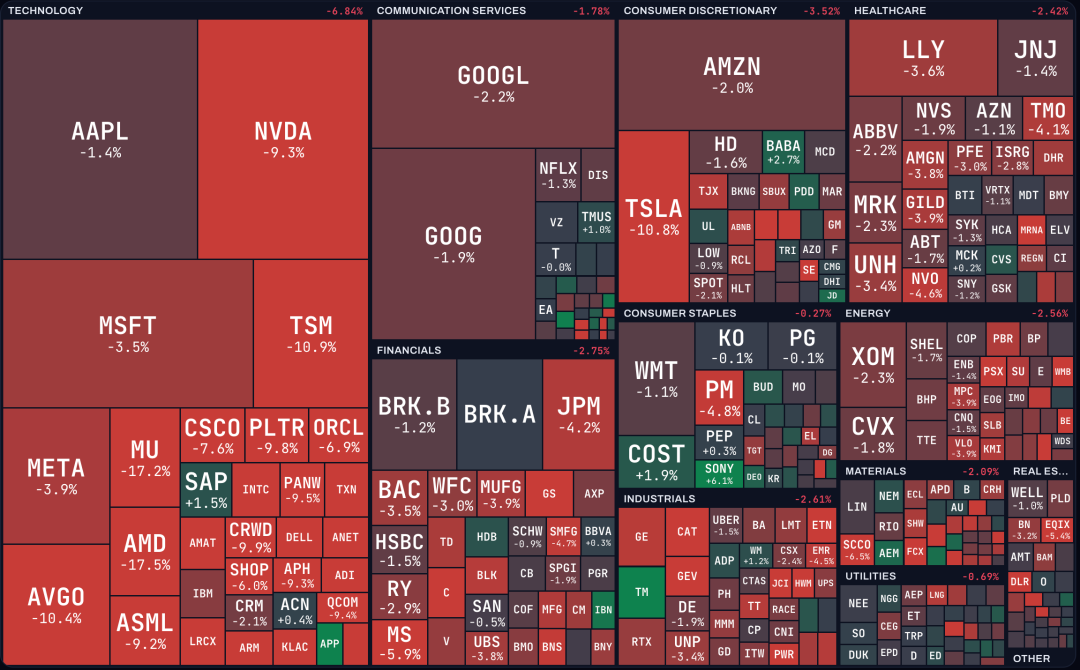
Note: There are differences in the rise and fall data of some stocks on different market platforms, and the numbers in the picture may be slightly different from the data cited in the text.
The color of the stock market contrasts sharply with the votes. One of the main triggers for this round of selling is the market’s concern that the new U.S. Congress and local governments may restrict the construction of AI data centers. Data centers’ large use of electricity, water, and impact on local infrastructure have become important issues in local politics in the United States.
UBS estimates that about 30% of the new data center capacity in the United States scheduled for 2028 may be affected by potential construction pause measures.
Under this sell-off, the IPO being prepared by Anthropic has become an important window for observing the AI market.
Anthropic is both a purchaser of huge amounts of computing power and a model developer that sells AI services directly to enterprises and consumers. Investors are worried about whether the huge investment in AI can be converted into sustained revenue and profits. The answer ultimately needs to be found from the operating performance of such companies.
The violent fluctuations in the stock market also increased the difficulty of pricing this transaction.
Institutional investors will refer to the valuation, profit expectations and market risks of existing technology stocks to decide at what price they are willing to subscribe for new shares. When AI-related stocks generally fall, even if they are still optimistic about Anthropic's long-term prospects, they may demand a lower offering price or reduce the subscription amount.
Anthropic was previously expected to raise up to US$100 billion. Such a large issuance scale needs to attract enough institutional investors. If the subscription demand is insufficient, the company may need to lower its valuation, reduce the scale of fundraising, or wait for the market to stabilize before going public.
On November 5, according to foreign media reports, potential investors have questioned whether Anthropic can launch a road show in the week of November 9 and complete the listing within November. Some investors believe that the previously discussed valuation of approximately US$1.5 trillion is still high and hope for a larger valuation discount. Anthropic declined to comment.
This transaction, which was expected to set a global IPO financing record, is now facing double pressure: institutional investors continue to lower valuation expectations, and the originally expected listing timetable is also beginning to be questioned.
However, it should be noted that Anthropic has not yet announced the official issuance price and launch date. In the prospectus, the company only stated that it "plans to conduct a public offering as soon as possible after the SEC registration statement becomes effective." The previous listing arrangements in November mainly came from sources familiar with the matter.
In fact, Anthropic's valuation pressure has always existed. The estimated valuation of US$2 trillion was only a flash in the pan in September this year, and the attitude of the capital market seemed to have turned colder along with the temperature.
On October 14, Anthropic held an investor day and disclosed third-quarter financial data to potential investors. The company's revenue increased by approximately 45% quarter-on-quarter to US$16.8 billion, still maintaining rapid growth, but it slowed down significantly compared to the approximately 145% quarter-on-quarter growth in the second quarter. The next day, there were media reports that some investors began to lower Anthropic’s IPO valuation expectations from the previous approximately US$2 trillion to US$1.5 trillion.
The expected valuation of US$500 billion evaporated before the official listing. Some media even commented that Anthropic may have missed the best time to go public - if the company can be listed in June and enter the public market when revenue growth is at its strongest, it may be able to obtain a more ideal valuation.
On November 2, Anthropic updated its prospectus to add third-quarter results: quarterly revenue was US$16.956 billion, a quarter-on-quarter increase of approximately 47%, and long-term computing power purchase and leasing commitments were as high as US$895.4 billion. It was reported on the same day that institutional investors preparing to participate in the IPO hope to control the valuation between US$1.5 trillion and US$1.6 trillion.
Now, even this discounted price is beginning to be questioned.
According to foreign media reports, as the market for technology stocks worsens, some potential investors are discussing a valuation range of US$1.2 trillion to US$1.3 trillion, and some are even considering lowering the valuation to US$1.1 trillion.
Other reports indicate that some investors are waiting for Anthropic's October revenue data to determine whether the company's revenue growth can pick up again after growth slowed in the third quarter.
This data has not been separately disclosed in the prospectus updated on November 2.At the same time,
Anthropic also faces competition for talent from competitors.
On November 3, U.S. time, Cat Wu, the former product leader of Claude Code, announced his resignation, ending about two years of work at Anthropic. She participated in the development of Claude Code from an internal experimental tool to a commercial product and is one of the most representative members of this product. Just two days later, Cat Wu announced that she would join OpenAI and be responsible for product management of core products, reporting to Tibo Sottiaux.
Anthropic’s first growth marketing employee, Austin Lau, also announced that he would join OpenAI on the same day. He previously participated in establishing Claude's user growth system and was responsible for attracting more users to use the product. Anthropic also introduced in January this year how he used Claude Code to develop marketing tools and shorten the creative production time from 30 minutes to 30 seconds.
It just so happened that during the critical period when Anthropic and OpenAI were competing for the enterprise market, those who switched to OpenAI happened to be two people who had helped Anthropic win users. One promotes the commercialization of Claude Code, and the other is responsible for letting more people access and use Claude. Now, both of them have joined the original competitor camp.
Interestingly, Anthropic has just emphasized its talent advantages in its prospectus. The company said that in the past 12 months as of September 30, the overall "regretful turnover rate" was only about 1%. However, this statistics does not include the departure of key personnel since the end of October.
As for the reason for leaving the company, the parties did not give an explanation directly related to the prospect of IPO. Cat Wu also made it clear that the ability to sell the company's shares in advance was not a consideration for her resignation.
Anthropic’s IPO valuation has been declining, and OpenAI is not immune to it.
On October 19, according to foreign media reports, OpenAI is accelerating to raise approximately US$30 billion, hoping to lock in investor funds before Anthropic goes public, with a target valuation of more than US$1.4 trillion. However, by October 30, OpenAI’s financing target had been reduced to approximately US$20 billion, and its target valuation was also lowered to US$1.25 trillion. On November 6, it was revealed that OpenAI had completed the first round of financing of approximately US$11 billion, and the remaining funds were still being raised.
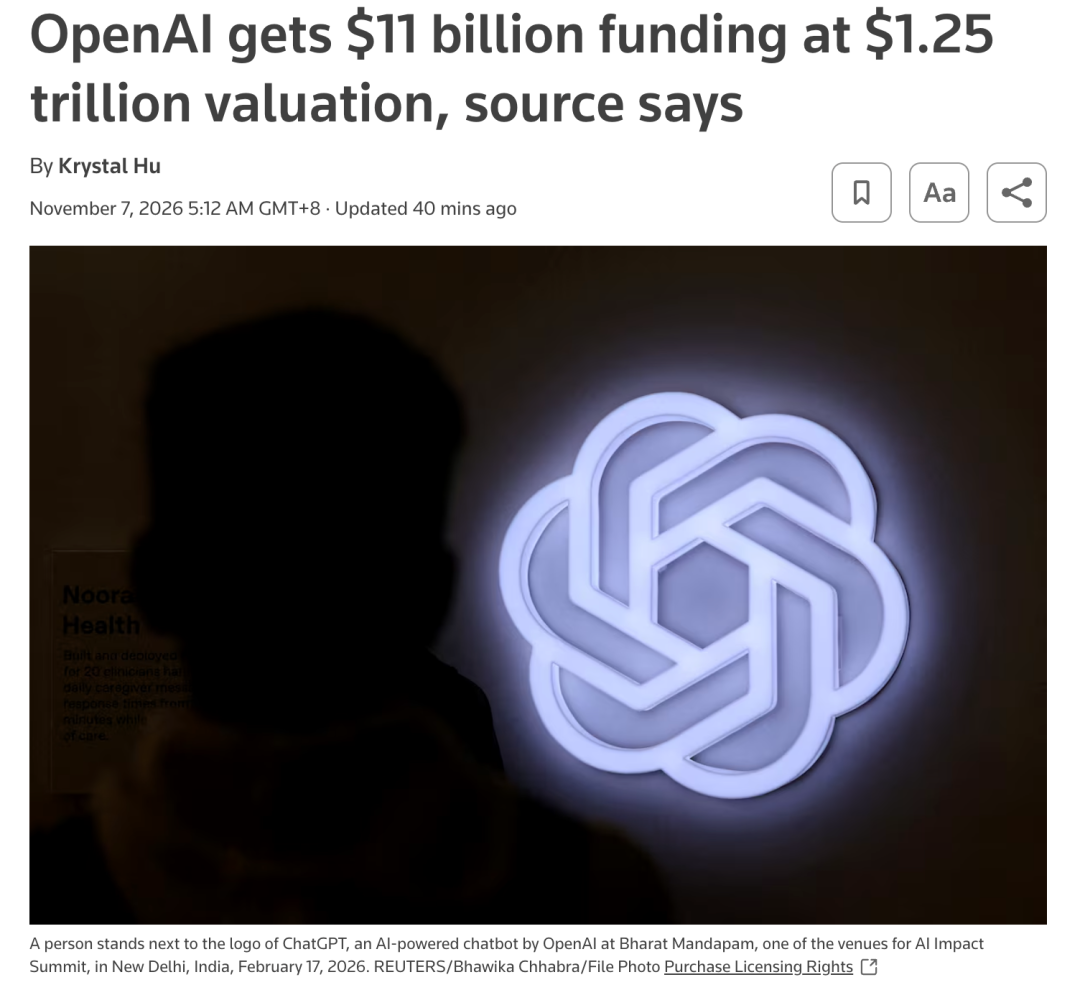
OpenAI is rushing to raise money ahead of Anthropic, while Anthropic hopes to use its IPO to set a financing record. Today, both companies have encountered price pressure from the market. They compete for the same investors and face similar financing obstacles.
Anthropic is one of the few companies still persisting in this wave of AI listings. Most of the other AI companies preparing to go public this year have chosen to temporarily withdraw from this financing competition.
As of October 22, data center operator Switch, AI infrastructure company Nscale, and SoftBank-backed SB Energy have all postponed their IPOs, while Nvidia-backed Firmus and Blackstone-backed AirTrunk REIT have withdrawn or suspended issuance plans. According to reports, some companies were even unwilling to compete with Anthropic for the funds and attention of institutional investors at the time. Many large investors remain bullish on Anthropic, seeing it as one of the few opportunities to directly invest in cutting-edge AI companies.
Just two weeks later, Anthropic’s distribution arrangements were also questioned.
Compared with already listed chip manufacturers and cloud computing giants, OpenAI and Anthropic, which directly develop cutting-edge models, still lack valuation reference in the public market. Anthropic was expected to become the first cutting-edge AI model company to list on the U.S. stock market, and its issuance results naturally attracted much attention.
If successfully listed, even if the valuation is lower than previously expected, the capital market will finally have the opportunity to directly price such companies. Investors can judge how high a valuation a cutting-edge AI company deserves based on Anthropic's revenue growth, profitability and computing power costs. This will provide an important comparison object for AI companies such as OpenAI that have not yet been listed.

It is worth noting that the IPO delay will not put Anthropic into financial difficulties immediately. According to the latest prospectus, as of September 30, the company still held approximately US$131.9 billion in cash and short-term investments, with a considerable capital buffer.
But if the IPO is delayed and other financing channels begin to tighten, the situation will be much more difficult.
Anthropic has signed long-term computing power purchase and leasing commitments of nearly US$900 billion, of which approximately US$69.8 billion is expected to expire before the end of September 2027. Once financing costs continue to rise and new funds are difficult to obtain, companies may have to slow down their expansion or even readjust some of their investment plans. Data centers, chip suppliers and financial institutions that rely on future orders may also be affected.
For Anthropic, if it misses one listing window, it may be able to wait for the next one. But if the capital market’s valuation logic for the entire AI industry changes, the next opportunity may not be better than now.
Comments