
Abstract:
YouTube announced a series of new tools for creators at its annual Made on YouTube event, a considerable number of which are powered by artificial intelligence and are mainly concentrated in YouTube Studio, the creator management platform. The highlights of this update include extending the AI Q&A assistant Ask Studio to iOS and Android mobile terminals, allowing creators to submit unreleased videos to AI for analysis and obtain modification suggestions, and using AI to automatically optimize video thumbnails.
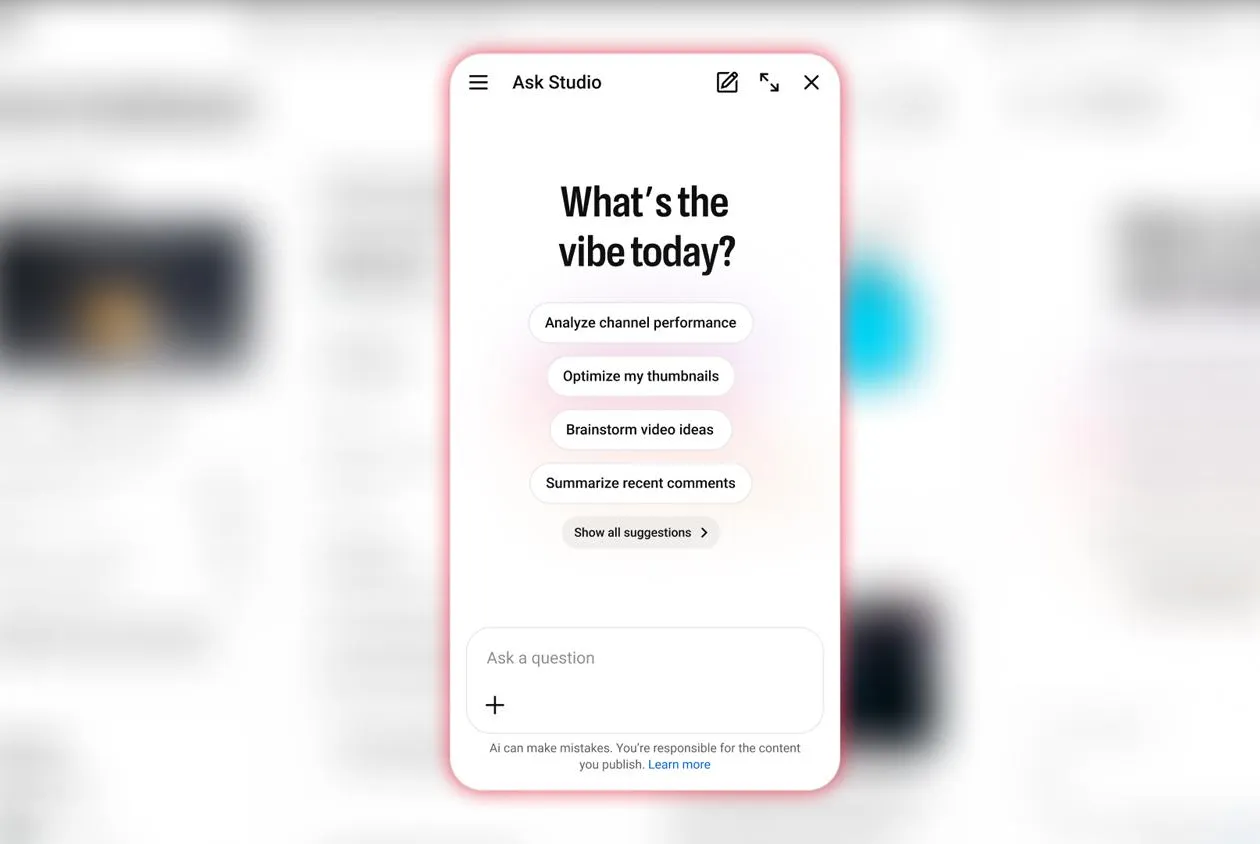
Ask Studio was previously mainly used to help creators analyze channel data and content performance, and now its functions have been further expanded. Creators can directly ask AI questions about channel operations, and the system will give personalized suggestions based on the creator's past videos, audience comments, and channel data. For example, when a video is performing poorly, Ask Studio can help analyze why and come up with new titles, thumbnails, and content adjustments.
After this update, creators can also submit unpublished video drafts to Ask Studio for evaluation. After watching the draft content, AI can point out problems that may affect the performance of the video and provide suggestions for improvement based on the creator's past works and audience feedback. This means that AI no longer just helps creators analyze data after the video is released, but begins to intervene in the creation and modification process before the video is officially released.
YouTube is also further strengthening its A/B testing capabilities for video titles and thumbnails. The platform currently allows creators to test titles and thumbnails, and starting in 2027, Shorts will also support uploading up to three different versions of videos for testing at the same time, allowing creators to directly compare the performance of different edited versions among real audiences.
At the same time, YouTube launched the Dynamic Thumbnails (dynamic thumbnails) feature. Creators can upload multiple thumbnail versions, and YouTube will then determine which version is most likely to attract user clicks based on the interests and behaviors of different viewers, and dynamically decide which thumbnail to display to specific viewers. In this way, the same video no longer needs to rely on a fixed thumbnail, but can be continuously adjusted according to the actual effect.
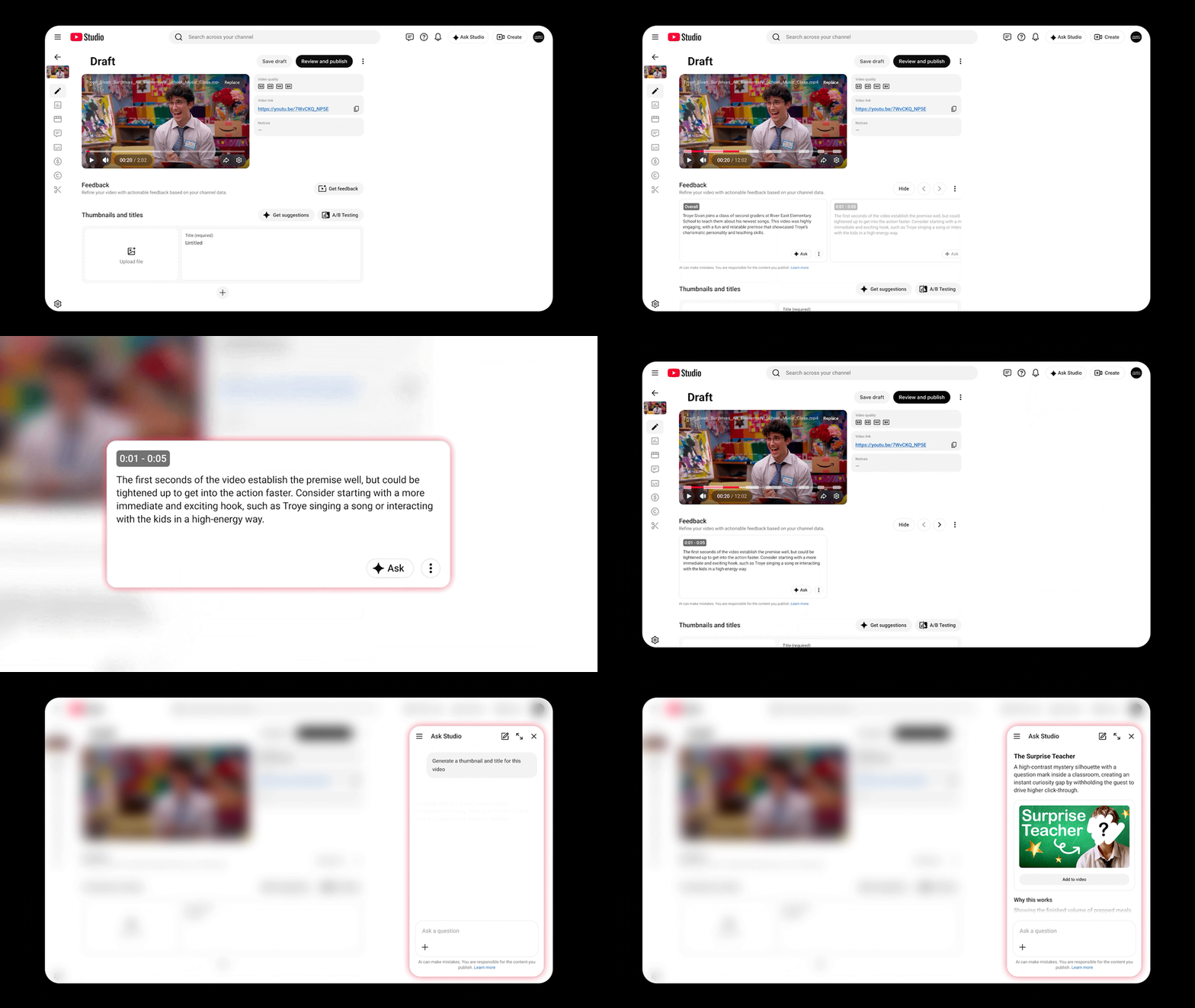
These AI tools can also be used on older videos that creators have already published. If authorized by the creator, Ask Studio can continuously monitor the thumbnail performance of older videos and automatically create new thumbnail tests to try to improve videos that have been released for a while but still have potential traffic. In other words, YouTube hopes to let AI not only participate in the production of new videos, but also continue to help creators tap the value of existing content.
This YouTube update also involves video commercialization. The platform will use AI to automatically identify products in videos and add product tags to help creators participate in affiliate marketing more conveniently. When a certain product appears in the video, the system can automatically identify related products, reducing the creator's workload of manually adding product information, and helping viewers directly find the products displayed or recommended in the video.
Meanwhile, YouTube is expanding the reach of Amazon's affiliate marketing program. Previously, this project was mainly targeted at the U.S. market. After this update, it will be further expanded to regions outside the United States, providing more creators with the opportunity to earn income through product recommendations.
However, YouTube also faces a real problem, that is, not all creators are willing to let AI participate in their content creation and operations. Some creators are worried that once AI makes a wrong judgment on video content, title or audience data, it may directly affect the credibility of the channel. Especially for creators who have established a stable audience group, an obvious AI error may damage the long-term accumulated trust.
Therefore, the features launched by YouTube this time are not simply to let AI make decisions on behalf of creators, but to try to let AI take on more analysis, testing and optimization work. Creators can still decide whether to use the AI’s suggestions for titles, thumbnails, and content, and they can also choose whether to have the system automatically test older videos.
This update also reflects that YouTube is further integrating generative AI from a pure content production tool into the entire creator ecosystem. In the past, AI was more used to generate videos, pictures, music or text, but now YouTube is letting AI participate in the complete process from creative conception, video production, pre-release analysis, to title and thumbnail optimization, post-release data analysis and commercialization.
With the launch of Ask Studio on the mobile terminal and the successive launch of dynamic thumbnails, video version testing and other functions, YouTube Studio is gradually transforming from a traditional channel management backend into a creator work platform continuously assisted by AI. For creators with a large number of historical videos, AI can also continue to analyze old content and automatically find new optimization opportunities. This also means that YouTube hopes to use artificial intelligence to further increase the lifetime value of each video on the platform.
Comments