
Abstract:
As generative artificial intelligence gradually changes the way users obtain information, Google is accelerating the integration of advertising business into the AI search experience. On October 28, local time, Google announced that it would expand advertising in AI Mode to more international markets and launch an advertising format that supports multi-round conversations in the United States. The move aims to convert search traffic brought by artificial intelligence into a new source of revenue. However, the growth rate of Google's traditional search advertising business is slowing down. The company urgently needs to prove that AI search can continue to support its core advertising business while improving the user experience.
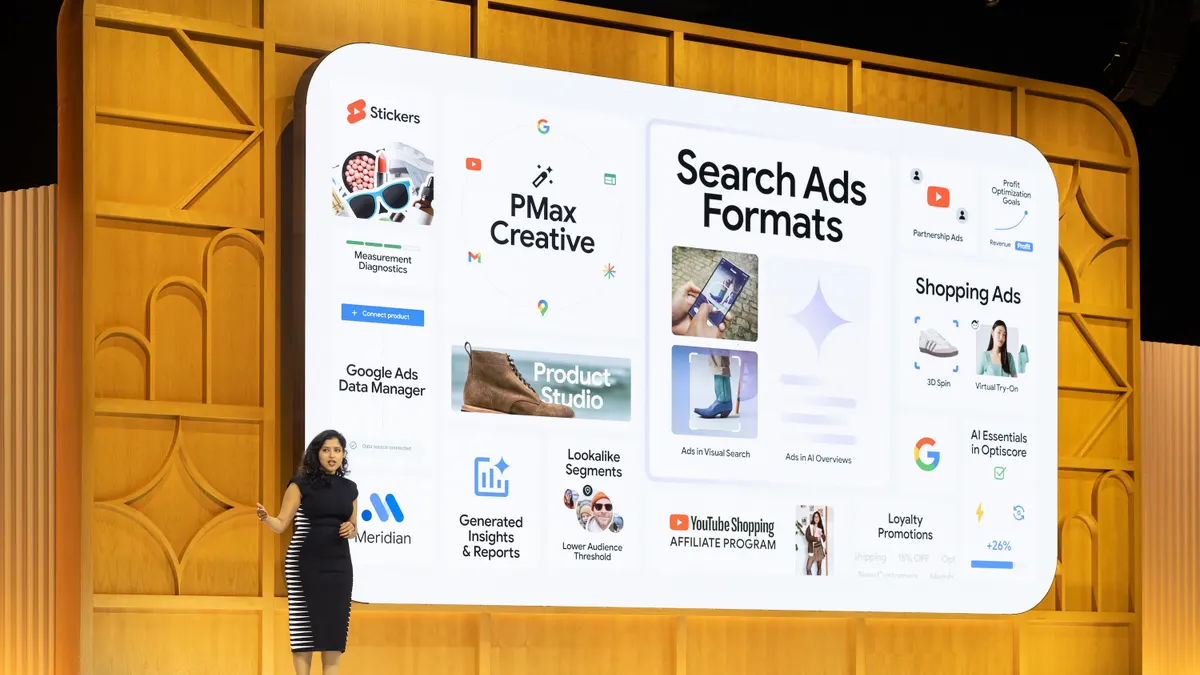
Google announced this time that advertising in AI Mode will be expanded to Australia, Canada, India, Kenya, Malaysia, New Zealand, Nigeria, Pakistan, Philippines and Singapore, a total of 10 markets. The company also plans to further expand to Brazil, Mexico and the United Kingdom in the fourth quarter of 2026.
At the same time, Google will launch multiturn ads in the United States. This type of advertisement can appear during the subsequent Q&A process between users and AI Mode, and is no longer limited to the initially entered search question. As users continue to add conditions, determine needs, or change their focus, the advertising system also has the opportunity to provide relevant product or service recommendations based on the conversation context.
Google Chief Commercial Officer Philip Schindler said on the earnings call that the company is expanding the coverage of high-quality ads in AI Overviews and AI Mode so that more users and more types of search requests can see relevant ads. This international market expansion also means that Google will promote the commercial scope of AI Mode advertising to markets outside the United States on a large scale for the first time.
Google believes that artificial intelligence is changing the way users ask questions. CEO Sundar Pichai said year-over-year growth in search queries was at its highest level in the past five years. Not only are users using AI functions more and more frequently, the questions they ask are also becoming more complex, and they are more inclined to gradually refine their needs through multiple rounds of dialogue.
Pichai revealed that the average query length in AI Mode is about three times that of traditional searches. About one-fifth of global AI Mode searches involve multi-modal input such as voice, image or document. In addition, Google processes more than 50 billion visual searches every month.
These changes mean that users no longer just enter a few keywords and then find answers from a series of web links, but may directly describe their budget, usage scenarios, preferences and restrictions to the AI, allowing the system to gradually narrow the search scope. For advertisers, this more specific expression of demand can theoretically help identify the goods or services that users really want to buy, thereby providing more targeted advertising.
Google said that early test results show that sponsored product lists in AI Mode have achieved click-through rates similar to natural product lists. The company also said that user research shows that consumers find these ads to be highly relevant to their search needs. However, these results mainly come from Google's own testing and research, and cannot yet prove that AI search advertising can achieve the same effect in all markets, all industries, or different user groups.
The advertising expansion comes as Alphabet releases its third-quarter earnings. The company's total revenue in the third quarter reached US$127.6 billion, a year-on-year increase of 25%. However, the growth rate of traditional search advertising business continues to slow down, becoming the focus of investors' attention.
The financial report shows that Google’s search and related business revenue increased by 12% year-on-year in the third quarter, lower than the 17% in the second quarter and 19% in the first quarter. The search business still maintains growth, but the growth rate continues to slow down, indicating that Google needs to find new commercialization methods to respond to changes in user behavior and competition in the advertising market.
Alphabet's Google Services division covers search, YouTube and other consumer-oriented services. Revenue in the third quarter reached $96.3 billion, a year-on-year increase of 11%. At the same time, Google Cloud performed outstandingly, with revenue increasing 103% year-on-year to US$30.7 billion, reflecting that enterprise demand for AI computing infrastructure and cloud services remains strong.
However, the rapid development of AI search does not mean that its commercialization is fully mature. Google executives admitted at the earnings conference that AI Mode’s advertising monetization capabilities are still lower than some mature advertising scenarios in traditional search. Users may obtain more complete answers through AI without the need to click on multiple web pages, which may change the display and click mechanism that traditional search advertising relies on.
Traditional search advertising usually revolves around clear business keywords. For example, when a user searches for a certain product, service or brand, the advertising system can match the advertiser's bid with the target customer based on keywords. In contrast, the questions in AI search may be broader. Users may first ask about the differences of a certain type of product, and then gradually put forward requirements such as budget, performance and applicable scenarios. It is not until later in the conversation that a clear purchase intention is formed.
Google believes that this change may also create new commercialization opportunities. AI can help understand the true needs of users, allowing advertisers to provide relevant information in a longer decision-making process, rather than just showing ads for a single search. Multi-turn conversational ads are the embodiment of this idea: ads have the opportunity to adjust as the user's question changes, rather than relying entirely on the keywords initially entered.
However, this model also faces user experience challenges. If ads involve too much in AI-generated answers, or if recommended content does not match users’ actual needs, it may weaken users’ trust in search results. Google said that ads in AI Mode will be clearly marked as "sponsored content" (Sponsored) and will continue to test different ad formats to ensure that ads remain relevant to user needs.
At the advertising system level, Google does not require advertisers to create a completely independent AI Mode advertising campaign this time. Some existing search, shopping, and Performance Max campaigns can participate in relevant ad display. Specific display opportunities depend on campaign settings, matching methods, and system judgment. This means that Google can gradually incorporate AI search traffic into the existing advertising system without requiring advertisers to make large-scale changes to the delivery process.
At the same time, Google still faces pressure from competitors and regulators. Generative AI search is changing the way users access Internet content, and some users may prefer to read AI-generated answers directly instead of visiting the original website. This not only affects the display mechanism of search ads, but may also change the traditional model of websites relying on search traffic to obtain visits.
Google has previously stated that AI functions can still bring a large number of visits to the website, but there are still different views in the industry on issues such as whether AI answers will reduce user clicks and whether advertising revenue can keep up with the growth in query volume. This financial report further shows that the increase in the frequency of users using AI search does not necessarily mean that advertising revenue will increase simultaneously.
For Google, the next key is to prove that AI search can generate sustainable advertising revenue while maintaining user growth. Companies need to both allow AI Mode to better understand complex questions and ensure ads fit naturally into conversations without compromising the credibility and usefulness of search results.
Google has expanded AI Mode advertising to 10 new markets this time and tested multiple rounds of conversational advertising in the United States, showing that it is accelerating the global promotion of this business model. However, in the context of the slowdown in the growth of traditional search advertising, whether AI search can become a new revenue engine still depends on the advertising conversion effect, user acceptance, and whether Google can find a balance between commercialization and search experience.
Comments