
Abstract:
Google released Genie 4, a new generation of artificial intelligence world model, on October 27, which further improves the realism of AI-generated interactive environments and adds the ability to modify scenes in real time and automatically generate audio. Unlike traditional image generation models that mainly output static pictures or videos, Genie 4 can create a virtual world in which users can participate and interact. Related technologies are expected to be applied in fields such as game development, film and television production, and robot training.
Genie 4 mainly brings four upgrades this time: generating a more realistic virtual environment, allowing users to change the scene in real time through natural language prompts, automatically adding audio to the generated world, and using Google Gemini 3.8 Flash model to assist the simulation process. In addition, the new model can generate interactive experiences of up to approximately two minutes, which is double the length supported by the previous generation Genie 3.
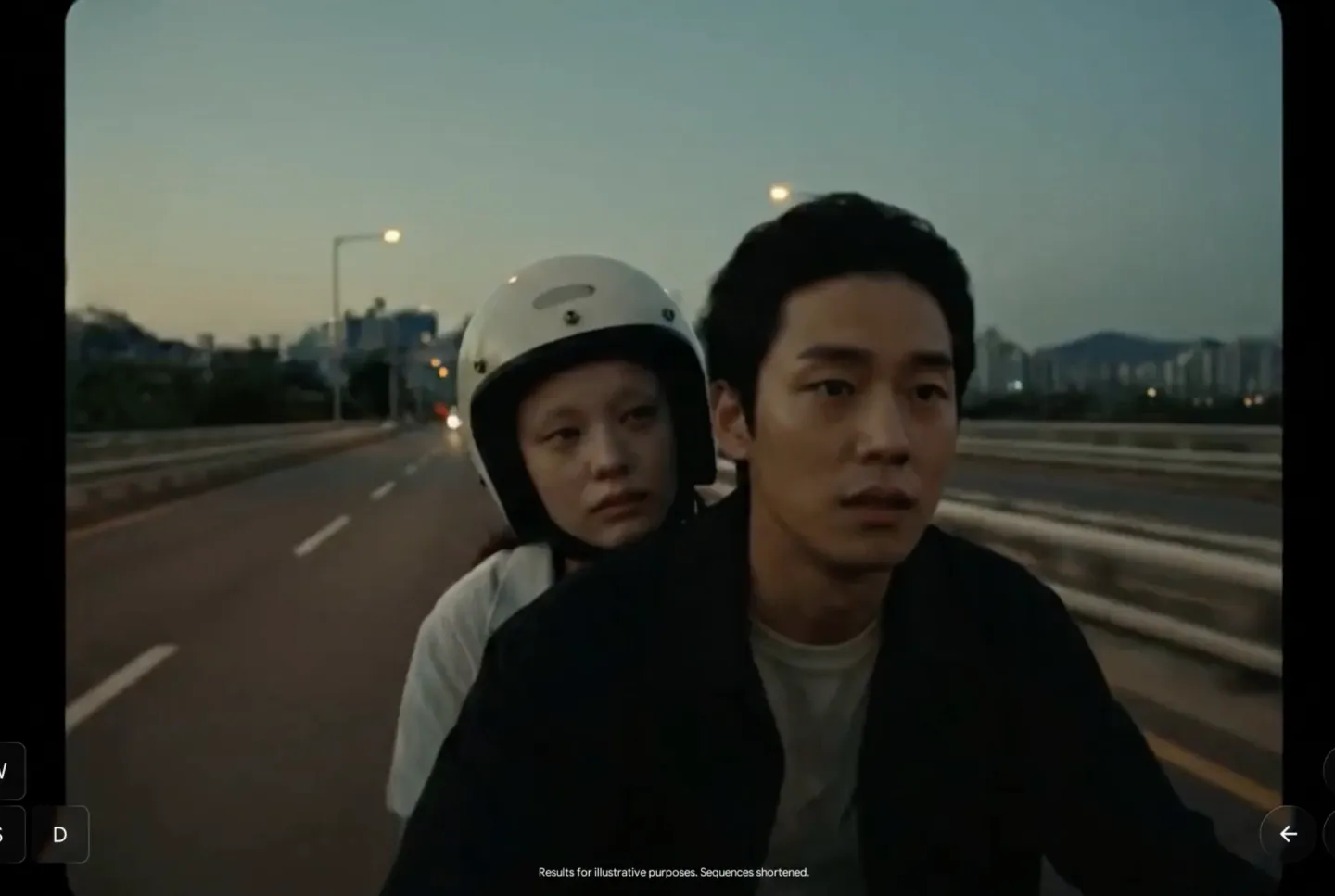
World model is one of the important directions of artificial intelligence research in recent years. Traditional generative AI usually generates images, videos or other content based on text prompts, while world models go a step further and try to learn the spatial relationships in the environment, the movement patterns of objects, and the connection between actions and results. The content generated by the model is no longer just for users to watch, but can continue to change with the user's operations.
For example, in a virtual environment generated by AI, users can control the character to move, change the viewing direction, or interact with objects in the scene. The model needs to continuously generate subsequent images based on these operations and maintain the coherence of the environment as much as possible. Such capabilities have potential value for games, robot simulations, and training in complex environments.
An important improvement of Genie 4 is that users can modify the virtual world through natural language instructions during the experience. Instead of exiting the current scene, rewriting prompt words, and generating them from scratch, users can directly ask the model to change certain elements in the environment to quickly adjust the scene design.
This feature may be especially useful for game developers and film and television production teams. Before officially investing a lot of resources in production, creators can use AI to generate preliminary scene prototypes, try different environment layouts, visual styles and interaction methods, and then decide which solutions are worthy of further development.
For film production, this type of technology may also be used in pre-visual previews. Production teams can quickly build virtual sets to explore camera movements, character paths, and environmental effects without having to immediately build real sets or create complex 3D assets.
Genie 4 also adds audio generation capabilities. While previous world models focused mainly on the visual environment and interaction processes, the new model can add sound to the generated scenes, making the virtual experience more complete. Audio can help simulate the atmosphere of the environment and may also provide preliminary sound effects for game prototypes.
However, automatically generating audio does not mean that the model can completely replace professional sound effects production. For projects that require precise control of rhythm, spatial positioning, character dialogue, and the synchronized relationship between sound and action, further manual adjustments and professional tool support are still needed.
Google also said that Genie 4 can be used to create robot training scenarios. Robots learn and test actions in the real world, which often involves equipment costs, site constraints, and potential safety risks. If an interactive simulated environment can be generated from a world model, researchers can test how robots move, grab objects, and respond to different environmental conditions in virtual scenes.
The key to this type of simulation capability is not only to make the virtual scene look realistic, but also to present the spatial relationships, motion patterns and action consequences of objects as accurately as possible. Only when the simulated environment can more reliably reflect the physical constraints in the real world, the strategies learned by the robot in the virtual environment are more likely to be transferred to the real device.
In terms of technical architecture, Genie 4 uses Gemini 3.8 Flash to assist in the simulation process. Google hopes to use the capabilities of this model to improve logical coherence and interactive performance in the generated environment. However, the company did not disclose enough detailed technical indicators in this report, so it is not yet possible to accurately measure its overall performance improvement compared to the previous generation model.
Longer build times are also an important change in this update. Genie 3 generated interactive experiences that lasted about one minute, while Genie 4 extended this time to about two minutes. While two minutes is still quite limited for a full game or complex simulation, it already provides more room for exploration for rapid prototyping and short interactive experiences.
At the same time, Google also admitted that as the duration of the simulation is extended, inconsistencies may still occur in the virtual environment. For example, details in a scene may gradually change, and some objects may not always maintain their original position and state. This involves a core difficulty with world models: Not only does the model need to generate a next frame that looks reasonable, it must also maintain a stable, continuous environment over an extended period of time.
If an object disappears after the user leaves the scene, or suddenly changes position when reentering the scene, the entire experience will appear unreliable even if the image itself is realistic enough. Therefore, object persistence, spatial memory, and long-term state consistency are still key capabilities that need to continue to be improved in world models.
In terms of release schedule, Genie 4 is currently open to selected testers in the form of a research preview. Google said that it will be launched to Google AI Ultra subscribers in the future and has opened a waiting list to allow users to apply to experience the new model through Project Genie.
It is currently impossible to independently judge how much progress the new model has made compared with the previous generation Genie 3. The public demonstrations at this stage mainly come from Google officials. The actual user experience, long-term interaction performance and the stability of the model in complex scenarios still need to be verified by subsequent tests.
From the perspective of industry development direction, Genie 4 represents that generative artificial intelligence is expanding from content creation to environment simulation and interactive experience. Future AI systems may not only generate a picture or video based on a prompt, but may also directly build a virtual space that can be explored, modified, and interacted with.
However, for this technology to truly become a practical tool in game development, robot training, or film and television production, issues such as long-term consistency, physical simulation accuracy, interactive response speed, and production costs still need to be solved. Genie 4 is currently more like an important experimental progress in this direction, rather than a mature product that can replace traditional game engines or professional 3D production tools.
Request Genie 4 access in Project Genie:
https://docs.google.com/forms/d/e/1FAIpQLSeD73fWVFVUXII27wIaSjdCZCesuGEb5-iZaBSTUpjkX98S0g/viewform?usp=send_form
Comments