Social media giant Meta claims that thanks to iMessageOutperforms Facebook Messenger on iOS and therefore cannot be considered a monopoly. Facebook parent company Meta has faced more than four years of antitrust lawsuits. 2020December, the U.S. Federal Trade Commission (FTC) has accused the social media giant of engaging in anticompetitive conduct and wants to break up the company.
The lawsuit itself was initially dismissed by a federal court judge in June 2021, but the FTC filed a more robust and detailed complaint in 2022. The case is still ongoing and Meta has now provided more details and arguments.
On Monday, the social media company made its opening statement and used a series of slides. The slides were later made public, although the content was redacted. However, Meta does a poor job of cutting it out and could easily be removed.
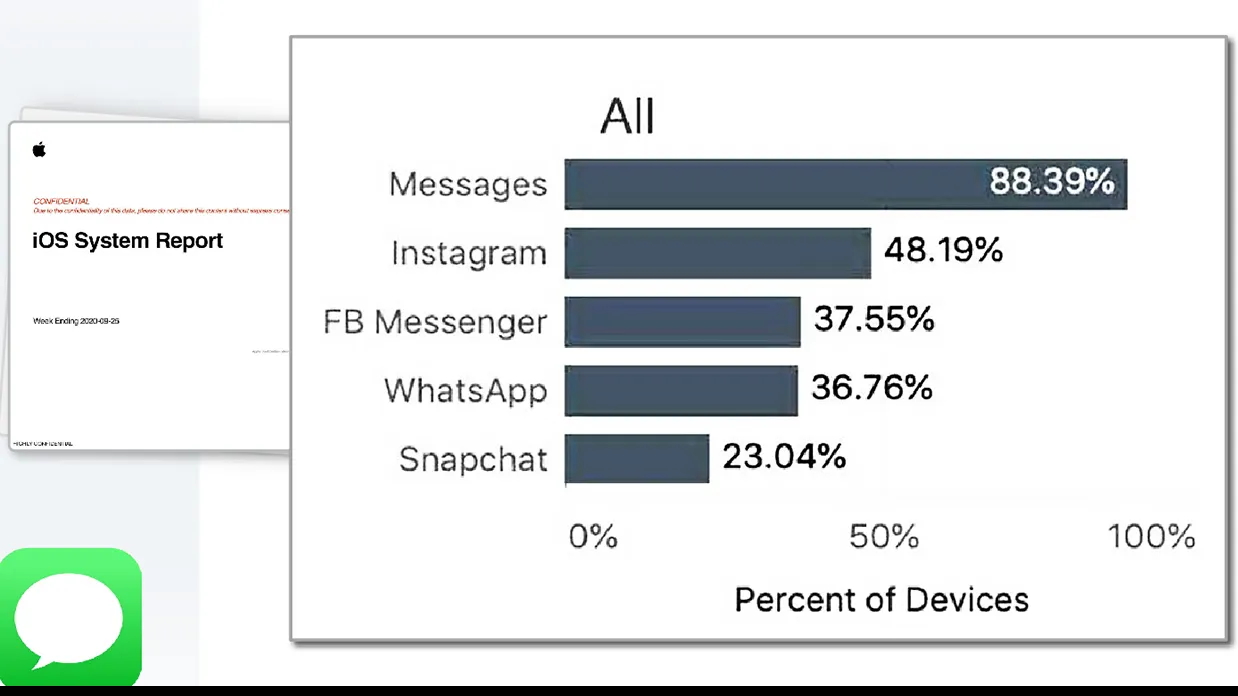
Meta's slideshow shows data for Facebook Messenger and how it compares to Apple's messaging app. Image source: Meta Platforms, Inc.
One slide shows weekly usage of Facebook Messenger and Instagram and compares it to Apple's built-in Messages app. Data shows that neither app can compete with iOS's default messaging app.
With the abridgements removed, Meta's slides contained the following figures:
Apple Messages: 88.39%
Instagram: 48.19%
Facebook Messenger: 37.55%
WhatsApp: 36.76%
Snapchat: 23.04%
Next to the number is an image of what appears to be an internal Apple document. The pages displayed in the Meta slideshow are very similar to real Apple files.
The only part of the slide that hasn't been removed is a quote from Ronak Shah, Apple's director of product marketing. The content is as follows:
One of iMessage's "core use cases" is "allowing users to communicate with people they know in their lives."
Meta believes that because Apple's default Messages app outperforms Facebook Messenger and Instagram, it cannot be considered a monopoly. The company also mentioned apps like TikTok and YouTube, claiming rival products and services were "booming."
The final outcome of the case remains to be seen. However, given that this antitrust lawsuit has been ongoing since 2020, a final verdict may still be years away.