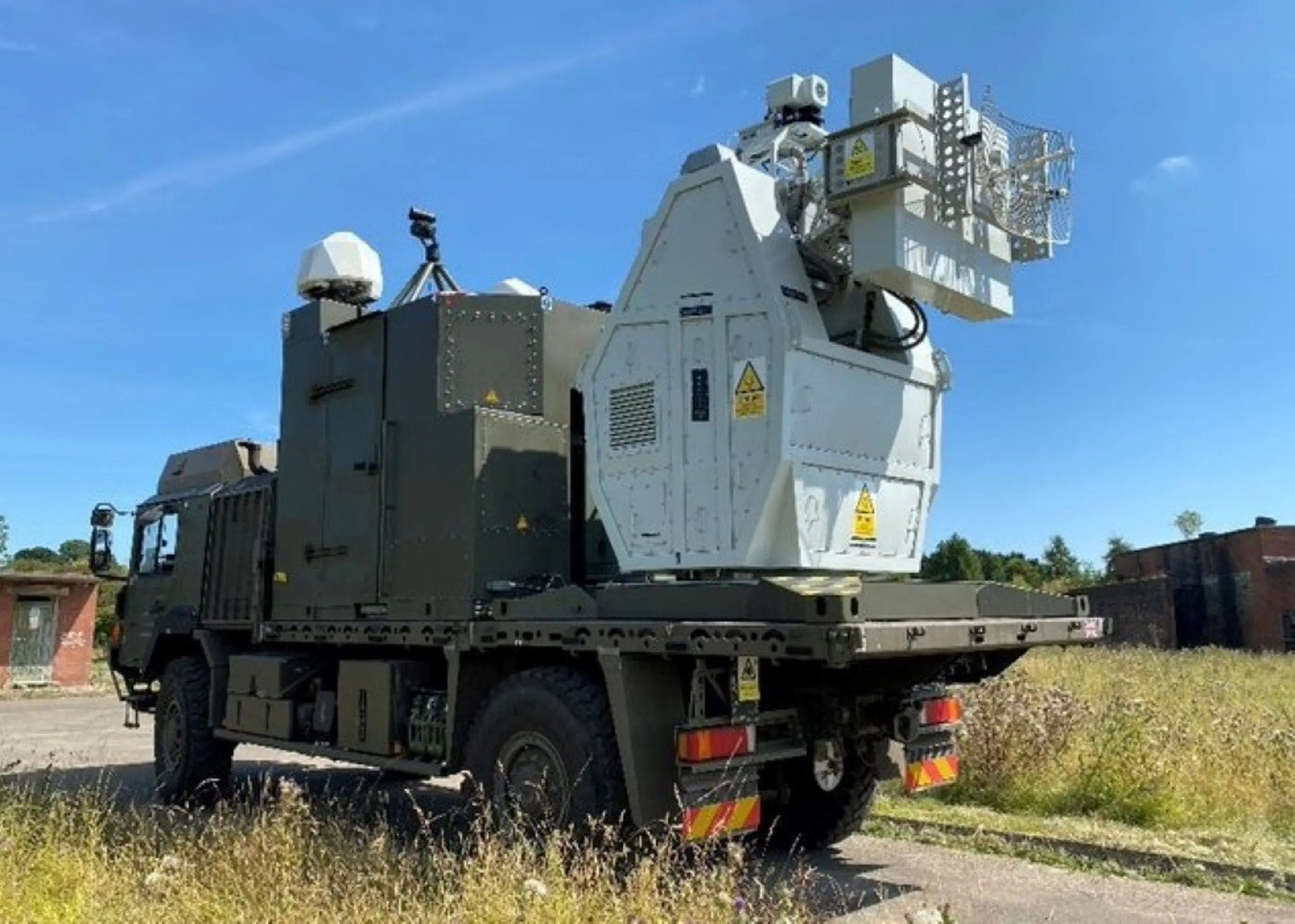
The British Army has successfully tested aradio frequency directed energy weaponsRF DEW, the weapon uses high-frequency radio waves to destroy multiple swarms of drones simultaneously and almost instantly, costing 10 pence ($0.13) per shot.
Drones are becoming an important factor in modern warfare and also pose a growing potential threat to civil aviation traffic. In 2024 alone, Russia launched 18,000 drone attacks on Ukraine. According to the Bard College Drone Research Center, in the United States alone, there were 241 near-collision incidents between drones and commercial airliners last year.
The problem with drones is that many models are small, cheap and can be launched in swarms, potentially overpowering or evading conventional air defense systems. One way to combat these drone swarms is to use directed energy weapons to attack all intruders at once, rather than one at a time.
Part of Project Ealing, the £40 million ($53 million) radio frequency directed energy weapon (RF DEW) can attack multiple drones at a range of up to one kilometer (0.62 miles). Unlike other systems, it does not interfere with the drone's control signals. Instead, it responds to threats by emitting electromagnetic radiation that interferes with or destroys the drone's delicate electronics and sensors, rendering it almost instantly useless. In this way, it can become an important safeguard in protecting military installations and civilian airports from drone threats.
Additionally, the system is highly automated and can be operated by just one person from a variety of platforms, including trucks and armored vehicles.
It is being built under the name 'Team HERSA' by a consortium of the UK Ministry of Defence's Defense Science and Technology Laboratory (Dstl), Defense Equipment and Support (DE&S) and industry partners including Thales UK, QinetiQ, Teledyne e2v and Horiba Mira. In the latest test in West Wales, RF DEW shot down two groups of drones at once, taking a total of 100 drones down during the trial.
"RF directed energy weapons are an exciting concept," said Sergeant Myers, senior remotely piloted air systems operator with 106 Regiment Royal Artillery. "We found the demonstrator learned quickly and was easy to operate. As range and power increase (and these improvements are likely to increase further), it will have a huge impact on layered air defense systems (LDA)."