According to "CCTV Financial Report", on April 17, Ren Hongbin, Chairman of the China Council for the Promotion of International Trade, held talks with Nvidia CEO Jensen Huang in Beijing. This is Huang Renxun’s second visit to Beijing after three months.
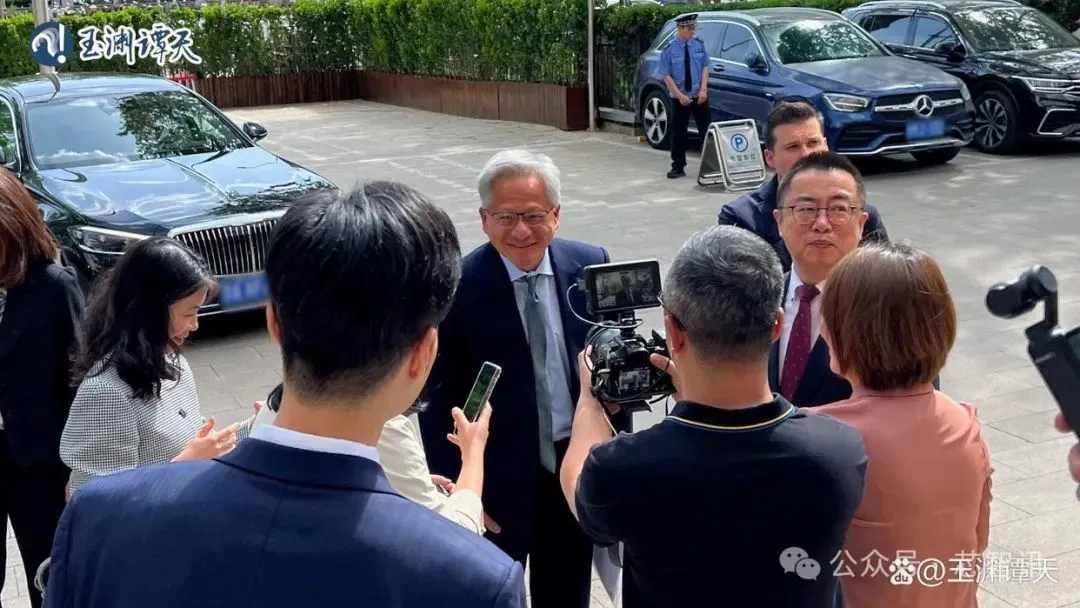
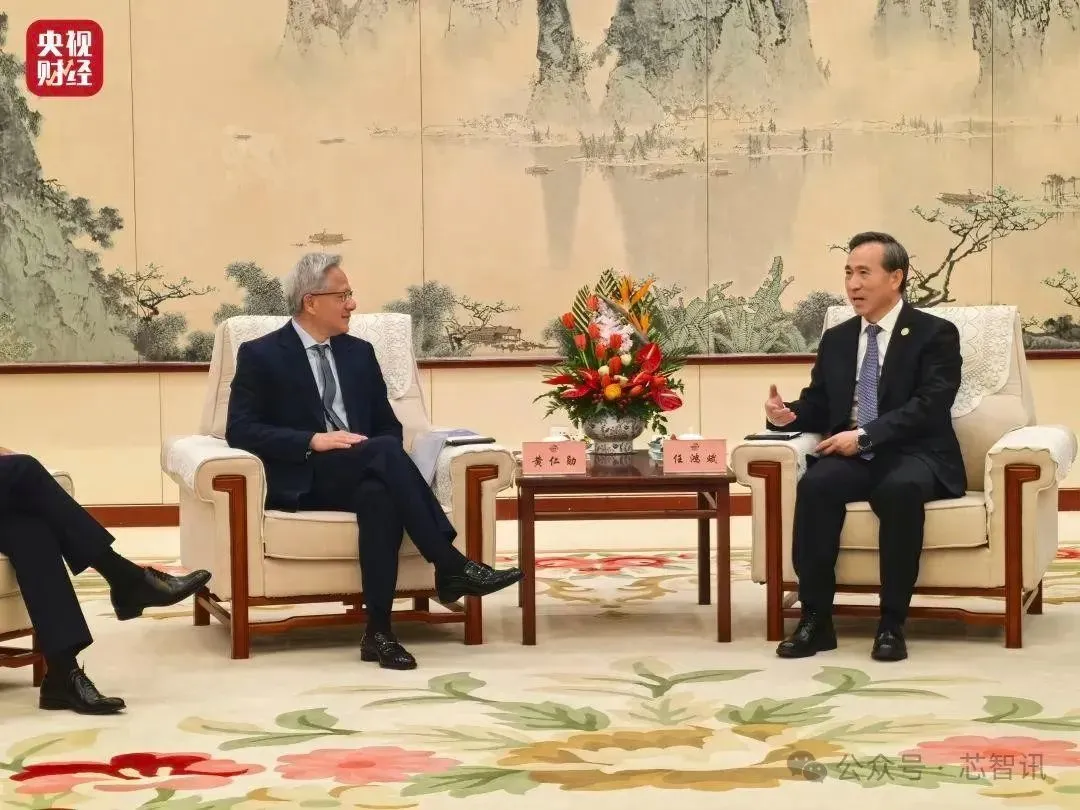
According to the report, Huang Renxun said during the meeting that the U.S. government’s tightening of chip export controls has had a major impact on Nvidia’s business. Currently, the world is witnessing a fierce competition in artificial intelligence. As the most transformative core technology of the times, AI has broad prospects for promoting the development of various industries. Countries around the world are accelerating the application of technology, R&D innovation and capacity improvement, which will surely have a profound impact on the global market structure, including China.
However, Huang Renxun emphasized, "As a company that has been deeply involved in the Chinese market for 30 years, we have grown together with the Chinese market and achieved mutual success. China is not only one of the largest consumer markets in the world, but its booming industrial ecology and leading software capabilities have also become an important driving force for our continuous innovation. , our successful experience in the Chinese market has driven us to continuously increase R&D investment, and our in-depth cooperation with Chinese companies has also enabled us to grow into a more competitive international enterprise. Therefore, we will continue to spare no effort to optimize the product system that meets regulatory requirements and serve the Chinese market unswervingly."
On the eve of Huang Renxun's visit to Beijing, the U.S. government placed Nvidia's artificial intelligence (AI) accelerator H20 "specially supplied" to the Chinese market under export control, and a license was required before it could be exported to China.
H20 is an AI accelerator card launched by NVIDIA for the Chinese market at the end of 2023. Although this accelerator card is significantly inferior in performance compared to H100, its HBM3e capacity is higher than H100, reaching 96GB, and it still performs well in large model inference applications. This is also the most advanced Nvidia chip for large model training and inference that Chinese buyers have previously been able to buy through legal channels. According to previous analyst forecasts, Nvidia will ship approximately 1 million servers containing H20 in 2024, which can generate more than $12 billion in revenue for Nvidia.
With the United States including H20 under export control, Nvidia H20 will be unable to continue exporting to China and will face huge losses. Nvidia expects to accrue losses of up to approximately $5.5 billion in inventory, purchase commitments and related reserve expenses related to H20 products.
At present, the export of almost all of NVIDIA's AI chips that can be used for AI training and inference to China has been restricted. Even the export of the most high-end gaming graphics cards RTX 5090/4090 to China has been banned. This will undoubtedly greatly affect the development of NVIDIA's business in China.
According to the financial report, Nvidia’s revenue in fiscal year 2025 reached US$130.497 billion, a year-on-year increase of 114%. Among them, China’s revenue was US$17.108 billion, a record high, accounting for 13.1% of total revenue. Although this proportion is not high, the Chinese market has always been one of the fastest growing markets for Nvidia's revenue.
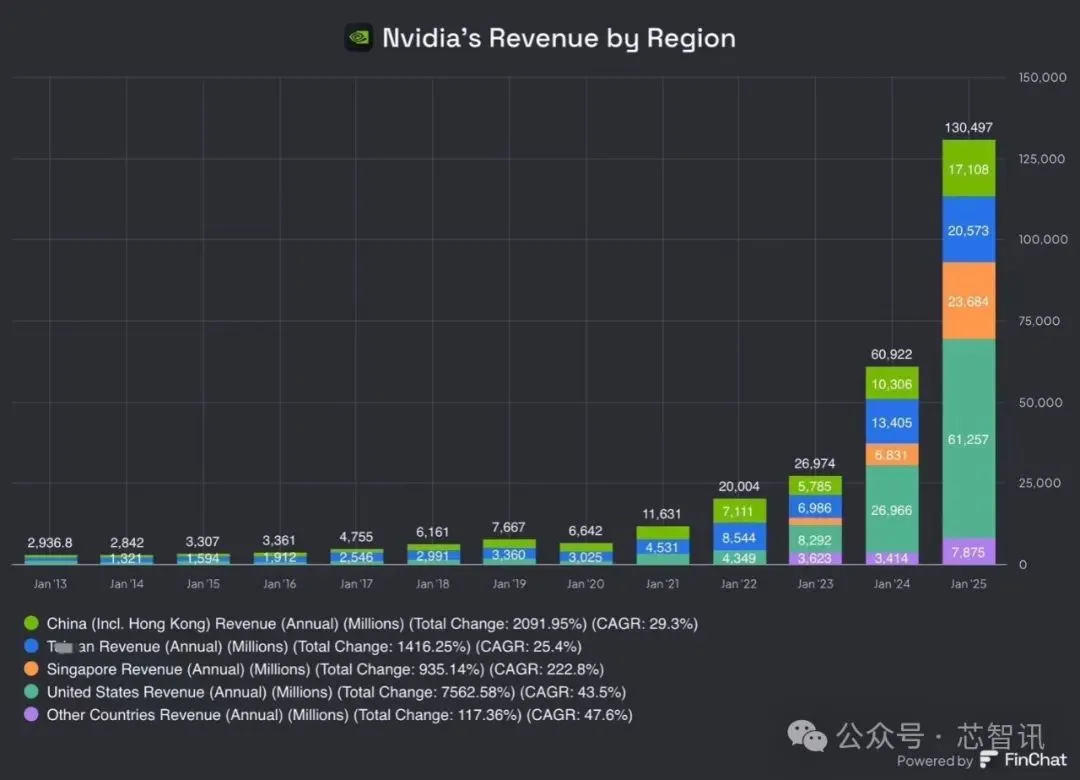
According to FinChat's statistical analysis based on NVIDIA's financial report data over the years, in the 12 years from fiscal year 2013 (as of January 2013) to fiscal year 2025, NVIDIA's revenue in the mainland China (including Hong Kong) market increased by 2091.95%, with a growth rate second only to the U.S. market. And this was achieved under the influence of the United States’ continued inclusion of Nvidia’s AI chips in export controls.
From the chart above, we can clearly see that between NVIDIA's 2018 and 2022 fiscal years, NVIDIA's revenue in China has always been higher than that of the U.S. market. Especially in the 2022 fiscal year ending in January 2022, Nvidia's total revenue was US$20.004 billion, of which China's revenue reached US$7.111 billion, accounting for 35.5% of revenue, while revenue in the US market was only US$4.349 billion, accounting for only 21.7%.
After the United States included AI chips in export controls to China in October 2022, NVIDIA's revenue from the Central Region declined for the first time in the 2023 fiscal year ending in January 2023. In contrast, the US market almost doubled. After that, although NVIDIA's revenue from China began to resume growth, the year-on-year growth rate has lagged far behind markets such as the United States.
It can be said that if it were not for the impact of U.S. export control policies, NVIDIA's revenue growth in China would most likely exceed that of the U.S. market in recent years, and even its overall revenue and revenue share may exceed that of the U.S. market.
For Nvidia, the U.S. export control policy has greatly affected Nvidia's business development in China and its revenue growth in China, which is not something it is happy to see.
Huang Renxun has previously said, "NVIDIA has the responsibility to comply with the policies of the US government, but China is an important and very large market, so NVIDIA will still work hard to manufacture exportable products to meet the needs of Chinese customers."
Therefore, we can see that under the red line of the US export control policy for AI chip specifications, NVIDIA continues to launch a series of products such as A800, H800, and H20 for the Chinese market. In order to respond to the Chinese market's demand for larger HBM capacity, NVIDIA also launched the H20 version with 141GB HBM capacity at the end of last year.
Obviously, even if the United States continues to upgrade its export control policy on AI chips, NVIDIA is still constantly looking for room for "operation" and continues to delve into the Chinese market. It can be said to be "dancing with shackles."
However, with the Trump administration directly suspending the export of H20, it means that NVIDIA's original practice of sticking to the "red line" of rules to launch compliant AI products for the Chinese market is facing new obstacles. In the future, it will be increasingly difficult for NVIDIA to continue to provide excellent AI products for the Chinese market in compliance with regulations. More importantly, in the Chinese market, Nvidia’s AI products specially supplied to China are not irreplaceable.
Huang Renxun also admitted in an interview not long ago that "Huawei is the most powerful technology company in China, and they have conquered almost every market they set foot in." "I think their influence in the field of artificial intelligence is growing every year. We cannot assume that they will not become an influencing factor."
Against the backdrop of the U.S. government’s escalating trade restrictions externally (Nvidia’s previous promise to increase its efforts to prevent H20 from being banned in the United States) and the fierce competition internally from Huawei and other Chinese domestic AI chip manufacturers, Nvidia’s situation in the Chinese market is getting worse and worse. It can be said that it is “not the same person inside and outside.”
As the CEO of Nvidia, Huang Renxun’s emergency visit to China shows that he will “continue to spare no effort to optimize the product system that meets regulatory requirements and unswervingly serve the Chinese market.” He also hopes to obtain official support so that he can continue to take root in the Chinese market instead of being accelerated.
Huang Renxun has said many times before: China is a very important market for the global technology industry. He also warned the U.S. government that it must think twice before further restricting trade with China. "If we are deprived of the Chinese market, we have no emergency plan because there is only one China."
It is worth mentioning that when Huang Renxun met with US President Biden, Vietnamese Prime Minister Pham Minh Zheng and other national leaders, he always wore his iconic leather jacket. However, this time when he came to China for talks with Ren Hongbin, Chairman of the China Council for the Promotion of International Trade, he rarely changed into a formal suit, which shows how much he attaches importance to this meeting.