Who would have expected that in the complex chess game of tariff confrontation, American consumers would be the most uneasy. When Chinese manufacturers released a series of videos through the Tik Tok platform to introduce how they used extremely low ex-factory prices to produce products for international big names, the short videos were like a window, allowing American netizens to glimpse the market truth behind trade frictions. As the video spread widely, American consumers suddenly realized that they were the ones ultimately paying for the increased tariffs.
As a result, a rush to buy Chinese goods quietly emerged, forcing Dunhuang.com, which had been established for more than 20 years, to "force to open for business." Due to the unexpected popularity of Dunhuang.com, the script of "reverse overseas shopping" has already been laid.
20-year-old platform "forced to operate"
In recent days, China's B2B cross-border e-commerce platform DHgate has staged a "rocket-like jump" on the App Store's US free list. The application data platform Appfigures shows that Dunhuang was still unknown on April 11, but two days later on April 13, it had soared from 352nd to 2nd, second only to ChatGPT. Its iOS downloads directly reached 117,500 times, a 732% increase from the 30-day average. The US market alone contributed 65,100 downloads, an increase of 940%.
Regarding Dunhuang.com, I am afraid that many young Chinese netizens are not familiar with it, and may even think that it is a tourism website made by Dunhuang Cultural Tourism or scenic spots. In fact, Dunhuang.com is a B2B cross-border e-commerce platform founded by former Joyo.com CEO Wang Shutong in 2004. As of now, it has 2.54 million suppliers and 59.6 million buyers, with business covering 225 countries, more than 100 logistics lines, and 14 overseas warehouses. To put it more vividly, Dunhuang Net is the overseas cross-border version of "1688".
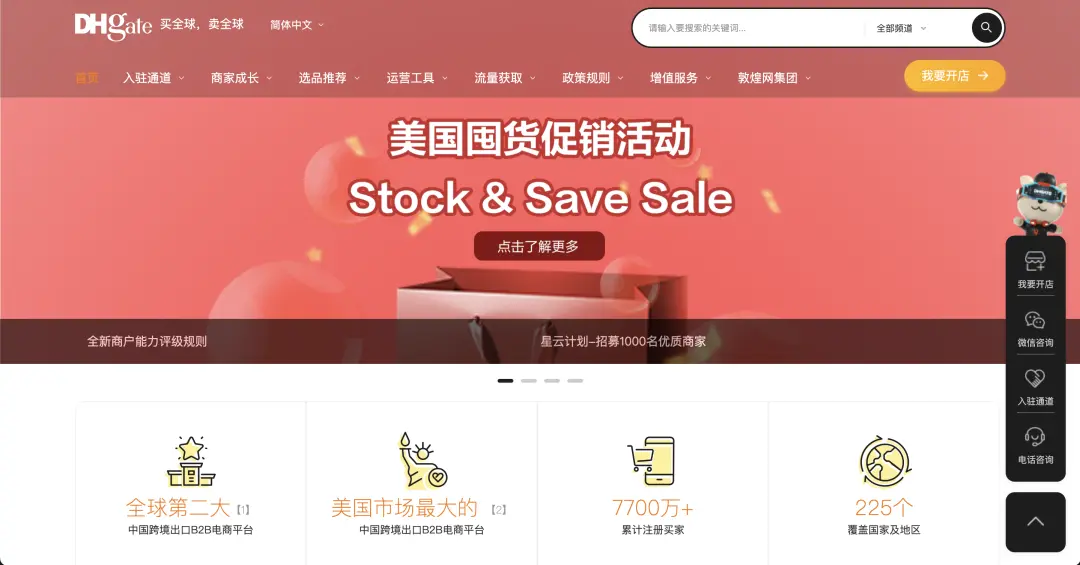
As an old platform with a history of more than 20 years, Dunhuang.com’s “popularity” is more like an accident.
Since April, several exchanges of tariff policies between China and the United States have left cross-border traders on thin ice. In order to save themselves, a large number of Chinese suppliers and manufacturers have chosen to publish videos on Tik Tok, revealing the "OEM secrets" of the global luxury market. On the one hand, they tell American consumers that the prices of their OEM products have increased several times after being sold by major international brands. On the other hand, they directly attach their own Dunhuang Net links in the videos, guiding users to "skip the brand premium and go directly to the source factory."
This narrative of "disintermediation" quickly resonated, setting off a big discussion about "China's secrets of luxury goods". Some American netizens began to reflect on the "IQ tax" they had paid for brands in the past.
According to Observer.com citing Hong Kong media reports, on Dunhuang Online, customers can easily find replicas of Goyard handbags priced at about US$20, while authentic products cost more than US$4,000; there are also yoga pants similar to the Lululemon brand, priced at about US$10. As a result, a group of netizens with a keen sense of smell began to "follow the clues" from the revealing videos of Chinese manufacturers and downloaded the Dunhuang App to snap up Chinese products.
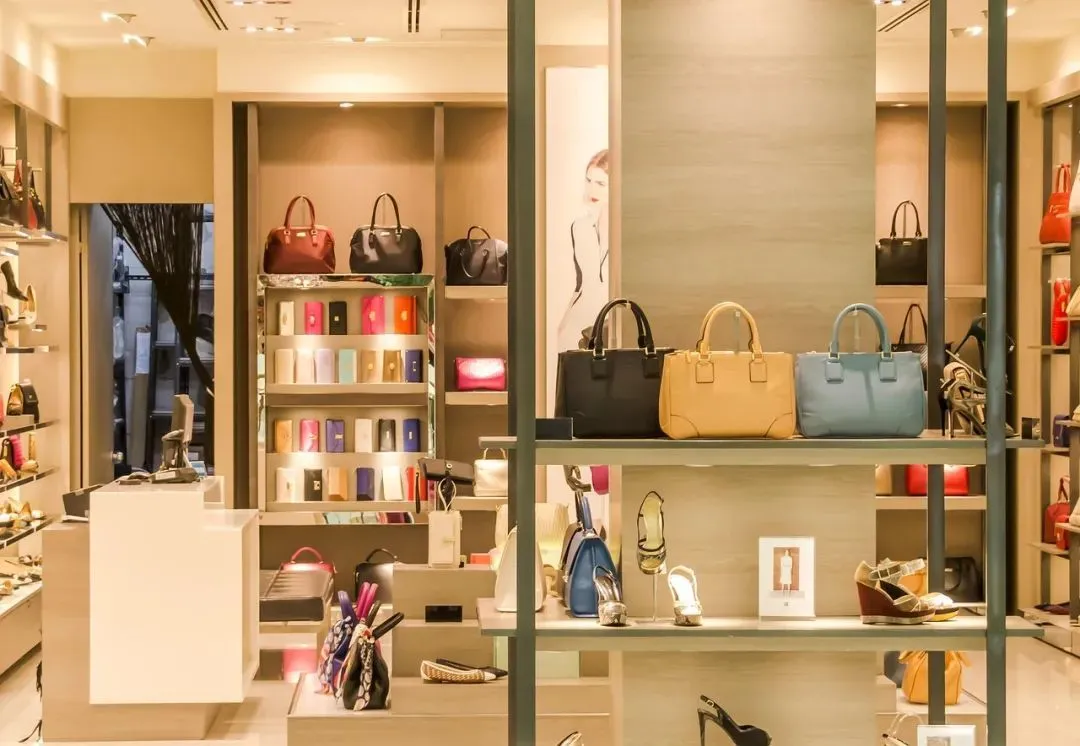
So far, Tik Tok's topic "China Reveals the Inside Story of Luxury Goods" has been viewed more than 100 million times. After experiencing a "social media discussion" and an explosion of downloads on Dunhuang.com, American consumers who have had an "enlightenment" are now busy buying "good products from the source" on Dunhuang.com. The sharp contrast between the rising tariff figures and the crazy hoarding behavior of American consumers reflects the strong desire of American consumers for Chinese goods. The "forced to open" DHgate network just meets their market needs.
Made in China unlock traffic password
The explosion of Dunhuang.com was essentially a double blow to “supply chain transparency” and “digital marketing.” The use of social media short videos to reveal the “brand premium” of luxury goods was the trigger for the entire incident. In fact, China’s cross-border merchants have already become proficient in the use of social media.
In January this year, "Miss Aluminum", a Northeastern lady who introduced space capsule mobile homes in a short video on Tik Tok, unexpectedly became popular. In her videos, she often opens with the iconic "Hello Boss", and then uses English with a strong Northeastern accent to enthusiastically recommend space capsule mobile homes made in China.
Because her oral expression is not fluent, the "loose English" spoken by "Miss Aluminum" is described by netizens as "every word lives in a single room", but this does not affect her most popular video with more than 6.4 million views, more than 400,000 likes, and more than 10,000 comments. What's more important is that many overseas netizens highly recognize the product's cost-effectiveness and leave messages asking to buy it.

Compared with "Miss Aluminum" who relies on sincerity to get out of the circle, "LCSIGN brother" Zhuyu, who has more than 1.4 million fans on Tik Tok, has become a phenomenon-level overseas Internet celebrity by virtue of his fluent English, talent for imitating multi-national accents, and ability to abstract and organize.
In short videos, Zhuyu often switches between English accents from the United States, Britain, France, India and other countries while holding various LED light signs to introduce his products to users in front of the camera. The real-life workshop scenes and accent imitation not only attracted the attention of overseas netizens, but also brought a large number of overseas orders.
From the cases of "Miss Aluminum" and "Brother LCSIGN" and the "explosion" of Dunhuang.com, it is not difficult to find that China's cross-border merchants have mastered the password to detonate traffic on overseas social media. However, cross-border merchants also have to pay attention to the risks and challenges beyond the traffic carnival.
Dunhuang.com was originally positioned as a B2B platform, mainly serving small and medium-sized wholesalers, but the spread of Tik Tok made it unexpectedly reach ordinary consumers. In order to handle this wave of traffic, the platform encourages American users to stock up on goods, while simplifying the shopping process, supporting small orders and flexible payments, and successfully realizing the "B2B2C" hybrid model to "break the circle".
Under the influence of tariff policies, this model has become the first choice to bypass middlemen and purchase low-priced goods directly from Chinese factories. But now that traffic is surging, it is a huge challenge for the platform to balance the needs of B-side and C-side to avoid a decline in user experience or an increase in return rates. What needs to be considered more is whether the "low-price supply" that American consumers order directly from Chinese suppliers is sustainable under the current tariff policy.
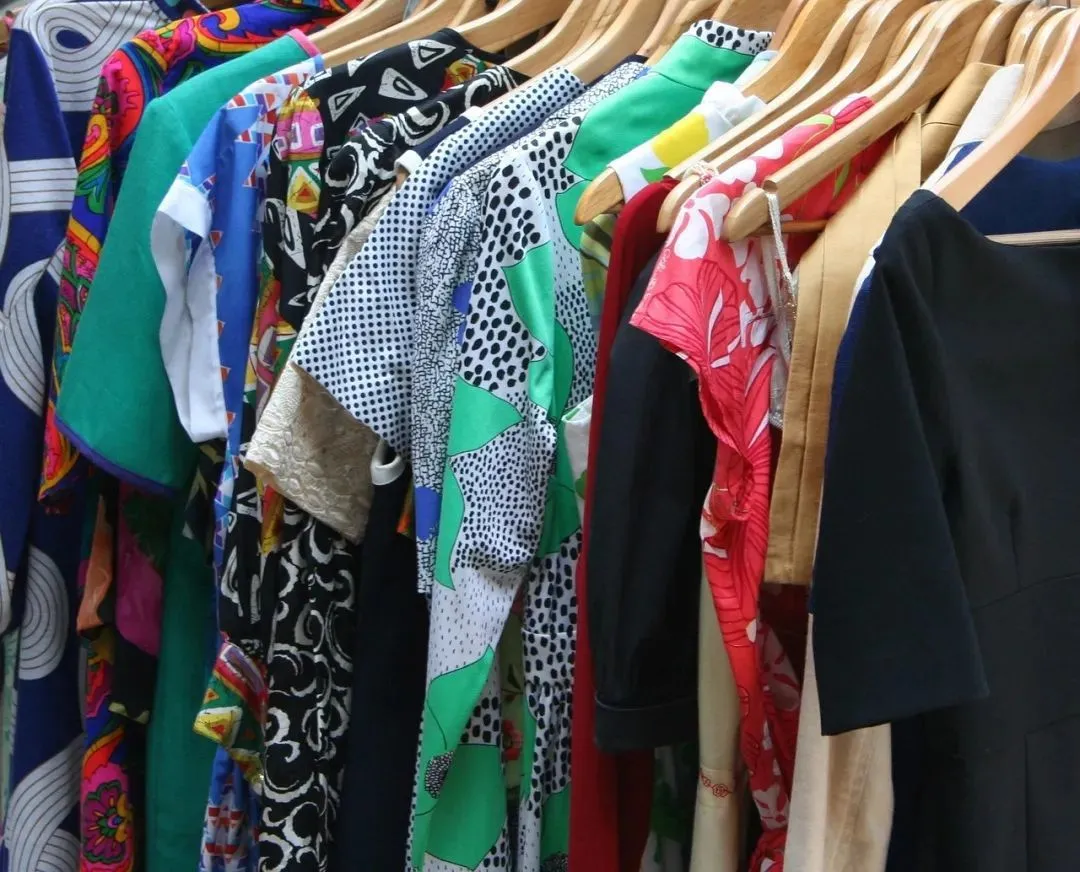
For consumers, even if calculated based on the current highest 245% tariff, the price of yoga pants priced at $10 on Dunhuang Online may rise to $24.50, which still has a significant price advantage compared with the $100 Lululemon genuine product.
However, with the surge in traffic, overseas media have also begun to pay attention to the sales of the platform. However, in a strict sense, the products manufactured by Chinese manufacturers cannot be equivalent to the products sold by international brands. Therefore, Chinese merchants who promote "big-name OEM" through social media may face accusations of "edge marketing" and even intellectual property infringement lawsuits or penalties.
From "going overseas" to "entering China"
The unexpected popularity of Dunhuang.com reminds people of the previous scene when "Tik Tok users flocked to Xiaohongshu". The slight difference is that Xiaohongshu was "forced to open" because of external factors, which caused overseas users to face the crisis of losing connection with Chinese applications, and now it is because of the sharp rise in tariffs that American consumers are facing losing the opportunity to purchase Chinese goods.
The core reason why American netizens have this kind of "disconnection anxiety" is that Chinese applications have successfully captured overseas users in terms of content supply. At the same time, China-made goods and their value are also being "transported from east to west" through the bridge built by content.
For example, in the previous "Tik Tok users flocked to Xiaohongshu" incident, Chinese and foreign netizens not only dispelled various rumors through "private reconciliation", but also eliminated misunderstandings between each other, allowing overseas netizens to understand China more truly. Chinese netizens actively share daily life content, which not only makes foreign users shocked by the rich daily necessities, fresh vegetables and fruits, meat and eggs in Chinese supermarkets, but also successfully cultivates Chinese high-tech products such as smartphones and new energy vehicles.
As for now, Tik Tok plays the role of a "bridge", connecting Chinese cross-border merchants with American consumers, conveying value, teaching them to settle accounts, and highlighting the advantages of "Made in China".
In addition to taking the initiative to "go overseas", attracting overseas consumers to "enter China" has also become a new opportunity for Chinese companies today.
From the initial "144-hour visa-free" to the current "240-hour visa-free", the transit visa-free policy that will be vigorously promoted in 2024 will directly push the Chinese tourism market to the global stage. Data show that as of March 2025, the number of foreigners entering the country's ports reached 9.215 million, a year-on-year increase of 40.2%. The number of foreign visits to tourist cities such as Huangshan and Wuyishan increased by 21.6% year-on-year, and cross-regional travel accounted for nearly 60%. Behind these figures is not only the magnificent transformation of China's tourism market from "unpopular" to "popular", but also an excellent window for Chinese brands to display to the outside world.
When overseas travel bloggers travel to China and produce a large number of short videos to record their experiences in China, everything from Chinese fruits and traditional delicacies sold at street vendors to digital products and new energy vehicles sold in shopping malls are all spread to every corner of the world following the videos of overseas bloggers.

For example, Hypothyroidism Brother, who just finished his trip to China, not only used live broadcasts to truly show the high-rise buildings and bustling streets of cities such as Beijing, Shanghai, and Shenzhen, but also used a first-person perspective to show China's shared bicycles, three-fold mobile phones, new energy vehicles, and driverless air taxis. While triggering massive traffic on the Internet, it also allowed overseas fans to plant Chinese technology and Chinese products.
On the basis of using social media to attract overseas consumers, the recently launched domestic departure tax rebate "buy now and get it back" policy is the last piece of the puzzle to attract overseas consumers to "go shopping in China". At this point, Chinese applications have harvested global traffic, and "Made in China" has used content traffic to achieve "grass planting" output, making it possible for Chinese products to start the popularity of "reverse overseas shopping" and "reverse purchasing".
Dunhuang.com's surge in the US App Store is just a footnote to the rise of China's manufacturing industry amid tariff disputes. When "reverse overseas shopping" became a new trend, Chinese cross-border merchants finally realized that price war is no longer the only way out. High-quality goods and services, refined operations, good brand image and user reputation are the new passwords for Made in China to master the global market.
This global trade revolution triggered by "tariffs" and short videos is rewriting all the rules - Dunhuang.com is just the lucky one, and it will be countless cross-border merchants who will truly embrace the dividends of the times.