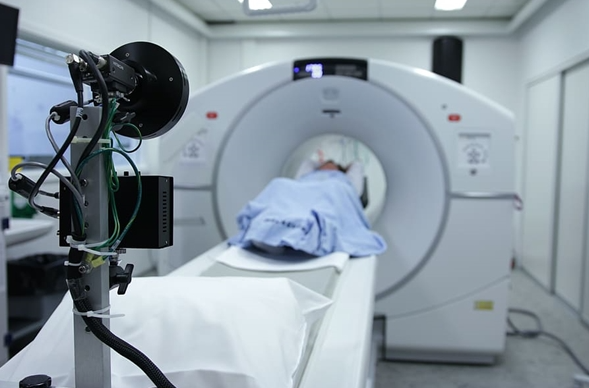
A fatal accident occurred at a magnetic resonance imaging (MRI) center in Long Island, New York, USA:A 61-year-old man broke into the scanning room while accompanying his relatives and friends to the hospital, suspected of wearing a metal necklace in violation of regulations. He was instantly sucked into the MRI machine by the strong magnetic field. He was seriously injured and died the next day.
The police revealed that the man was not a patient undergoing examination, but accompanied his relatives and friends. When his relatives and friends felt uncomfortable in the MRI room and called for help, the man forced his way into the machine room despite the dissuasion of the medical staff.As a result, the large metal necklace he was wearing was attracted by a strong magnetic force, causing his whole body to be violently pulled into the machine.
The man suffered serious injuries and was rushed to North Shore University Hospital for treatment, but died the next day. Doctors speculated that the cause of death may be suffocation or cervical spine injury caused by a metal necklace wrapped around the neck. Winterfeldt, director of the Imaging Department at North Shore University Hospital, pointed out that the magnetic force of MRI is extremely strong, and any metal objects entering the machine room will be quickly sucked into the center of the machine, which is extremely risky.
The police are currently involved in the investigation, and the homicide team is responsible for investigating the specific cause of death. The identity of the deceased has not yet been announced.
The following eight groups of people cannot undergo magnetic resonance imaging:
1. Those with metal pacemakers and nerve stimulators;
2. Those who have had aneurysm surgery and have a metal aneurysm clip in their skull;
3. Those who have had heart surgery and have metal artificial heart valves;
4. Patients with metal foreign bodies in the eyeball or various metal implants in the body;
5. Pregnant women in the first 3 months of pregnancy;
6. Critically ill patients who need to use life support systems;
7. Epilepsy patients;
8. People with claustrophobia.