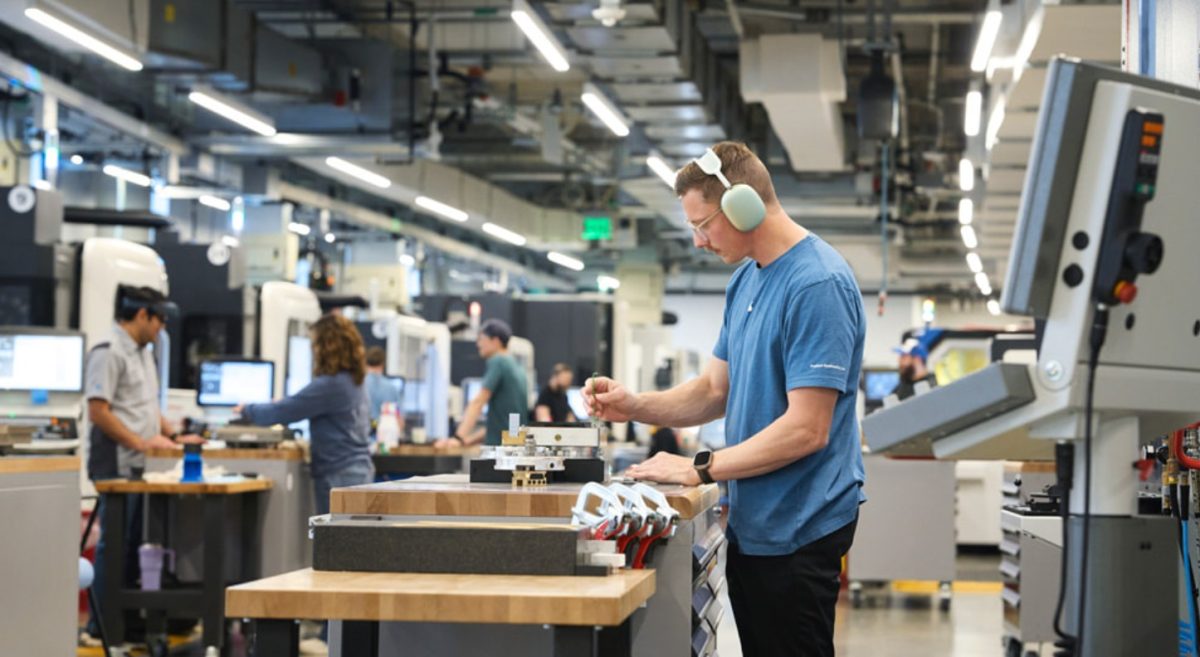
Apple just announced that it will become the first company to build a complete end-to-end silicon chip supply chain in the United States. this onestatementis part of the company's newly expanded American Made Initiative (AMP). Over the next four years, the plan willInvest $600 billion, including an additional $100 billion dedicated to U.S. chip production and supply chain construction.
This means that every stage of chip manufacturing, from the initial silicon wafers to final packaged components that can be used in iPhones, Macs and other Apple products, will occur in the United States.
Apple will no longer rely solely on international factories, but will complete every step of chip production in the United States. The supply chain begins with advanced silicon wafers, supplied by GlobalWafers America, and then moves to TSMC's Arizona facility. The iPhone maker will become TSMC's first and largest customer in Arizona. Texas Instruments will also play a major role in expanding chip production in Utah and Texas, while Austin-based Applied Materials will build advanced semiconductor equipment. The collaboration between the different companies will ensure that Apple's custom chips stay in the United States, a first for any technology company in the region.
Apple's new plans are massive, with more than 19 billion chips expected to be produced in 2025 alone. In addition, the expansion goes well beyond silicon wafer and chip manufacturing. Corning plans to produce all iPhone and Apple Watch cover glass at its factory in Harrodsburg, Kentucky. MP Materials will produce rare earth magnets in Texas and California to meet Apple's needs for internal components such as Taptic Engines. In addition, Coherent will develop the laser technology used by Apple in Face ID and will produce it in Sherman, Texas. If Apple's plan goes smoothly, it will strengthen its influence in U.S. chip manufacturing.
AMP's expansion will also secure thousands of jobs. The company estimates that it will create more than 450,000 jobs across all 50 states through its supply chain network and partnerships with diverse suppliers. The company itself plans to hire 20,000 new employees, focusing on research and development in the field as well as artificial intelligence, software and engineering. These investments will play an important role in boosting the U.S. economy and help Apple gain a foothold in the United States in the face of global uncertainty. The company will reduce its reliance on external supply chains, avoid potential trade and tariff disputes, and align with the U.S. government.