After encountering heat dissipation and performance limitations on the hardware, the "trash can" shapeappleThe Mac Pro was quickly abandoned, forcing the company to return to tower cases powered by Intel Xeon processors, and then byM2 UltraCompleted the transition to self-developed chips. However, what prompted Apple to enter the workstation field and gain a decisive advantage over the competition? That was Apple's first Mac Pro, now 19 years old and packed with some of the most powerful internals at the time. Fast forward to 2025, and it still has some great specs, but limited upgrade capabilities.
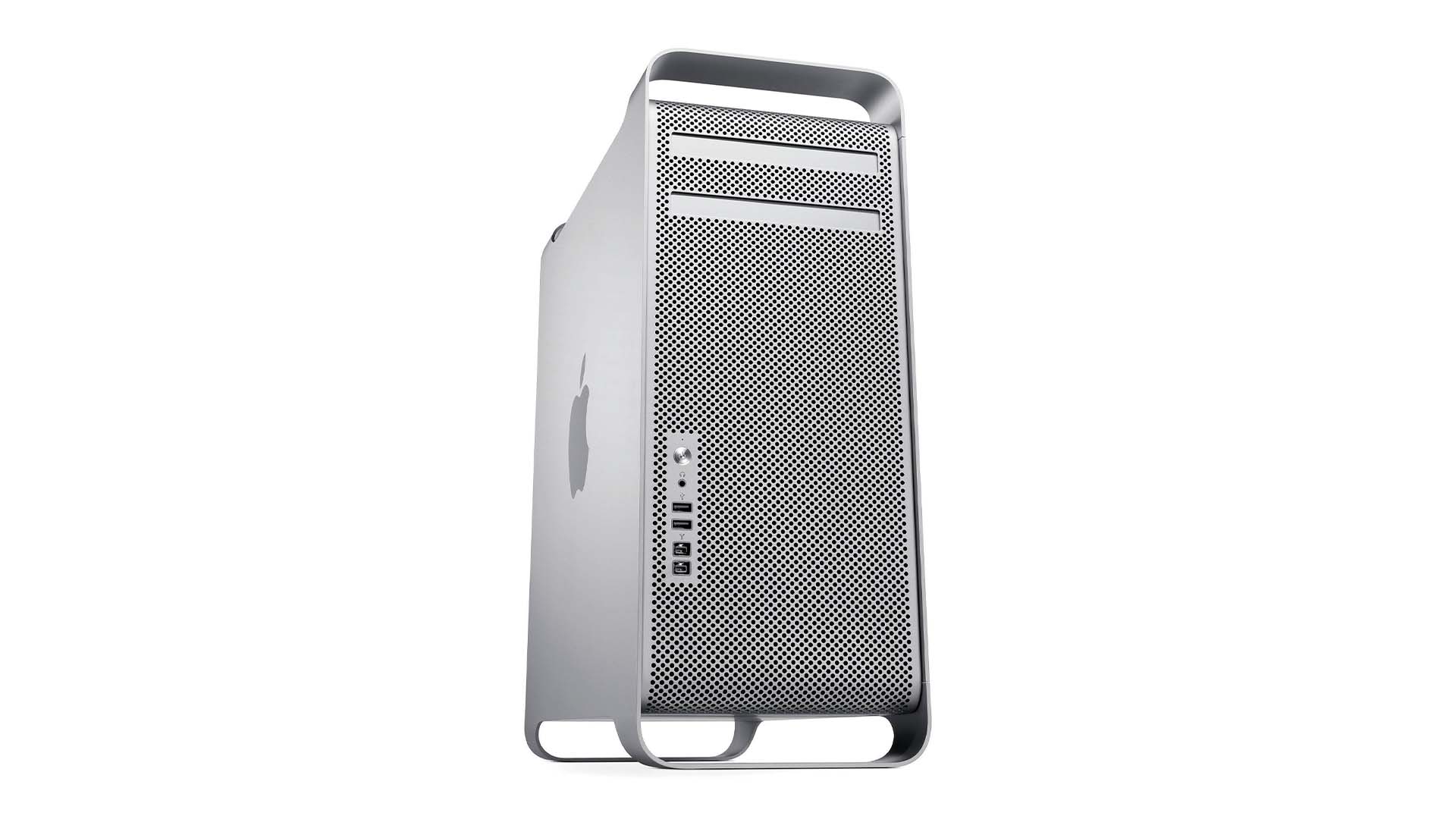
The first-generation Mac Pro was also the beginning of Apple's transition from PowerPC to Intel processors. The machine also used a high-quality unibody aluminum body.
Intel's CPUs perform far better in terms of "performance per watt" than the PowerPC line, which means that if Apple wants to deliver the best hardware to its customers, it will have to make some changes that others may not be comfortable with, and not everyone will be able to adapt to the changes.
Announced at Apple's WWDC keynote on August 7, 2006, the Mac Pro adopted the same design language as the Power Mac M5, but with improved internal design. As for the "brain" of the entire system, the Mac Pro is equipped with the Intel Xeon 5100 series "Woodcrest" CPU. Each chip is dual-core, clocked at 2.60GHz, and supports 64-bit architecture. The Mac Pro was available in 4-core, 8-thread configurations, which for the time provided amazing multi-core performance, allowing power users to run the most demanding applications with ease. Additionally, it comes with 16GB of DDR2 ECC memory spread across eight slots. Each memory stick runs at 667MHz. In addition, it offers extensive expansion options, allowing users to add up to four 3.5-inch SATA hard drive bays, as well as a 5.25-inch bay that can accommodate an Apple SuperDrive optical drive.
Apple's first Intel Mac Pro features an NVIDIA GeForce 7300 graphics card with 256MB of VRAM, making it easy to swap out your existing graphics card for a more powerful one, as it has plenty of I/O ports to expand a variety of peripherals. As for the Mac Pro's "grater" nickname, it comes from the punch-holes in the front of the case, a design that's still used in newer cases today and was a major improvement over the much noisier Power Mac G5.
Considering how efficient Apple Silicon is, a tower case like the Mac Pro might seem too bulky to house these components. And because each part is expensive to manufacture, requiring precision milling and additional raw materials, the M3 Ultra is currently the exclusive processor for Mac Studio. Whether Apple will continue to update the Mac Pro is unknown, but even if it's no longer in the Cupertino company's lineup, it will always have a place in people's hearts.