With the rapid development of artificial intelligence (AI) technology, major technology companies in the United States are consuming more and more electricity to train and run new AI models. Their competition with each other has led to a sharp increase in demand for electricity, and some utilities have responded to this trend by accelerating the construction of new gas-fired power plants and pipelines to ensure supply.However, a newly released report points out that the current reshaping plan of the US energy system and its so-called huge power demand may be overestimated due to the influence of the "AI bubble".
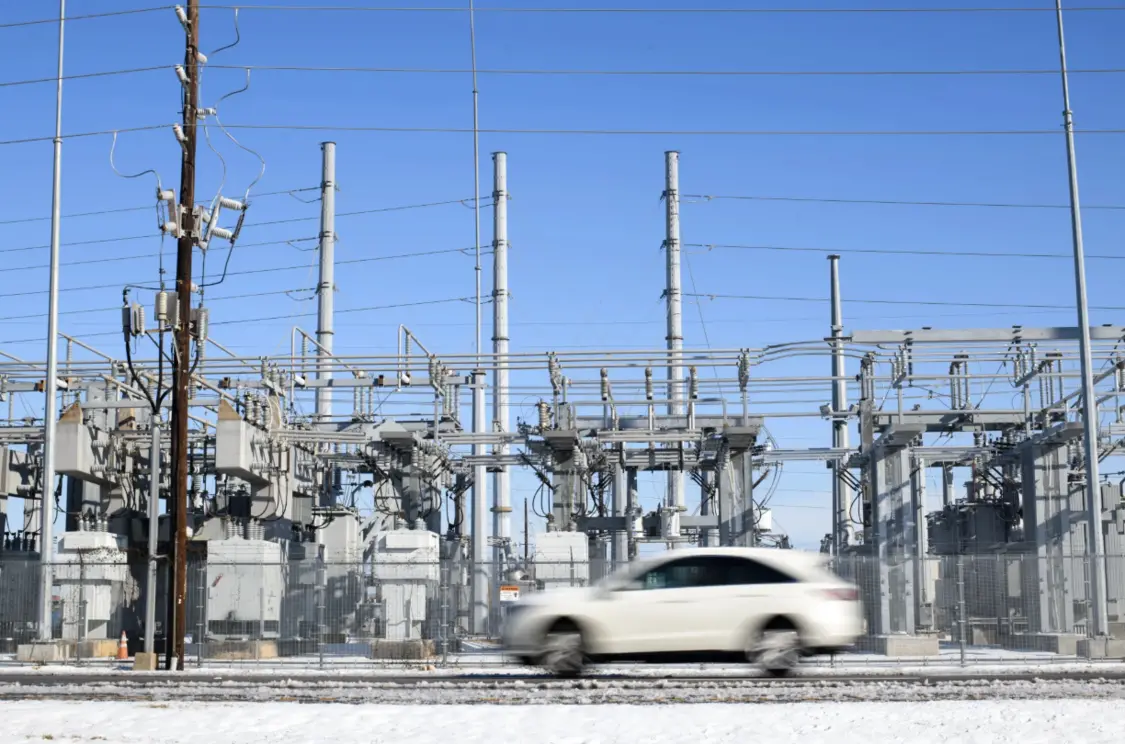
The report was jointly released by the shareholder advocacy group As You Sow and the environmental organization Sierra Club. Lead author Kelly Poole warned that improper road choices may lead to higher electricity bills and greater pollution burdens on the American people. "The AI boom does bring opportunities, but if we don't make careful and sensible assessments of energy needs, we will bear serious risks of long-term impacts," she said at a press conference.
Data shows that if all new gas projects proposed between 2023 and 2025 are implemented, the size of gas-fired power plants in the United States will increase by almost one-third. In particular, due to the significant increase in power demand for AI data centers, the capacity of new gas projects proposed by independent developers and utility companies surged by 70% year-on-year.
Previously, U.S. electricity demand had remained stable for more than a decade thanks to improvements in energy efficiency. But today, high-density data centers designed for AI models consume up to 100 kilowatts of electricity per server rack, which is more than ten times that of traditional racks and is equivalent to the power consumption of a small town. S&P Global analyst Dan Thompson pointed out that this is unprecedented energy consumption.
The power system is already extremely fragile between supply and demand. If the supply cannot adapt to the surge in demand, electricity bills will increase and the risk of power outages will increase. If capacity is expanded blindly without actual demand, resources will be wasted, and the burden will eventually be passed on to users. Accurate predictions of future energy demand are therefore crucial.
The reality is that market speculators have poured into data center construction, causing confusion and inflated demand forecasts. Some developers even apply for power quotas in advance when they do not have funds and customers, and quote quotes from multiple utility companies at the same time, which may result in data center energy needs being counted twice or even multiple times.
According to an IEEFA report earlier this year, in the data center-dense areas of the southeastern United States, utility companies' forecasts for power demand growth are four times higher than independent analysis of industry trends; nationwide, utility companies' demand estimates are also 50% higher than those of the technology industry. Jim Burke, CEO of Texas power company Vistra Energy, admitted in an earnings call that the actual number of new projects may be only one-fifth to one-third of the currently disclosed number.
Despite the uncertainty, utilities continue to build new gas-fired power plants and pipelines, in part because infrastructure expansion can bring them huge profits. Currently, the Trump administration has also introduced policies to encourage the development of fossil fuels. For example, the Louisiana utility company Entergy plans to build three gas-fired power plants for Meta's new data center. The power consumption of the center in 15 years is expected to be equivalent to 1.5 million households, and the cumulative carbon emissions during this period will reach 100 million tons.
This runs counter to the Biden administration’s goal of achieving 100% carbon-free power generation by 2035. The key to curbing climate change is to completely eliminate greenhouse gas emissions from fossil fuels, and blindly expanding gas infrastructure is counterproductive.
The report recommends a number of measures to reduce the above risks. These include utility companies requiring developers to disclose the number of other power companies they have contacted and the status of project progress, sign long-term service agreements, and increase non-refundable deposits to curb resource waste. In addition, technology giants should also continue to invest in improving the energy efficiency of their own technologies and actively promote the procurement of renewable energy. For example, Amazon, Meta and Google have become major corporate buyers of wind and solar energy in recent years. Signing long-term contracts to support new renewable energy projects will be particularly important in the current context of weakening government support, as long as companies can align their sustainability goals with the need to scale up AI.
In summary, if the exaggerated power demand of U.S. AI data centers is not controlled, it will not only lead to a waste of resources and high costs, but also threaten the country's transition to clean energy. Only when technology companies and utility companies work together to promote transparency, accurate calculations, and prioritize renewable solutions can the energy challenges brought about by AI be solved smoothly.