In response to the common bias problem in current artificial intelligence visual models, the Sony AI team recently released a new data set called "Fair Human-Centric Image Benchmark (FHIBE)", aiming to promote the standardization of fairness testing and ethical data collection.
All images in this data set were collected with my consent, covering 81 countries and regions around the world. It contains a total of 10,318 images and 1,981 independent subjects. Each image is equipped with detailed annotations, including professional information such as border definitions, segmentation masks, and camera parameters, to facilitate developers to conduct detailed evaluation of the model.
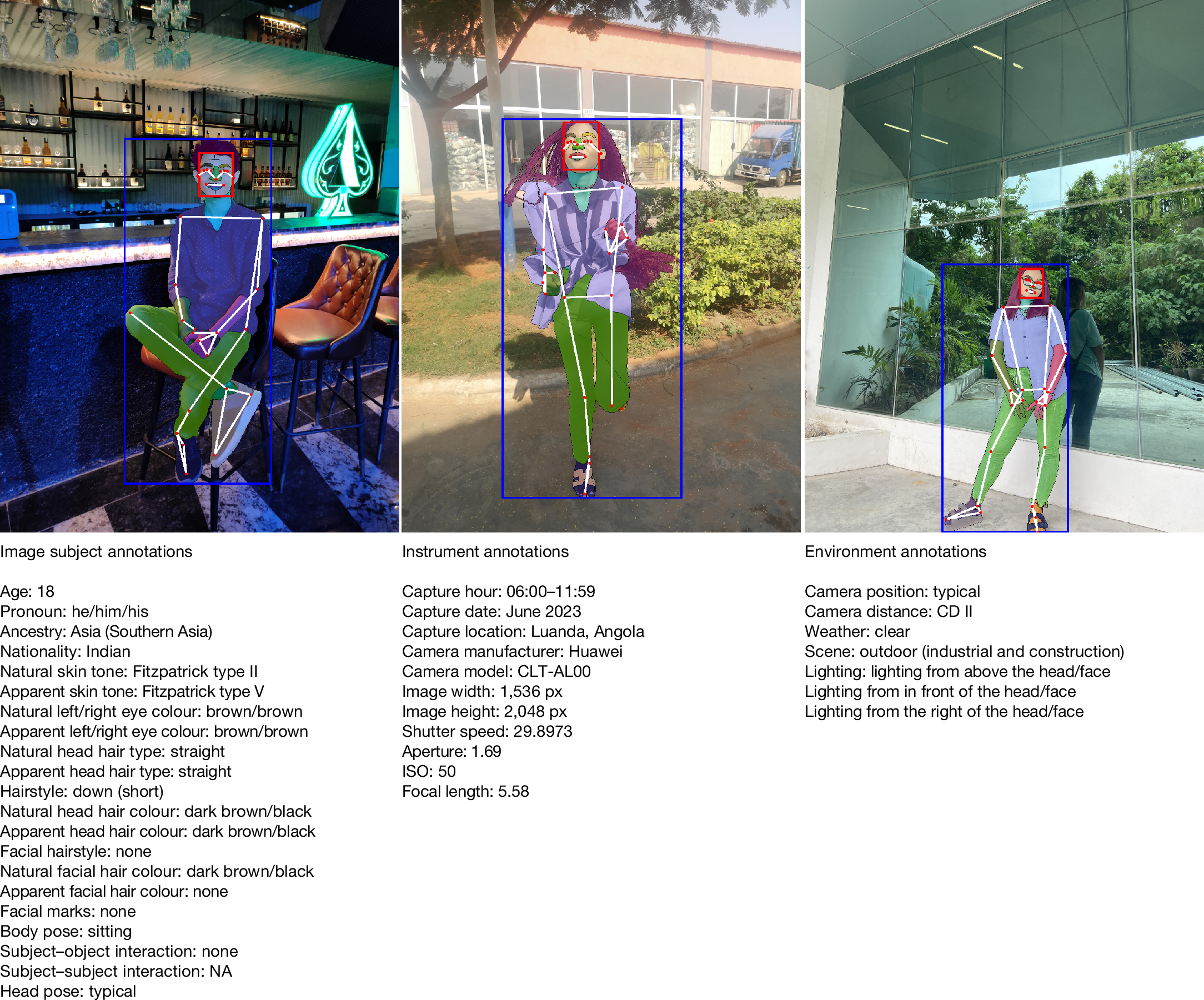
Alice Xiang, head of global AI governance at Sony AI, said that a misunderstanding in the field of computer vision is that models can objectively reflect reality due to their reliance on data and algorithms. In fact, data bias in the model training process will directly affect actual performance. For example, in China, some mobile phone facial recognition systems once had insufficient Asian faces in the training data, causing family members to accidentally unlock the device and complete payments, thus causing security risks. In addition, existing visual models have also had problems such as misclassifying female doctors as nurses, or inadvertently reinforcing occupational, racial, and gender stereotypes.
Previously, most computer vision data sets used to assess fairness did not obtain the consent of the subjects, and even crawled images directly from Internet platforms, which triggered many copyright and privacy disputes. In contrast, all of FHIBE's data collection has fully public records of consent and compensation processes, and is considered to have set a new ethical standard for the industry.
Based on the FHIBE test, the Sony AI team found that the accuracy of some models decreased when dealing with designated gender pronouns (such as "She/Her/Hers") due to the diversity of hairstyles. The model may also unreasonably associate criminal activities with certain ethnic groups in the occupation recognition task. The team emphasized that FHIBE can help developers discover and correct these deviations in a timely manner, promote the industry to pay more attention to ethics and fairness in data collection, and encourage R&D personnel to invest more resources in improving data layer innovation.
At present, although the U.S. federal level has not yet introduced policies that specifically support AI ethics and fairness, the EU AI Act and relevant regulations in some U.S. states have begun to require the review of algorithmic bias in high-risk areas. The Sony Group has adopted the FHIBE data set in the AI ethics assessment process and proactively reviews the fairness of its business models in compliance with the AI ethics code.
Alice Xiang believes that "data nihilism" is increasingly prevalent in the industry, and FHIBE's practice shows that AI technology can be developed entirely based on consented and compensated data. Although the current scale of FHIBE is still small and not enough to support big data training, its significance is to provide method demonstrations for the industry and draw more attention to data layer innovation, which is still an important issue that needs to be solved in the current AI field.