"Takeout + review", the three major platforms are aligned this time. Recently, JD.com has launched the "JD Reviews" function in Miaoshi.com, and the entrance is currently a bit hidden. JD.com’s new section includes five channels: finding food, staying in hotels, choosing good things, where to go, and choosing housekeeping.
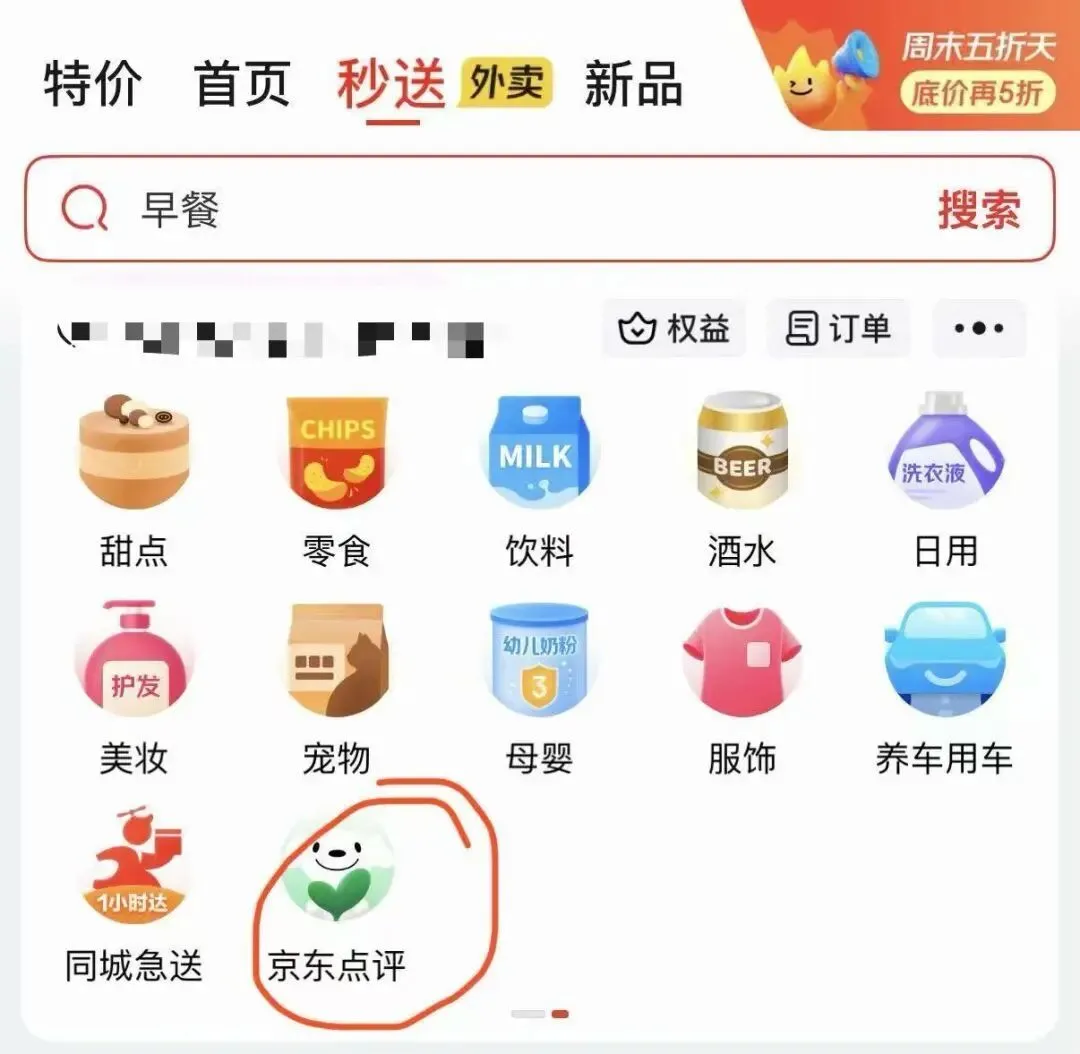
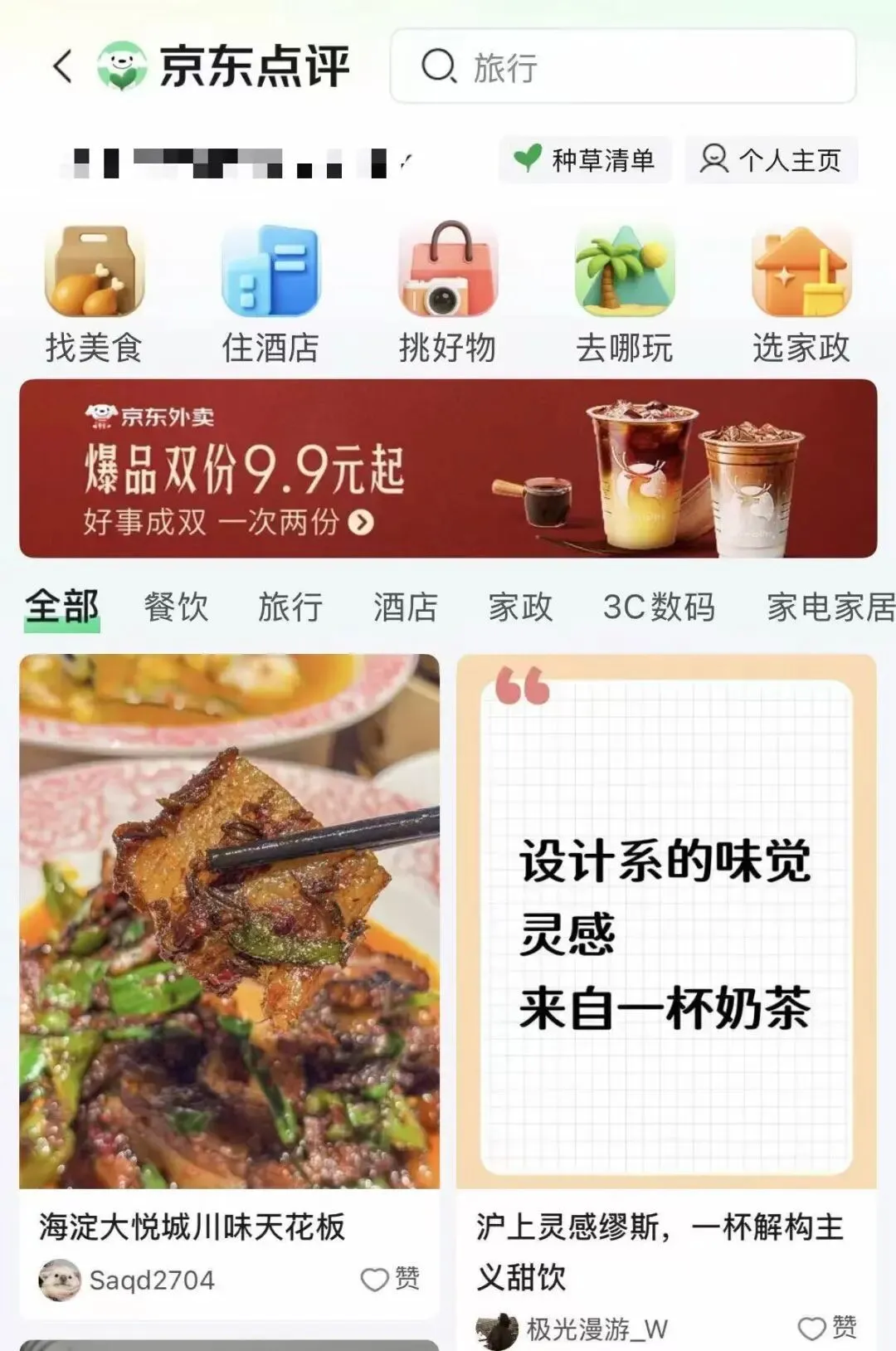
In September this year, Amap, owned by Alibaba, launched the “Amap Street Sweeping List” to promote local life.
JD.com’s entry into the game at this time has intensified competition in the local life services market.
From this point of view, the three major platforms, Meituan + Dianping, JD Instant Delivery + Dianping, and Taobao Flash Sales + Street Sweeping List, have been assembled. The strategies are different, but the general direction is similar.
At present, the content of JD.com’s reviews is not rich, and it is still mainly based on planting notes. There is also a JD.com review list, but it is very deep and not rich enough.
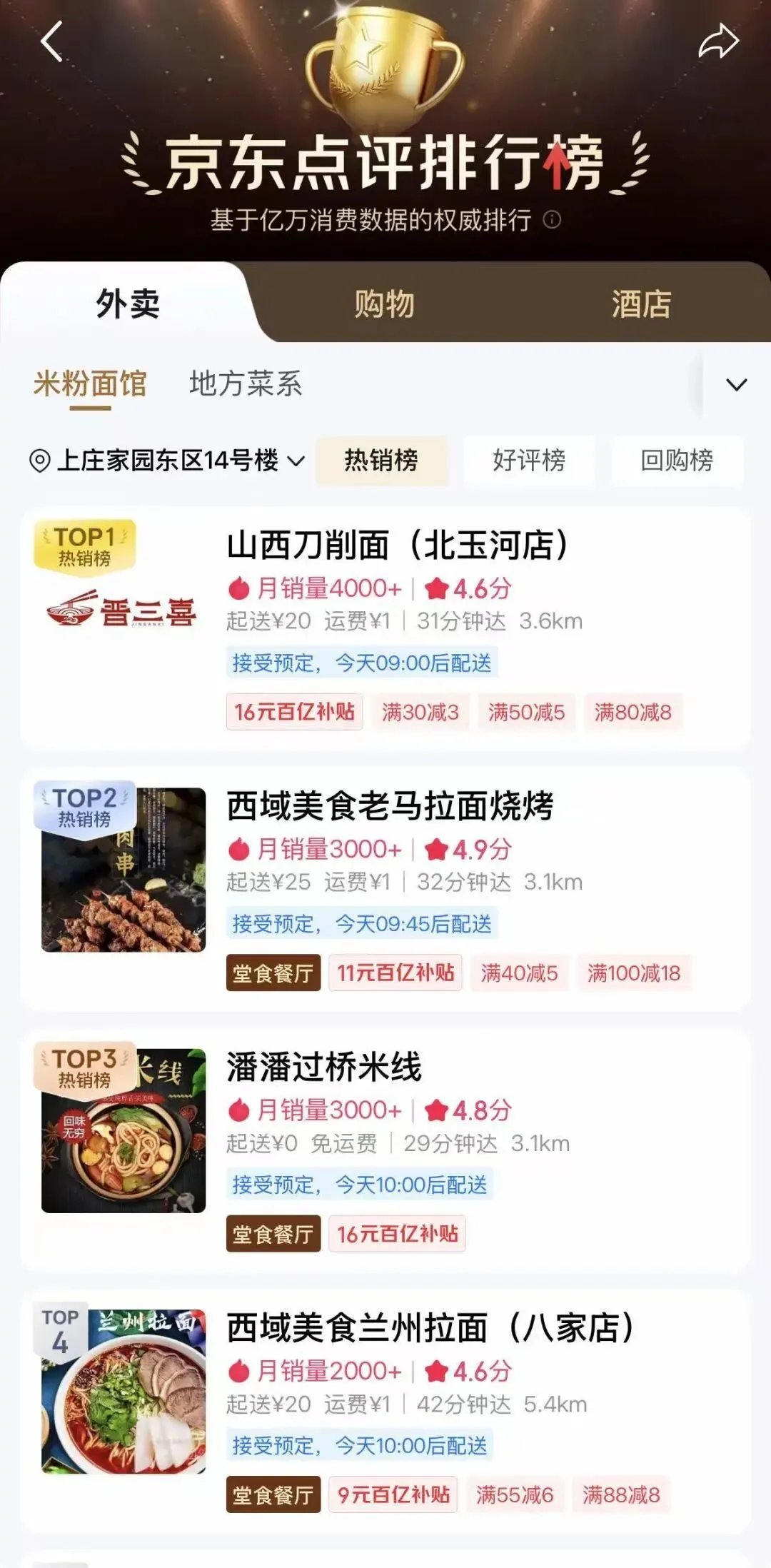
Overall, it seems that JD.com’s Dianping is a bit more like Dianping. There are lists and grassroots, while Amap’s Street Sweeping List focuses more on lists.
Although they are all a combination of "takeaway + review", their underlying logic and advantages are different.
Meituan’s advantage lies in Dianping’s long-term accumulation of huge user evaluation content and deep user intelligence. Its must-eat list relies on massive UGC and a complex rating system, forming a strong social recommendation attribute.
Ali’s Gaode Street Sweeping List takes a different approach. It is built based on the massive real-time navigation and behavioral data of Amap. It emphasizes immediacy and geography, and is more suitable for temporary decision-making consumption.
JD.com still needs more time to accumulate in local life such as food delivery, hotels, tourist attractions, etc. JD.com is still strong on the e-commerce list. Outsiders believe that JD.com’s review is more like a defensive move.
JD.com faces challenges if it wants to do well.
In the field of restaurant reviews, Dianping has a strong user mentality and content ecosystem. Amap has unique scene advantages. JD.com needs to cultivate the habit of users making consumption decisions through "JD.com Dianping".
The real battle may have just begun.
Platform competition has shifted from extensive traffic grabbing to a refined reconstruction of user trust mechanisms.
In the future, winning or losing may no longer be determined simply by the size of the order, but by who can more accurately connect content, goods and services, and provide users with more efficient and credible decision-making support between "planting grass" and "pulling grass" every time, thereby reshaping the core value of local life services.