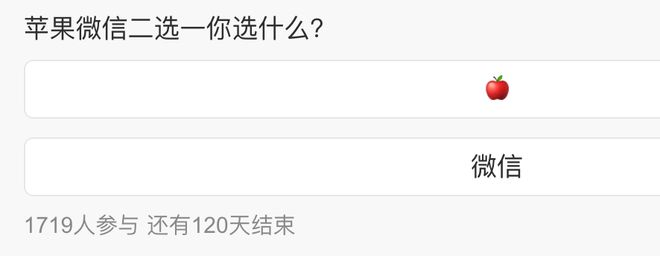
After more than a year of tug-of-war, Apple and Tencent finally made peace - Apple will charge a 15% "tax" on WeChat mini programs.The most impressive thing about this incident should be the hotly searched rumor last year, which said that iPhone 16 will not support WeChat and will have to choose between mobile phones and social software.
Let me give you a brief review.
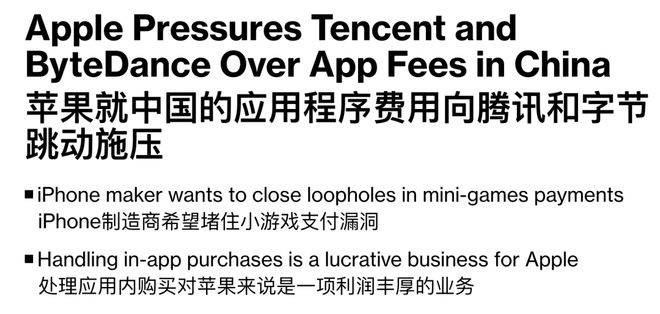
In August last year, Bloomberg broke the news that Apple began to crack down on WeChat and Douyin, saying that your mini-programs and mini-games were"tax evasion".
What is "tax evasion"?
As we all know, Android users who spend money on mini-games can directly access WeChat payment.
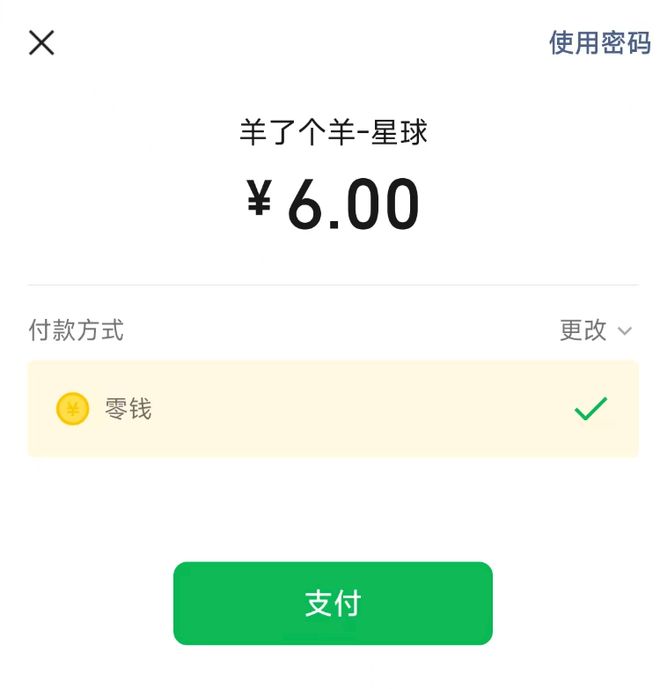
On the iOS side, according to Apple's rules, in-app purchases of virtual goods must be made through Apple Pay, so it can take a commission of 15% to 30%.
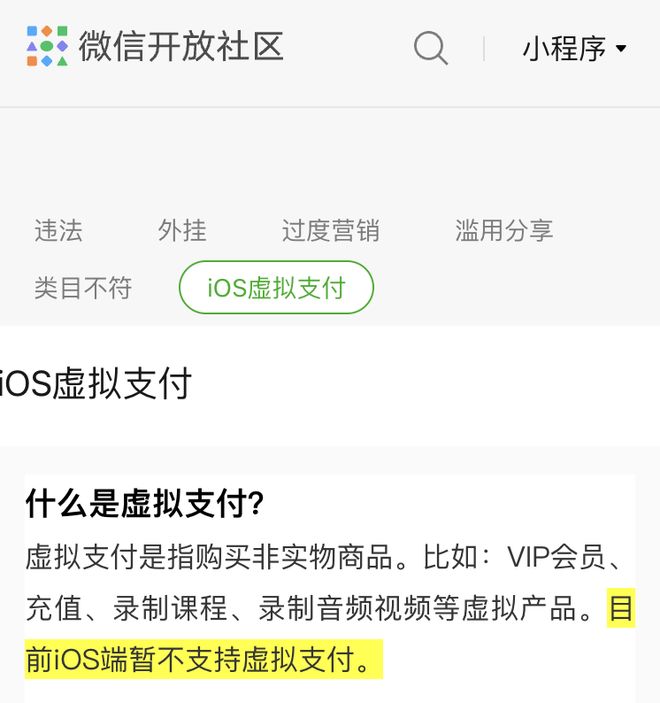
But because there has been no tax negotiation with Apple, the WeChat mini program bypassed this set of rules——
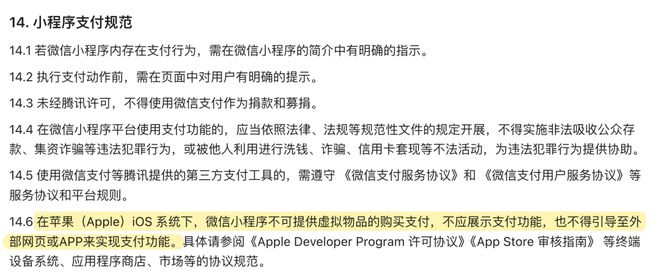
The iOS side does not provide virtual payment functions at all.
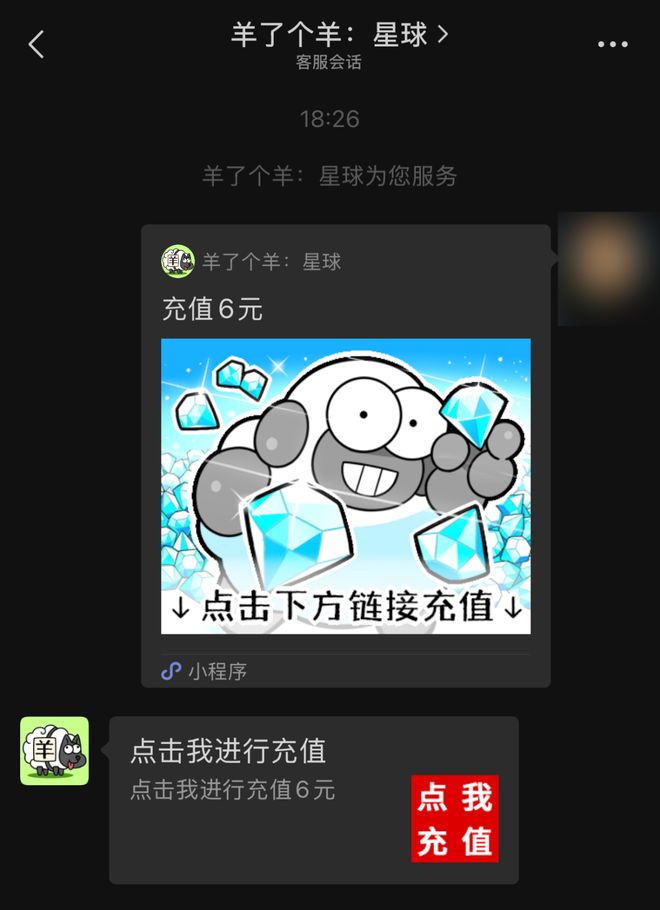
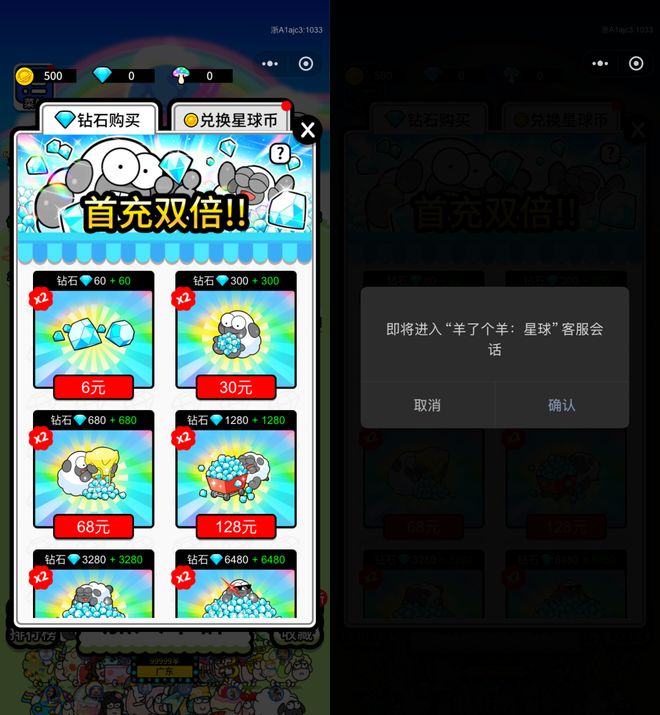
Developers want to collect money? I can only think of a way: jump to the customer service to send a link, guide to the official account, jump to the H5 page, and call WeChat payment.
For example, if you spend a bag of gems, it will jump to the customer service conversation, and then the customer service will give you a link, and you can pay using WeChat.
Can Apple not be in a hurry? You must know that the little game is too fat.
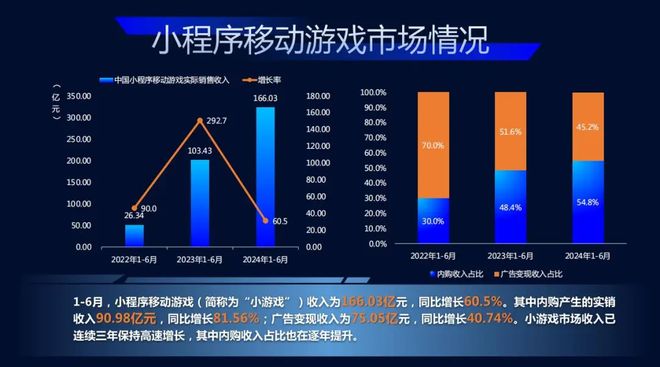
According to the "China Game Industry Report from January to June 2024", the actual sales revenue of small games in the first half of the year was 16.6 billion, a year-on-year surge of 60.5%. Among them, in-app purchase revenue was 9.1 billion, a year-on-year surge of 81.56%.
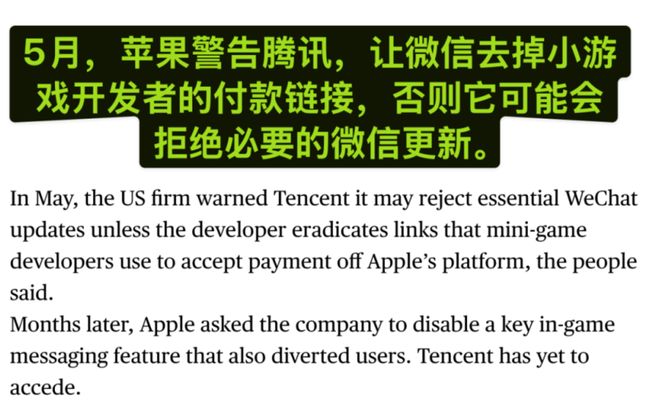
So Brother Guozi began to present the facts and reason - you have violated the rules. The App does not comply with my "Audit Guidelines". If you don't remove those payment links, you can't even think about updating it.
But Tencent is not a vegetarian either. I created the environment and laid the channels, so you have to take a commission for not doing anything?
For this matter, just ask the mall about the rent collected by the store. It turns out that the store made a little money, and the mall still wants a commission.
So the two sides began a long game.
Then the media responded to the storm, and all kinds of headlines were flying all over the place, such as choosing between iPhone and WeChat.
I said at the time that Apple and Tencent would not break up.
These two giants know how to negotiate better than anyone else. This is not the first time they have quarreled, nor is it the first time they have reconciled. Just like the chess player at the gate of the community, he was still taking pictures of the table yesterday, and he still plays the same role today.
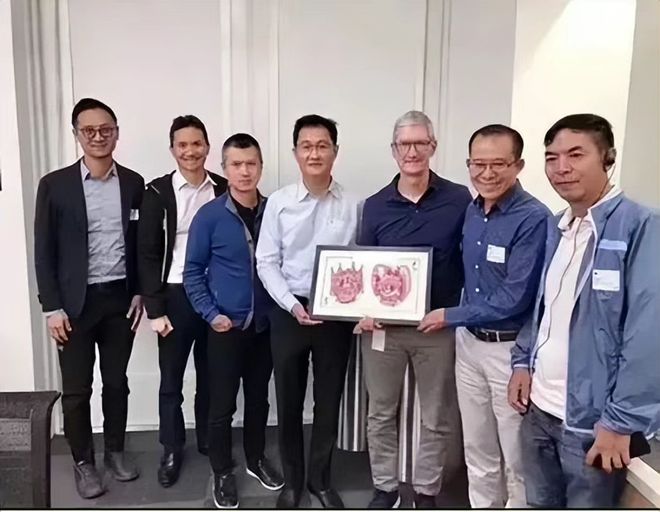
Tencent visits Apple in 2017
You see, the young couple reached an agreement yesterday (the 14th).
Apple launched the Mini Program Partner Program, and WeChat also issued an announcement saying that it will be arranged immediately.
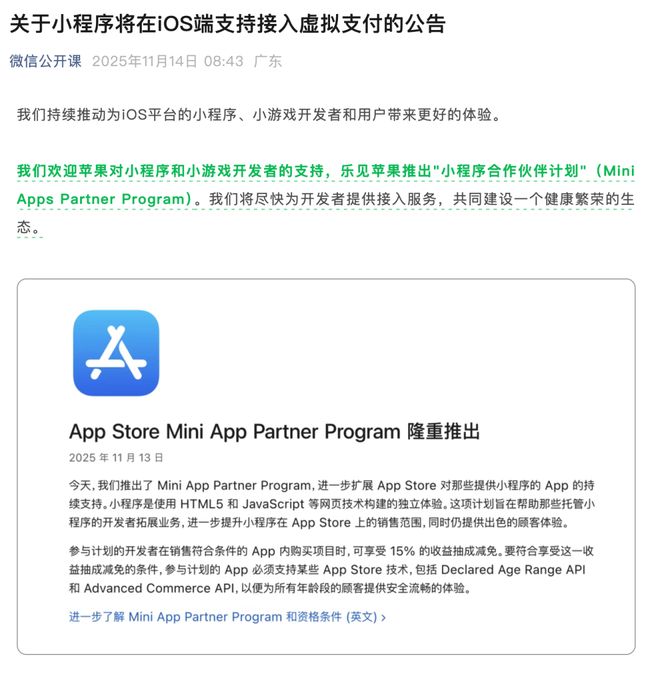
The core content of the agreement is that Apple takes a uniform 15% fee on mini programs.
Some people may be panicking after seeing this - if I use a mini program to order takeout and send it to express delivery, do I also have to pay Apple?
fine.
Apple's tax only collects money for virtual goods, not physical businesses such as takeout and express delivery. At most, the krypton gold for your game may be a little more expensive, because developers may pass on the Apple tax to players.
I think, compared with the national App Store’s commission standard (30% for annual income of more than 1 million US dollars, 15% for less than 1 million US dollars), the unified 15% can be considered as taking care of the big users of small programs.
So how can developers access this plan?
The first step is to register as an Apple developer.
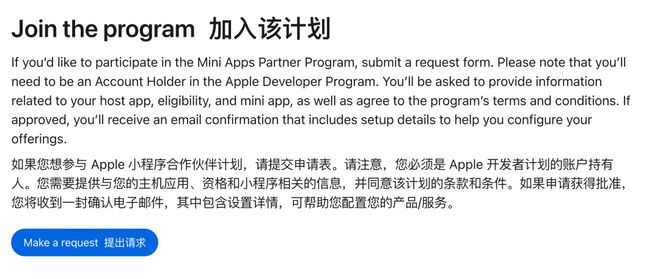
This first step is quite difficult. It's easy to pay $99, but it still needs to be reviewed.
Recently, we developed an app for a topic. When registering as a developer, we found that the money had been paid and it still had to be reviewed before it could be approved. After waiting for 48 hours, nothing happened.
No dude, it’s just a photo, it takes so long to review?Then I called and asked, and it was approved immediately.
I wonder if at this pace, if small program developers flood in all at once, wouldn’t the review process take longer?
Okay, after registering as a developer, the next step is to submit some materials.
Prepare the metadata information of the mini program, including name, description, age rating, etc. You also need to provide a manifest configuration file to WeChat, and WeChat will submit this to Apple for review.
It's a bit troublesome, but I think it's reasonable. After all, when it comes to money, Apple must take control.
Some developers may think, it’s so troublesome, why can’t I continue to exploit loopholes? No commission required. It’s hard for you to leave a bad review, but I’ll talk about why later.
Let’s talk about it first, who wins this agreement and who benefits more?
For Tencent, the benefits are huge.
First of all, Tencent will take 30%-40% commission for WeChat games on Android.
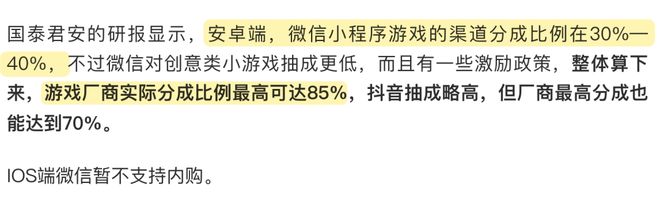
But on the iOS side, because there is no agreement with Apple,Tencent has never opened virtual payments, so the money it makes from in-app purchases is 0.
At the 2024 Q2 earnings call, Tencent Chief Strategy Officer James Michel said: Currently, Tencent’s mini programs on iOS do not make money through in-app transactions. If profits can be achieved, it will be beneficial to Tencent, Apple, game developers and users.
There are two important points in this statement.
One is that there was no commission at that time;
The other is that if you make a profit (commission), it will be beneficial to everyone.
Combined with the commission on the Android side, I speculate that if Apple takes action, Tencent may also be able to take a bite in the future——
Commission for iOS mini-program games.
If they really want to draw, they will probably lower the draw ratio, otherwise the developers will get much less.
After all, Tencent has always emphasized the protection of small and medium-sized developers. According to WeChat data in June this year, more than 80% of the more than 400,000 small game developers are small teams of less than 30 people.

Let’s talk about developers.
In the short term, everyone may not be willing to connect to Apple Pay.
After all, you will be charged a commission if you connect, and you will still find ways to exploit loopholes to bypass Apple Pay.
But the idea of stuck bugs may not work soon.
Tencent and Apple have signed an agreement, and WeChat may have to plug loopholes to some extent.
The result is probably to gradually tighten it - first kill the chicken to scare the monkeys, and then gradually spread it to the entire industry.
But in the long run, it is not without benefits to developers.
Think about it, the payment process is smoother and there is no need to jump, and users’ willingness to pay increases. In the past, many small games with version numbers could only rely on advertisements on the iOS side.
Now that there are formal in-app purchase channels, the methods of monetization are more diverse.
The main thing is to see whether the revenue from Apple Pay can offset these commissions.
For Apple, the additional 15% Apple tax on small programs is, on the surface, a big chicken drumstick to gnaw on, and it is a guaranteed profit.
But this may not be a bad thing for us.
You should know that Apple taxes in many countries/regions are now lower than in China.
In 2021, after South Korea passed the amendment to the "Telecommunications Business Act", Apple's commission was reduced to 26% and 11%, and third-party payment was supported.
In January last year, Apple’s commission in the United States also dropped to 27% and 12%, supporting third-party payment.
In March last year, the European Union fined Apple 1.8 billion euros. Under the requirements of the Digital Market Act, Apple's commission was reduced to 17% and 10%, and it supported third-party payment.
But China is still 30% and 15%, and does not support third-party payment.

Now Apple is willing to give a 15% commission rate on mini programs, which is a signal in itself.
Because South Korea, the United States, and the European Union can force Apple to reduce taxes by relying on a combination of antitrust legislation and judicial litigation.
In China, 55 Apple users complained to the State Administration for Market Regulation last month, accusing Apple of abusing its market dominance to charge high commissions.
This time Apple took the initiative to make concessions on mini programs, and user complaints began to increase. I think these changes are worth observing.
After all, turning a giant ship around never happens overnight, but happens bit by bit.