Market analysts broke the news that Apple is expected to hand over some of the entry-level M7 chip manufacturing to Intel's domestic wafer factories in the United States starting in 2027 to diversify the supply chain and respond to the Trump administration's policy demands to promote the return of manufacturing to the United States.
To date, all M-series chips used in Macs and iPads have been manufactured by TSMC in factories in China and elsewhere. The latest supply chain analyst Ming-Chi Kuo reports that this situation may change in 2027, and some entry-level M-series chips will be manufactured by TSMC’s factories in the United States. The feasibility of using Intel fabs to participate in production is also being evaluated.
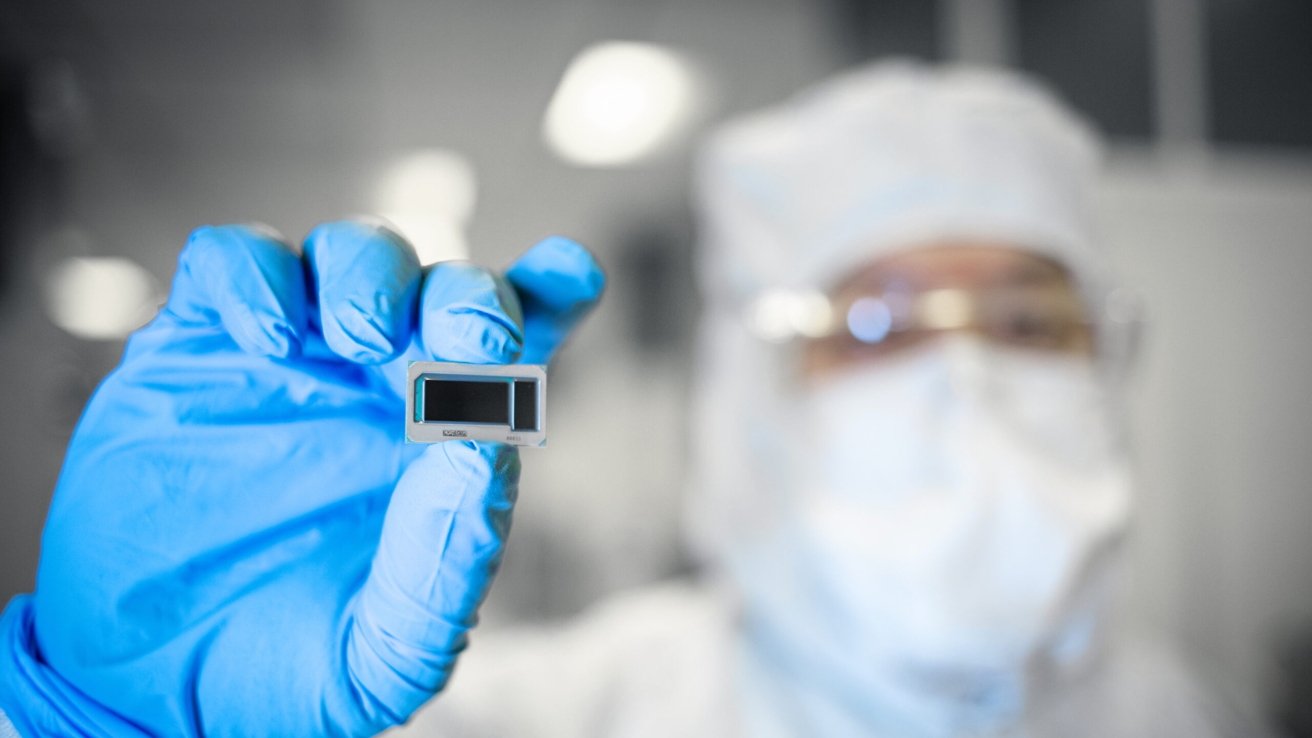
Apple has signed a non-disclosure agreement (NDA) with Intel on its manufacturing process to evaluate its suitability for mass production of M-series chips. Related simulation and R&D projects are said to be progressing smoothly, and Apple is waiting for Intel to mature its 18AP process node around mid-2027, paving the way for possible mass production.
Ming-Chi Kuo said that if all goes well, the M7 chip produced by Intel is expected to appear in products such as iPads and MacBooks as soon as about two years later. However, this plan is currently focused on the low-end models of the product line, with high-end chips such as Pro and Max expected to still be supplied by TSMC.
Even if they are manufactured by Intel, the M7 and other M-series chips will still be designed based on the ARM architecture. This means that Apple will not return to the x86 architecture used on Macs that year, but will continue to follow the self-developed Apple Silicon route that began a comprehensive shift in 2020.
Rumors about Intel manufacturing Apple Silicon have actually been circulating for about three years, but they have previously remained at the level of assumptions and rumors. Ming-Chi Kuo’s revelations this time are regarded as the most concrete progress in this direction so far, but there are still many uncertainties before it is truly implemented.
Apple spent years "diverging" its Mac lineup away from Intel processors after ending the long x86 era. Now, if Intel returns to Apple's supply chain as an foundry partner, it will mean that the relationship between the two parties has changed from a "chip supplier" to a "manufacturing service provider."
One of the reasons why Apple is considering introducing Intel OEM is to continue and strengthen its supply chain diversification strategy and reduce its high dependence on a single manufacturer and production base in mainland China. Since the COVID-19 epidemic severely disrupted the global supply chain, Apple has been actively diversifying production capacity in an attempt to reduce similar risks. Apple will place some of its chip production in Intel's factories in the United States. Another consideration is to ease its relationship with U.S. President Donald Trump. The report pointed out that Trump has long called on American technology companies to bring manufacturing back to the country, but Apple has limited actions in this regard. Therefore, by establishing high value-added chip manufacturing in the United States, it is expected to obtain a more favorable policy and tariff environment.
Intel has experienced many delays in the mass production of its new process, and its advanced process ramp-up capabilities are still the focus of attention from the outside world. Some analysts believe that if Apple wants to rely on Intel to undertake part of its M-series chip production capacity, it must obtain extremely certain yield and supply guarantees to avoid being "crowded" by Intel's own processor production capacity during peak demand periods.
Although the current signals are more concrete than before, whether Apple will eventually enable Intel foundry on a large scale in the M7 era still depends on multiple factors such as technology maturity, cost structure, production capacity allocation, and political environment, and it is difficult to make a conclusion in the short term.