A large-scale epidemiological study jointly completed by University College London (UCL) and a multinational research team shows that long-term exposure to high concentrations of fine particulate matter (PM2.5) pollution will significantly weaken the protective effect of regular exercise on health. Under certain pollution levels, this protective effect may be weakened to about half of its original value, but it will not disappear completely.
The research results have been published in the medical journal "BMC Medicine" and included cohort data of more than 1.5 million adults from countries and regions such as the United Kingdom, Taiwan, China, Denmark and the United States, with a follow-up period of more than ten years.
The research team focused on analyzing the relationship between the annual average concentration of fine particulate matter PM2.5 in the environment and the benefits of people's exercise. PM2.5 refers to particles in the air with a diameter less than 2.5 microns, which are enough to penetrate deep into the alveoli and enter the blood circulation. They are considered to be closely related to the occurrence of a variety of cardiovascular and tumor diseases. The results show that when the annual average concentration of PM2.5 in the environment of the population reaches or exceeds 25 micrograms per cubic meter, the reduction in mortality risk caused by regular exercise begins to be significantly reduced. Research estimates that currently about 46% of the world's population lives in areas where the average annual concentration of PM2.5 is no less than this level.
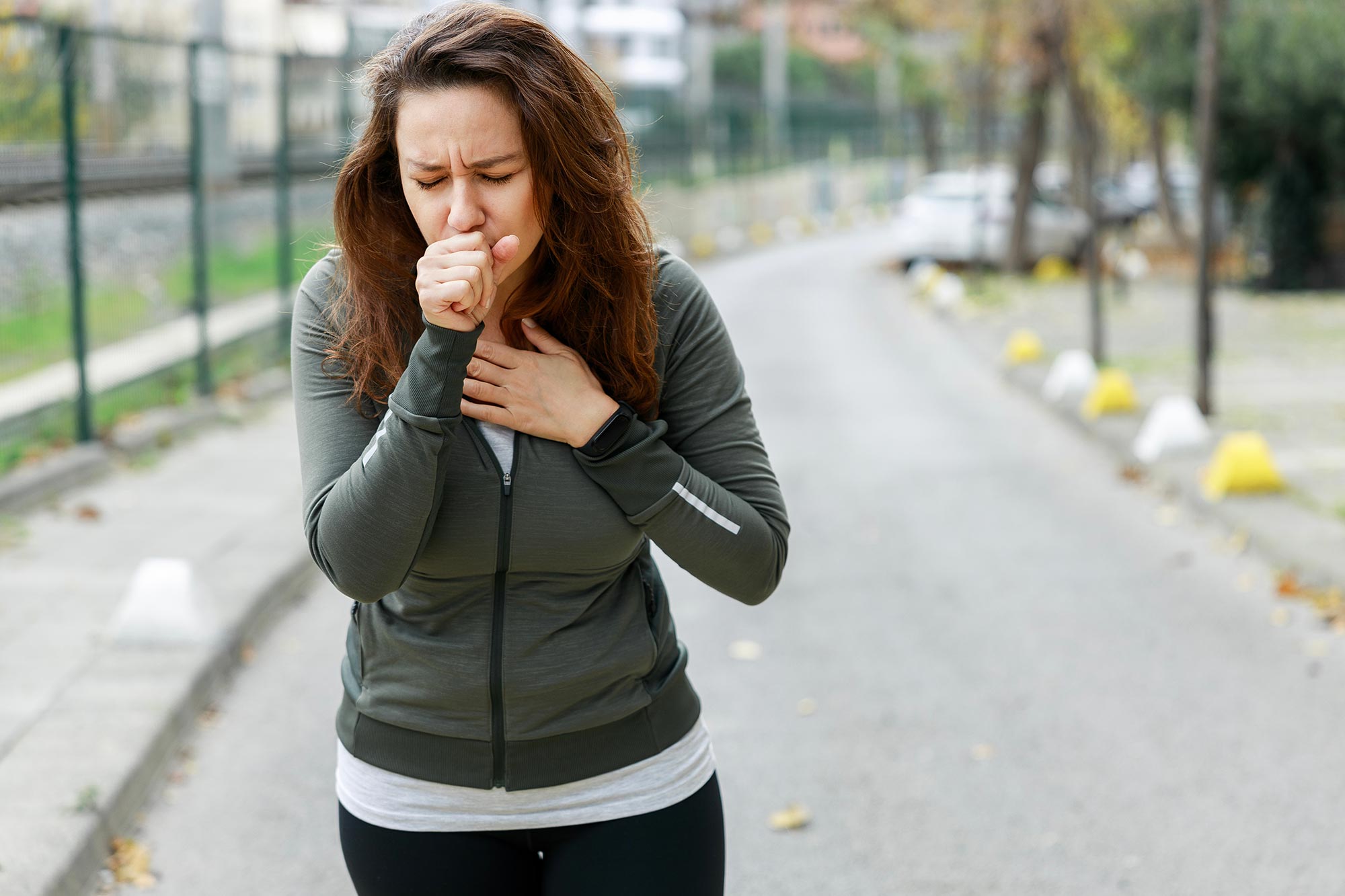
According to current public health recommendations, completing at least about 2.5 hours of moderate-to-high-intensity leisure physical activity (such as jogging or other breathless and sweaty exercises) per week can generally reduce the risk of all-cause mortality by about 30%. However, in areas where the annual average concentration of PM2.5 exceeds 25 micrograms/cubic meter, even if the above-mentioned amount of exercise is completed, the reduction in mortality risk is only about 12% to 15%. When pollution levels further increased above 35 micrograms per cubic meter, the protective association of exercise with cancer-related death weakened significantly, and in some analyses, the advantage was almost no longer evident. Research points out that about 36% of the world's population lives in areas where the average annual concentration of PM2.5 is higher than 35 micrograms/cubic meter.
Specific to different countries, the average annual concentration of PM2.5 in the environment of the British participants included in this study is about 10 micrograms per cubic meter, which is lower than the pollution threshold in this study that indicates the most obvious attenuation of exercise benefits. However, the researchers cautioned that air quality in urban areas fluctuates greatly, and short-term pollution peaks in winter and other periods may still exceed the critical level of 25 micrograms/cubic meter, thereby weakening the health benefits of exercise in specific periods. The study used methods such as systematic review, meta-analysis and individual-level joint analysis, and synthesized 7 previous cohort studies, 3 of which have not been officially published before.
Po-Wen Ku, the first author of the project and a professor at National Chung Hsing University in Taiwan, said that overall, regular physical activity is still beneficial to health even in an air polluted environment, but improving air quality can significantly amplify the protective effect of exercise. Andrew Steptoe, professor at the Department of Behavioral Sciences and Health at University College London, pointed out that this study further proves the systemic harm of fine particulate matter pollution to the human body, and also emphasizes the dual importance of clean air and moderate exercise for healthy aging. The research team calls for both pollution reduction and promotion to be promoted at the public policy level to maximize health benefits at the population level.
Scholars involved in the study also reminded that although the data suggests that the benefits of exercise are "discounted" in highly polluted environments, this does not mean that public outdoor activities should be discouraged. On the contrary, at the individual level, harmful exposures can be minimized while retaining the cardiorespiratory and metabolic benefits of exercise by paying attention to air quality monitoring information, choosing periods and routes with lower pollution for exercise, and appropriately reducing exercise intensity when pollution is severe. Because this study is mainly based on cohort data from high-income countries and regions, its results may underestimate the true health risks in some low-income countries—especially areas where the average annual PM2.5 exceeds 50 micrograms per cubic meter for a long time.
The author also admitted that this study still has several limitations, including the lack of detailed records of indoor air quality, the difficulty in assessing the additive effects of home and workplace exposure, and the limited understanding of lifestyle factors such as the participants' diet. Nevertheless, in the statistical analysis, the study has tried its best to incorporate confounding factors such as income, education level, smoking status, and previous history of chronic diseases for adjustment to improve the reliability of the conclusions. This project brings together research teams from the UK, the United States, Australia and Asia. Some of the UK data comes from UK Biobank, and funding is mainly provided by institutions such as Taiwan’s National Science and Technology Council, Taichung Veterans General Hospital and National Chung Hsing University.
Compiled from /ScitechDaily