According to CCTV Financial Channel, the standard development task of the "Action Plan to Improve Traction Equipment Updates and Trade-in Consumer Goods with Standards" jointly issued by seven departments has concluded.All 294 national standards in 13 key areas planned for formulation and revision have been approved and released.
It is understood that the 294 national standards approved and released focus on three aspects: accelerating the upgrading of energy consumption and emission technology standards, strengthening the improvement of product quality and safety standards, and increasing the supply of recycling standards.
The relevant person in charge said that the safety standards for electric vehicle power batteries have achieved a major breakthrough, and for the first time, "no fire and no explosion" has been listed as a mandatory requirement.Promote car companies to optimize battery structures and thermal management systems to significantly improve the safety level of new energy vehicles.
It is reported that the standard is the "Safety Requirements for Power Batteries for Electric Vehicles" issued by the Ministry of Industry and Information Technology in April this year. It will be implemented on July 1, 2026. It is also known as "the most stringent battery safety order in history."
The new standard includes 7 individual tests and 17 battery pack or system tests, including new battery bottom impact tests, safety tests after fast charging cycles, etc., and strengthened safety requirements such as thermal diffusion.
Compared with the 2020 version of the national standard, which requires batteries to not catch fire or explode within 5 minutes after thermal runaway,The new regulations are modified to "no fire or explosion (still need to call the police), and the smoke will not cause harm to the occupants."
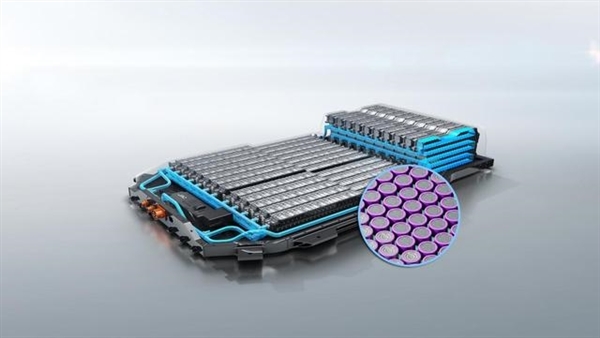
At the same time, the new regulations also add a bottom impact test, requiring the battery pack to have no leakage, no fire, and no explosion after being hit by a 30mm diameter steel ball with an energy of 150J.
A new safety test item after fast charging cycles is added. After 300 fast charging cycles, an external short circuit test is performed, which requires no fire or explosion.
