Space Forge, a space start-up company headquartered in Cardiff, Wales, has taken an important step towards manufacturing materials outside of the Earth's gravity: its microwave-sized "space factory" mounted on an orbiting satellite has been successfully ignited and operated, and the internal furnace temperature can rise to nearly 1,000 degrees Celsius. It is regarded as a key milestone towards the long-term vision of space semiconductor manufacturing.
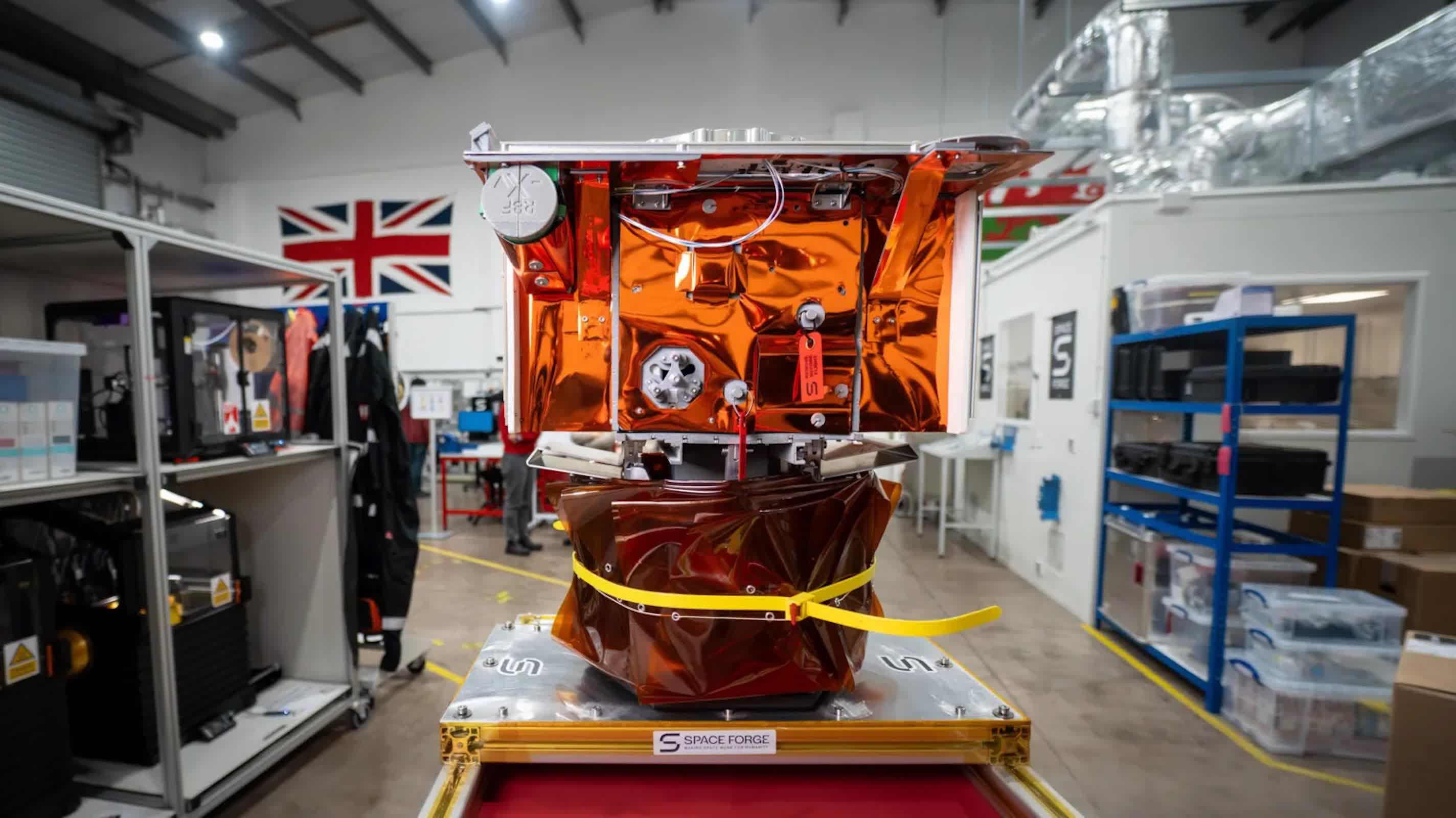
This prototype device was sent into space via a SpaceX rocket this summer. Its mission is to verify the effects of microgravity and space vacuum environments on improving material performance: Under microgravity conditions, semiconductor atoms are expected to form a nearly perfect crystal structure, while the ultra-high vacuum above the Earth's atmosphere almost completely eliminates pollution caused by particles in the air, resulting in materials with a more uniform structure and higher electronic properties. Space Forge CEO Josh Western told the BBC that current on-orbit experiments show that the purity of semiconductors they manufacture in space is expected to be up to 4,000 times higher than on the ground. Such high-purity materials can be widely used in critical infrastructure areas such as 5G base stations, electric vehicle charging facilities and new generation aircraft in the future.
The Space Forge team continues to monitor the satellite in real time from its headquarters in Cardiff, treating the entire mission as a complete on-orbit technology demonstration. During the mission, Veronica Viera, head of payload operations, disclosed images from the satellite's internal camera system, which showed a bright plasma glow in the furnace cavity. This is a typical feature that occurs when the gas phase is heated to about 1,000 degrees Celsius, and is also a key condition for high-temperature material processing. She described seeing this scene as one of the "most exciting moments in her life" and emphasized that achieving stable plasma generation in a microgravity environment is of symbolic significance to the company's future space manufacturing roadmap.
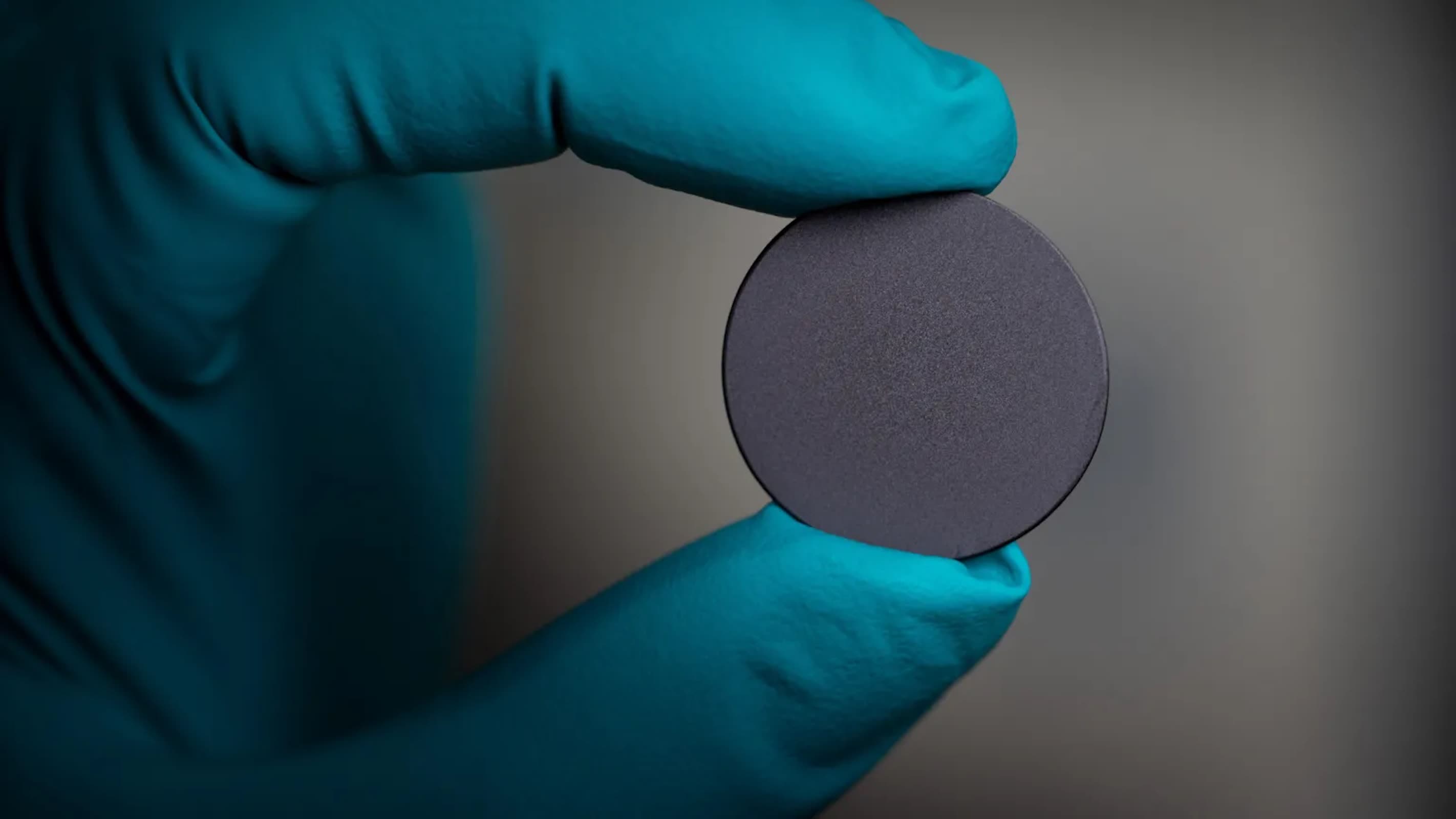
Viera pointed out that this experiment provided verification of "core elements" for Space Forge's long-term planning: the company has initially demonstrated that the thermal environment and plasma environment required for semiconductor production can be established and controllably maintained in orbit, which means a substantial step towards a true space manufacturing process. Meanwhile, Space Forge has begun developing a larger-scale orbital "foundry" with the goal of being able to mass-produce enough semiconductor materials to manufacture up to 10,000 chips.
However, how to safely and efficiently return these high-value materials produced in orbit to the ground is a major challenge that follows. To this end, Space Forge is planning to test a heat shield called "Pridwen", whose name is derived from the legendary Aegis of King Arthur. It is designed to withstand extreme temperatures when the payload re-enters the atmosphere and ensure the safe landing of the spacecraft and internal materials. This work is also seen as a key link in building a complete space manufacturing-recycling closed loop: only by solving the problem of returning to Earth can the commercial potential of space manufacturing be truly released.

Currently, the exploration around space manufacturing is gradually entering the early practical stage from the conceptual demonstration stage. Scientific research institutions and private companies around the world are evaluating the feasibility and economics of manufacturing drugs, tissue engineering materials, and other high-performance materials in orbit. Libby Jackson, head of the space department at the British Science Museum, said, "Space manufacturing is now no longer an idea that remains on paper, but a reality that is happening." This also confirms from the side that projects like Space Forge are laying the technical foundation for the future space industry chain.