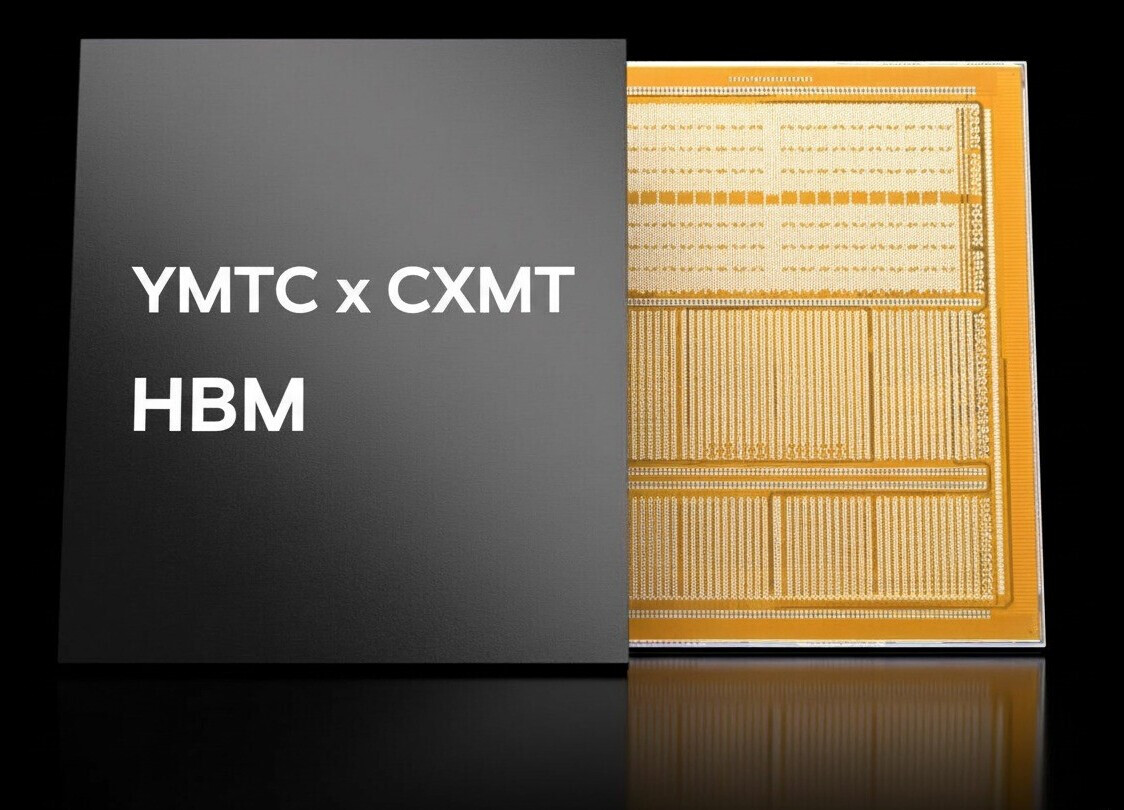
It is reported that Chinese memory chip manufacturer Changxin Memory (CXMT) has started mass production of HBM3 high bandwidth memory (High Bandwidth Memory 3) modules. The company is working hard to catch up with mainstream international manufacturers in the field of high-performance storage. Among them, competitors represented by Korean companies will fully enter the mass production stage of fourth-generation high-bandwidth storage products as early as 2023.
In the past year, Changxin has demonstrated improvements in its technical capabilities in a number of product lines mainly for the commercial market. For example, its self-developed DDR5 and LPDDR5X memory designs were previewed in November last year, demonstrating the latest progress in "localized" high-speed memory. In early February this year, a number of international PC brands such as ASUS, Acer, Dell and HP were said to be evaluating the use of Changxin consumer-grade memory products to cope with the continued tightening of global memory supply.
Changxin's diversified layout in the HBM3 field was first disclosed by industry insiders in May last year, when the outside world first learned that it had begun to get involved in "localized" HBM3 module development. In the early autumn of the same year, the joint venture project related to Yangtze River Storage (YMTC) was further regarded as a key step in promoting the overall expansion of China's HBM industry chain. This series of trends is considered to have laid the foundation for China to speed up its shortcomings in the high-end storage field.
Against the background of skyrocketing demand for high-end computing power and continued tightening of sanctions, Huawei's latest generation Ascend series AI accelerator has been pointed out to have adopted "self-developed" HBM technology. As global sanctions restrict the supply of high-end storage products from manufacturers such as Micron, Samsung, and SK Hynix to Chinese companies, Huawei and its local partners are forced to accelerate the promotion of domestic high-bandwidth storage solutions. Korean media MK quoted anonymous sources as saying: "Huawei, which is in a leading position in China's AI chip development, is jointly developing HBM with Changxin. Even if the outside world believes that the current yield rate is low, related products are still expected to enter the mass production stage."
Further industry news shows that Changxin plans to use about 60,000 wafers per month for HBM3 production, and this number accounts for about 20% of its total monthly production capacity of 300,000 wafers. Within the 2026 time window, this ratio means that Changxin will invest a considerable part of its overall DRAM production capacity into high-bandwidth storage, striving to occupy a place in the industry landscape where global HBM supply continues to be tight and AI and high-performance computing demand is rapidly expanding.