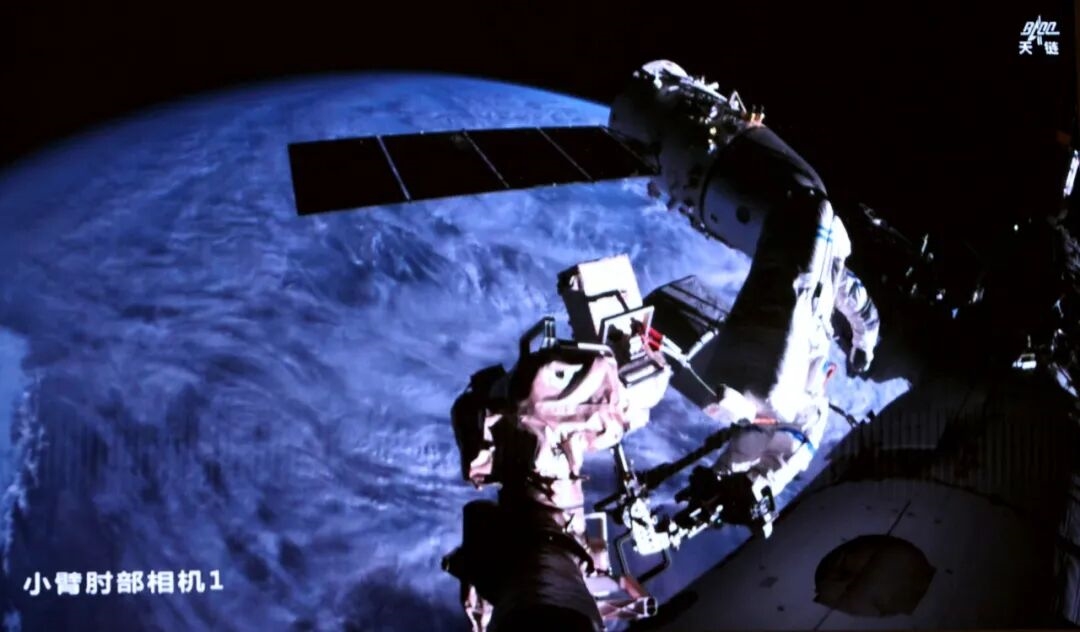
According to the China Manned Space Engineering Office, at 01:36 Beijing time on April 17, 2026, after about 5.5 hours of extravehicular activities,The Shenzhou 21 crew astronauts Zhang Lu, Wu Fei, and Zhang Hongzhang worked closely together, and with the cooperation and support of the space station's robotic arm and ground scientific researchers, they successfully completed the installation of space debris protection devices and the inspection of extravehicular equipment and facilities.
The extravehicular astronauts Zhang Lu and Wu Fei have safely returned to the Wentian experimental module, and the extravehicular activity was a complete success.
So far, astronaut Zhang Lu has conducted a total of 7 extravehicular activities, setting a new record for the number of individual extravehicular activities by a Chinese astronaut.
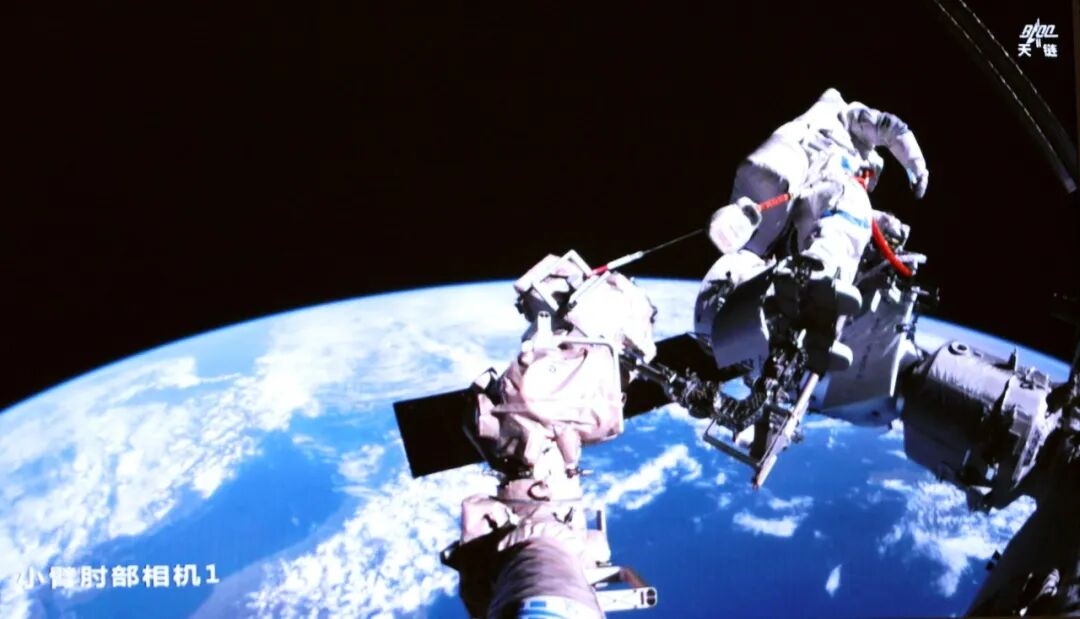
Since the successful completion of the second extravehicular activity on March 16, the Shenzhou 21 astronaut crew has steadily advanced experimental tasks in the fields of space life sciences and human body research, microgravity physical science, etc., continued to carry out environmental monitoring on the station, equipment inspection and maintenance, material sorting and other work, and completed system-wide pressure emergency drills, emergency life-saving on-orbit training, and preparations for extravehicular activities.
Currently, the three astronauts have been in orbit for more than five months and are in good working and living conditions.
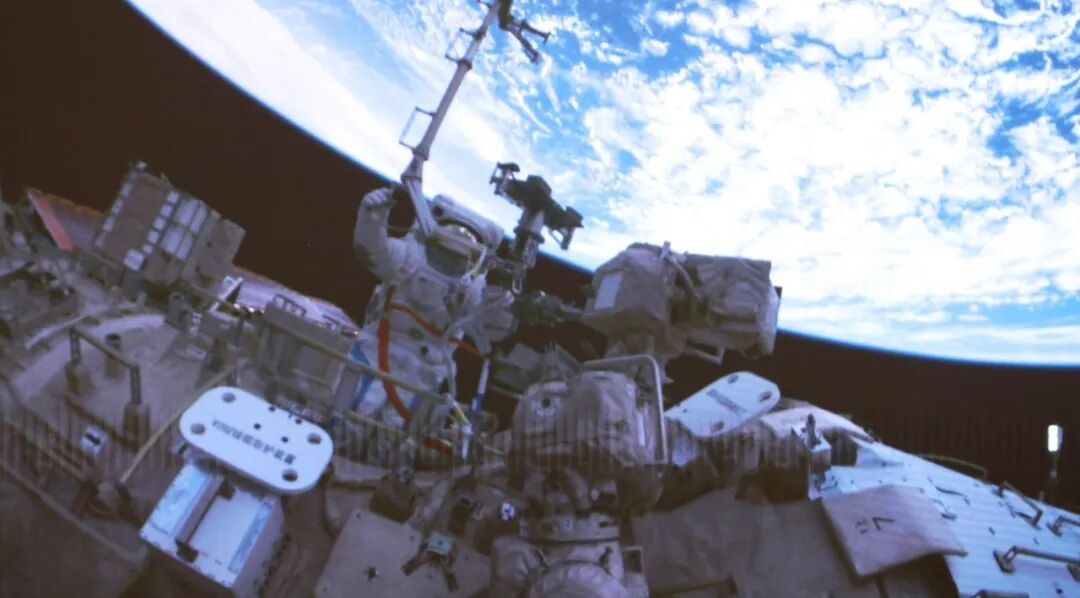
In order to further deepen and verify the technologies related to the long-term residence of astronauts in orbit, and give full play to the comprehensive benefits of the emergency launch of the Shenzhou 22 spacecraft to replenish supplies to the space station,After careful evaluation, it is planned to extend the crew’s stay in orbit by about one month.
During the next flight journey, the astronaut crew will continue to carry out relevant scientific experiments and technical tests, and welcome China Space Day and celebrate International Labor Day in orbit.